
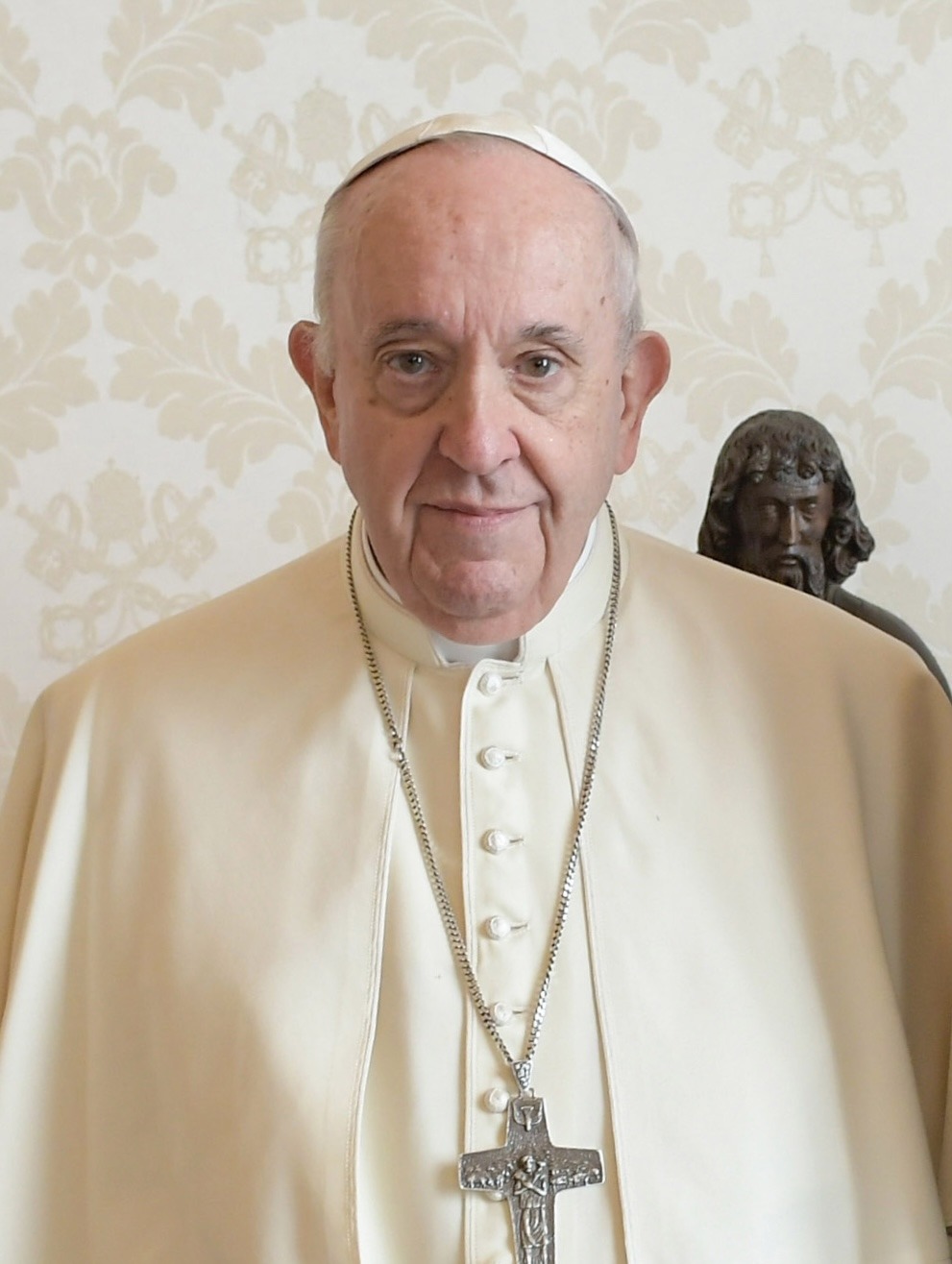
Pope Francis, born Jorge Mario Bergoglio on December 17, 1936, in Buenos Aires, Argentina, is a transformative figure in the Catholic Church and a global symbol of humility, compassion, and social justice. As the first pope from the Americas, the first Jesuit pope, and the first to take the name Francis, his papacy has been marked by a focus on inclusivity, environmental stewardship, and a call to return to the Church’s foundational values. This article explores Pope Francis’s life, his rise to prominence, and the key moments that have defined his tenure as the leader of the Roman Catholic Church.
Early Life and Education
Jorge Mario Bergoglio was born into a family of Italian immigrants in Buenos Aires. His father, Mario José Bergoglio, was a railway worker, and his mother, Regina María Sívori, was a homemaker. Growing up in a modest household, Bergoglio learned the values of hard work, humility, and faith from an early age. These values would profoundly influence his later life and papal mission.
Bergoglio initially pursued a career in science, studying chemistry at a technical school. However, his calling to the priesthood led him to enter the seminary in 1958, joining the Society of Jesus, commonly known as the Jesuits. The Jesuits, founded by Ignatius of Loyola, are known for their emphasis on education, missionary work, and social justice, principles that would shape Bergoglio’s future ministry.
His early formation in the Jesuit order took him to Chile, where he continued his studies, and later back to Buenos Aires, where he earned a degree in philosophy from the Colegio Máximo de San José. He began teaching literature and psychology in the Jesuit schools of Santa Fe and Buenos Aires, where he developed a reputation for his intellectual rigor and deep empathy for his students.
The Path to Priesthood and Leadership
Bergoglio was ordained a priest on December 13, 1969, at the age of 33. His early years in the priesthood were marked by further academic pursuits and a growing commitment to pastoral work. He returned to teaching while also assuming leadership roles within the Jesuit community, eventually serving as the provincial superior of the Jesuits in Argentina from 1973 to 1979.
During this period, Argentina was engulfed in political turmoil, with the military dictatorship of the 1970s known for its brutal repression. Bergoglio’s leadership during these years was complex and controversial; he worked to protect Jesuits and others from persecution, but his actions during this time have been the subject of scrutiny and debate. Despite the controversies, Bergoglio’s commitment to the poor and marginalized became a hallmark of his ministry.
In 1986, Bergoglio traveled to Germany to complete his doctoral studies in theology, deepening his understanding of the Church’s role in the modern world. Upon his return to Argentina, he continued his pastoral and educational work, eventually becoming the rector of the Philosophical and Theological Faculty of San Miguel. His deepening spirituality and commitment to social justice earned him recognition within the Church hierarchy.
Rise to Prominence in the Catholic Church
Bergoglio’s rise within the Catholic Church continued when he was appointed Auxiliary Bishop of Buenos Aires on May 20, 1992. His leadership style, characterized by simplicity and a hands-on approach, endeared him to the clergy and laity alike. He was known for his habit of traveling by public transportation, cooking his own meals, and maintaining a close connection with the people he served.
In 1998, following the death of Cardinal Antonio Quarracino, Bergoglio was appointed Archbishop of Buenos Aires. In this role, he became the leading voice of the Catholic Church in Argentina, advocating for the poor, the disenfranchised, and those affected by the country’s economic crises. His work in the slums of Buenos Aires, known as “villas miseria,” highlighted his deep commitment to social justice and his belief that the Church must be close to the people, particularly the most vulnerable.
Pope John Paul II recognized Bergoglio’s dedication and leadership by elevating him to the rank of cardinal in 2001. As Cardinal Bergoglio, he gained international attention for his humility and refusal of the traditional trappings of his office, opting instead to live in a modest apartment and continue his outreach to the poor. He became a significant figure in the global Church, known for his calls for greater simplicity, humility, and focus on the core teachings of Christianity.
The Election of Pope Francis
The path to the papacy for Jorge Mario Bergoglio was both unexpected and historic. Following the resignation of Pope Benedict XVI in February 2013, a conclave was convened to elect the new pope. On March 13, 2013, after five ballots, the College of Cardinals elected Bergoglio as the 266th pope of the Roman Catholic Church.
Taking the name Francis, after St. Francis of Assisi, the new pope immediately signaled a shift in the tone and focus of the papacy. St. Francis of Assisi is known for his dedication to poverty, humility, and care for creation—values that Pope Francis has embraced and promoted throughout his papacy. His choice of name was unprecedented, and it reflected his vision for a Church that prioritizes the poor, seeks peace, and cares for the environment.
Pope Francis’s election was groundbreaking in several ways. He is the first pope from the Americas, the first Jesuit pope, and the first non-European pope in over 1,200 years. His background and experiences as a Latin American bishop brought a new perspective to the papacy, emphasizing the global nature of the Church and the importance of addressing the needs of the developing world.
Key Themes of Pope Francis’s Papacy
Since his election, Pope Francis has focused on several key themes that have defined his papacy and resonated with millions around the world.
1. Humility and Simplicity
From the outset, Pope Francis has demonstrated a commitment to humility and simplicity, rejecting the opulence often associated with the Vatican. He chose to live in the Casa Santa Marta, a modest guesthouse, rather than the Apostolic Palace. His actions, such as washing the feet of prisoners and refugees during Holy Week, have symbolized his desire for a Church that serves others, especially the marginalized.
2. Social Justice and the Poor
One of the central tenets of Pope Francis’s papacy is his advocacy for the poor and vulnerable. He has consistently called for economic justice, criticizing the excesses of capitalism and the global economic system that, in his view, marginalizes the poor. His encyclical “Evangelii Gaudium” (The Joy of the Gospel) emphasizes the Church’s mission to evangelize by serving the poor and addressing social injustices.
3. Environmental Stewardship
Pope Francis has also made environmental stewardship a key focus of his papacy. His 2015 encyclical “Laudato Si’” (On Care for Our Common Home) is a groundbreaking document that calls for urgent action to combat climate change and protect the environment. In this encyclical, Francis connects environmental degradation with social injustice, arguing that the poor are disproportionately affected by the destruction of the planet.
4. Interfaith Dialogue and Peace
Throughout his papacy, Pope Francis has worked to promote interfaith dialogue and build bridges between different religious communities. He has reached out to leaders of other Christian denominations, as well as to those of other faiths, including Judaism and Islam. His visits to conflict zones and his calls for peace in regions such as the Middle East reflect his commitment to fostering understanding and cooperation among different faiths.
5. Reform of the Church
Pope Francis has also focused on reforming the internal governance of the Catholic Church. He has called for greater transparency and accountability, particularly in addressing the issue of sexual abuse within the Church. His efforts to reform the Roman Curia, the administrative body of the Vatican, have been aimed at making the Church more responsive to the needs of the global Catholic community.
6. Inclusivity and Compassion
Pope Francis is known for his inclusive approach, particularly toward those who have felt marginalized by the Church. His famous statement, “Who am I to judge?” in reference to LGBTQ+ individuals, signaled a more compassionate and open stance on issues of sexuality and identity. While maintaining traditional Church teachings, he has emphasized the importance of mercy, understanding, and pastoral care.
Challenges and Controversies
Despite the widespread admiration for Pope Francis, his papacy has not been without challenges and controversies. His efforts to reform the Church have met with resistance from some quarters, particularly among more conservative factions within the Church hierarchy. His progressive stance on issues such as climate change, immigration, and economic inequality has also drawn criticism from political leaders and commentators.
The ongoing issue of sexual abuse within the Church has been a significant challenge for Pope Francis. While he has taken steps to address the crisis, including establishing new protocols for handling abuse cases and holding bishops accountable, many survivors and advocates feel that more needs to be done to bring justice to victims and prevent future abuse.
Additionally, Pope Francis’s calls for greater inclusivity and dialogue on issues such as divorce, remarriage, and LGBTQ+ rights have sparked debate within the Church, with some seeing his approach as a departure from traditional Church teachings.
The Legacy of Pope Francis
Pope Francis’s impact on the Catholic Church and the world at large is profound. His emphasis on humility, social justice, environmental stewardship, and inclusivity has resonated with people of all faiths and backgrounds. He has sought to bring the Church closer to the people, particularly the poor and marginalized, and to make it a force for good in a world facing numerous challenges.
His papacy has also been marked by a renewed focus on the core values of Christianity—compassion, mercy, and love. Pope Francis’s call for a “Church of the poor” has reinvigorated discussions about the role of the Church in addressing global poverty and inequality.
As the first pope from the Americas and the first Jesuit pope, Francis has brought a new perspective to the papacy, one that reflects the realities of the global South and the challenges faced by the developing world. His influence extends beyond the Catholic Church, as he has become a moral leader on issues such as climate change, social justice, and interfaith dialogue.
Conclusion: The Continuing Journey of Pope Francis
Pope Francis’s life and papacy are a testament to the power of humility, compassion, and a deep commitment to social justice. His journey from the slums of Buenos Aires to the highest office in the Catholic Church is a story of dedication to the service of others and a relentless pursuit of the values he holds dear.
As he continues to lead the Catholic Church into the future, Pope Francis’s legacy will likely be defined by his efforts to reform the Church, address global challenges, and promote a message of hope, mercy, and inclusivity. His impact on the world and the Church will be felt for generations to come, as he remains a beacon of faith, humility, and social conscience in a complex and often divided world.


