
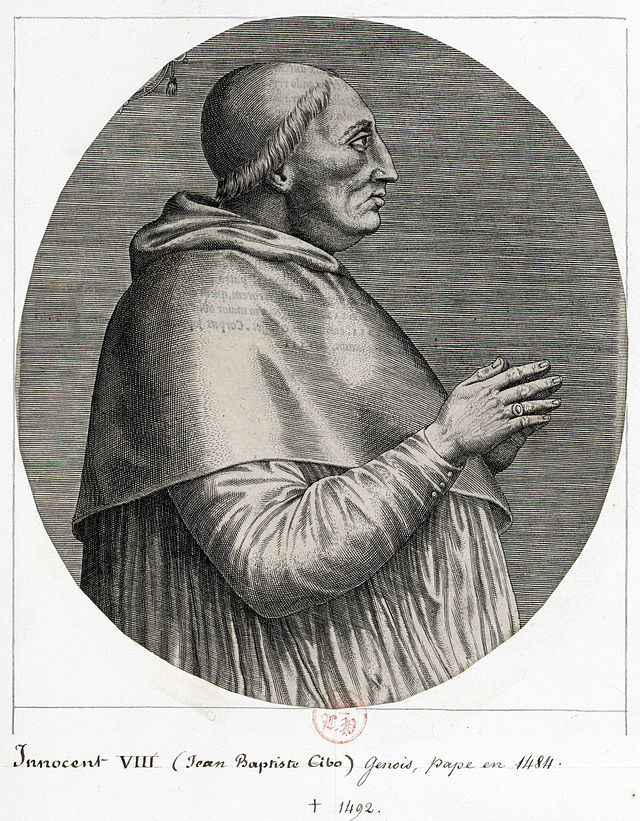
Pope Innocent VIII, born Giovanni Battista Cybo in 1432 in Genoa, is one of the more enigmatic and complex figures in the history of the papacy. His life and reign were marked by significant historical events, controversies, and a deep entanglement in the political machinations of his time. This article will explore his age, fame, and life highlights, offering a nuanced perspective on his legacy.
Early Life and Ascension to the Papacy
Giovanni Battista Cybo was born into a noble family in Genoa in 1432. His early education took place at the court of Naples, where he was introduced to the intricacies of politics and diplomacy. He furthered his studies at the prestigious universities of Padua and Rome, which prepared him for a life within the ecclesiastical hierarchy.
In 1466, Cybo was appointed as the Bishop of Savona, marking the beginning of his ecclesiastical career. His rise within the Church was swift; by 1471, he had become the Bishop of Amalfi, and two years later, in 1473, he was elevated to the rank of Cardinal.
The death of Pope Sixtus IV in 1484 led to a contentious struggle for succession within the College of Cardinals. The primary contenders were Cardinal Rodrigo Borgia, supported by the powerful Orsini family, and Giuliano della Rovere, backed by the Colonna family. Neither could secure a decisive victory, leading to a compromise candidate—Giovanni Battista Cybo—who was elected Pope on August 29, 1484, assuming the name Innocent VIII.
Pontificate and Architectural Renaissance
Innocent VIII’s papacy coincided with a period of intense architectural and artistic activity in Rome. The city was undergoing a renaissance, with many cardinals sponsoring the construction and embellishment of churches and sacred buildings. One of the most notable projects during his reign was the continuation of the frescoes in the Sistine Chapel, initiated by Pope Sixtus IV. Artists such as Sandro Botticelli, Pietro Perugino, Domenico Ghirlandaio, and Cosimo Rosselli contributed to this masterpiece, setting the stage for later works by Michelangelo and Raphael under Pope Julius II.
Innocent VIII’s role in this architectural renaissance, while not as direct as some of his predecessors and successors, was nonetheless significant. His papacy provided the necessary stability and patronage for these grand projects to continue, contributing to the cultural and artistic heritage of the Vatican.
Political Maneuvering and International Relations
One of the defining features of Innocent VIII’s papacy was his involvement in the complex political landscape of the time. His initial attempt to unite the Christian princes in a crusade against the advancing Ottoman Empire failed, leading him to seek alternative means of securing peace. This culminated in a treaty with the Ottoman Sultan Bayazid II, a move that was both pragmatic and controversial.
Innocent VIII’s diplomatic efforts extended to other European powers as well. His relationship with King Ferdinand I of Naples was particularly fraught. The King’s refusal to pay tribute to the Holy See and his questionable loyalty led Innocent to support the Barons’ Conspiracy of 1485, an unsuccessful attempt to overthrow Ferdinand. The Pope’s backing of this rebellion highlighted his willingness to use ecclesiastical power to influence secular affairs, a common practice among Renaissance popes.
Despite the failure of the conspiracy, Innocent VIII eventually reconciled with Ferdinand, thanks to the mediation of Lorenzo de’ Medici, one of the most influential figures of the time. This reconciliation was cemented by the elevation of Lorenzo’s son, Giovanni de’ Medici (the future Pope Leo X), to the cardinalate.
The Witch Hunts and “Summi desiderantes”
One of the most controversial aspects of Innocent VIII’s papacy was his role in the witch hunts that swept across Europe in the late 15th century. In 1484, he issued the papal bull “Summi desiderantes affectibus,” which condemned the practice of witchcraft and called for vigorous action against those accused of sorcery. This decree is often cited as one of the catalysts for the witch hunts that led to the persecution and execution of countless innocent women across Europe.
The bull authorized inquisitors Heinrich Kramer and James Sprenger to prosecute witches in Germany, leading to the publication of the infamous “Malleus Maleficarum,” or “Hammer of Witches.” This text became the handbook for witch hunters and contributed to the hysteria and violence that characterized this dark chapter in European history.
Nepotism and Corruption
Innocent VIII’s papacy was also marred by allegations of nepotism and corruption. Like many Renaissance popes, he used his position to advance the fortunes of his family. His illegitimate son, Franceschetto Cybo, was a particular beneficiary of this favoritism. Despite lacking any notable virtues or abilities, Franceschetto was appointed to several high-ranking positions, including Captain General of the Church, Governor of Rome, and Count of the Sacred Lateran Palace.
This blatant nepotism led to widespread discontent among the Roman nobility and clergy, who saw the papacy as increasingly corrupt and self-serving. Innocent VIII’s inability to address these concerns or implement meaningful reforms contributed to the growing disillusionment with the Church, setting the stage for the later crises of the Reformation.
Death and Legacy
Pope Innocent VIII’s health deteriorated rapidly in the final years of his pontificate. He passed away on July 25, 1492, at the age of 60, after eight years on the papal throne. His death came just days before Christopher Columbus set sail from Palos de la Frontera, marking the beginning of the Age of Exploration. Although Innocent’s tomb in St. Peter’s Basilica bears an inscription noting that “during his reign, the discovery of a New World occurred,” this event actually took place after his death.
Innocent VIII’s legacy is a complex one. On the one hand, his papacy was marked by significant cultural and artistic achievements, particularly in the realm of architecture and the visual arts. His support for the Sistine Chapel frescoes and other projects contributed to the enduring splendor of the Vatican.
On the other hand, Innocent’s involvement in the witch hunts, his nepotism, and his failure to address corruption within the Church have left a darker stain on his reputation. His reign exemplifies the challenges and contradictions of the Renaissance papacy—a period of great cultural flourishing, but also of deep moral and spiritual turmoil.
Historical Context and Influence
To fully understand the significance of Innocent VIII’s papacy, it is essential to consider the broader historical context in which he lived. The late 15th century was a time of profound change in Europe. The consolidation of nation-states, the expansion of trade and exploration, and the rise of humanism were transforming the social, political, and intellectual landscape.
Innocent VIII’s reign coincided with the final years of the Middle Ages and the dawn of the modern era. His efforts to navigate the complex political environment of Renaissance Europe, while often unsuccessful, reflect the broader challenges faced by the Church during this period. The tension between maintaining traditional ecclesiastical authority and adapting to new political realities was a constant theme of his papacy.
Moreover, Innocent’s involvement in the witch hunts can be seen as part of the broader trend of religious and social control that characterized the late medieval period. The fear of heresy, witchcraft, and other forms of deviance was pervasive, and the Church’s efforts to suppress these threats were often brutal and uncompromising.
In this context, Innocent VIII’s actions, while deeply problematic from a modern perspective, were consistent with the attitudes and practices of his time. His legacy, therefore, must be understood within the framework of the historical and cultural norms that shaped his decisions and policies.
Conclusion
Pope Innocent VIII remains a figure of considerable interest and debate among historians and scholars of the Renaissance. His papacy, though relatively short, was marked by significant events and developments that had a lasting impact on the Church and European society.
From his early life in Genoa to his rise to the papacy and his involvement in the key political and religious issues of his time, Innocent VIII’s story is one of ambition, power, and the complexities of leadership in a rapidly changing world. His contributions to the cultural and architectural heritage of the Vatican are undeniable, but his legacy is also tainted by his role in the witch hunts and the corruption that plagued his pontificate.
In the end, Pope Innocent VIII’s life and reign offer valuable insights into the challenges and contradictions of the Renaissance papacy. His story serves as a reminder of the enduring tension between the ideals of the Church and the realities of power, a tension that continues to shape the history of the papacy to this day.


