
Introduction
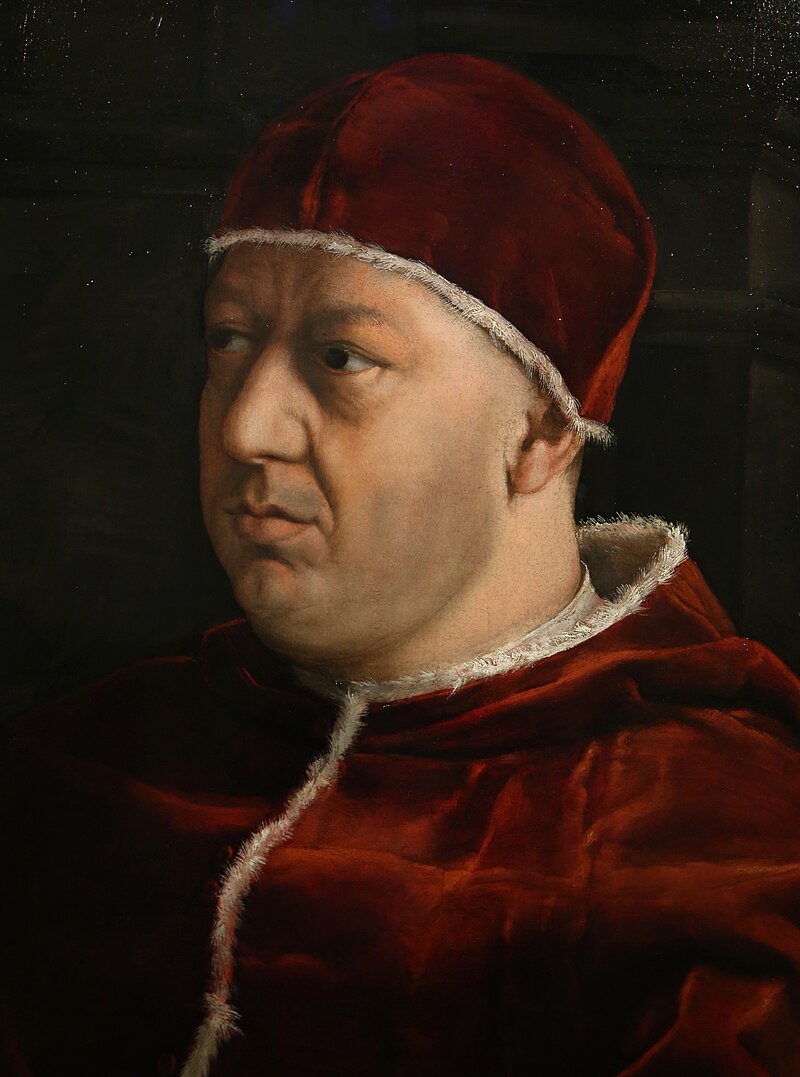
Pope Leo X, born Giovanni di Lorenzo de’ Medici on December 11, 1475, in Florence, is a figure of considerable historical significance, particularly within the context of the Renaissance and the Catholic Church. His life is emblematic of the intersection between religion, politics, and the arts during one of Europe’s most transformative periods. As a member of the powerful Medici family, his rise to the papacy was marked by both opulence and controversy, embodying the complexities of a church struggling with internal reform and external pressures.
Early Life and Rise to Power
Giovanni de’ Medici was the second son of Lorenzo the Magnificent, one of the most prominent figures of the Italian Renaissance. From a young age, Giovanni was groomed for a career in the Church, reflecting his family’s ambitions and the political strategies that often intertwined with religious roles. At just thirteen, he was secretly appointed a cardinal, a move orchestrated by his father to secure the family’s influence within the ecclesiastical hierarchy.
His education was nothing short of exceptional. Giovanni was immersed in humanistic studies, with notable scholars such as Marsilio Ficino and Angelo Poliziano among his teachers. These formative years in Florence, a hub of Renaissance culture, undoubtedly shaped his later policies as pope, where he became known for his patronage of the arts and letters.
Giovanni’s early life was marked by political turbulence, especially following the fall of the Medici family in 1494. Forced to flee Florence, he spent several years in exile, eventually settling in Rome, where he resided in what is now known as Palazzo Madama. His resilience during these years in exile would later be reflected in his papal policies, particularly his efforts to restore Medici control over Florence.
The Papacy of Leo X: A Renaissance Pope
In 1513, Giovanni de’ Medici ascended to the papacy, taking the name Leo X. His election came at a time of significant political instability in Europe. England was under the rule of King Henry VIII, and the rivalry between Spain and France for dominance over the Italian Peninsula was intensifying. As pope, Leo X navigated these complex dynamics with a keen sense of diplomacy, striving to maintain the Church’s independence while simultaneously bolstering the Medici family’s power.
Leo X’s papacy is often characterized by his dual focus on politics and culture. On the one hand, he was deeply involved in the political affairs of the Italian states, using his position to reassert Medici dominance in Florence. On the other hand, he was a fervent supporter of the arts, embodying the ideals of the Renaissance more than perhaps any other pope. His patronage extended to artists such as Raphael and Michelangelo, whose works continue to define the artistic legacy of the period.
However, Leo X’s papacy was not without its controversies. His lavish spending on art, architecture, and personal luxuries drained the papal treasury, leading to the sale of indulgences—a practice that would become one of the catalysts for the Protestant Reformation. Critics of Leo X accused him of being more concerned with worldly pleasures than with the spiritual responsibilities of his office, a sentiment that would later fuel the reformist zeal of figures like Martin Luther.
Leo X and the Protestant Reformation
One of the most significant events during Leo X’s papacy was the rise of the Protestant Reformation, initiated by Martin Luther in 1517. The Reformation posed a direct challenge to the authority of the Catholic Church, and Leo X’s response to Luther’s 95 Theses was initially dismissive. However, as Luther’s ideas gained traction, Leo X issued the papal bull Exurge Domine in 1520, which condemned Luther’s teachings and threatened him with excommunication.
Despite this strong stance, Leo X’s efforts to quell the Reformation were largely ineffective. His inability to fully grasp the theological and popular underpinnings of the movement, combined with his focus on political and cultural matters, meant that the Reformation continued to gain momentum, leading to a significant and enduring schism within the Christian world.
Leo X’s Legacy: A Mixed Assessment
Pope Leo X’s legacy is a subject of considerable debate among historians. On one hand, his reign is often seen as the zenith of the Renaissance papacy, characterized by an unparalleled patronage of the arts and a sophisticated, if sometimes indulgent, approach to leadership. His support for artists and intellectuals helped to foster a cultural flourishing that would have a lasting impact on European civilization.
On the other hand, Leo X’s papacy is also remembered for its role in the events leading up to the Protestant Reformation. His focus on the temporal power of the papacy, coupled with his failure to address the growing calls for reform within the Church, contributed to the division that would forever alter the landscape of Western Christianity.
Moreover, Leo X’s personal life and his love of luxury have been subjects of criticism. His papacy was marked by significant financial mismanagement, as the costs of his lavish lifestyle and extensive building projects, such as the construction of St. Peter’s Basilica, far exceeded the Church’s income. This financial strain led to the controversial sale of indulgences, which many viewed as an abuse of ecclesiastical power.
Historical Context and the Medici Influence
To fully understand Pope Leo X, it is essential to consider the broader historical context of his life and reign. The late 15th and early 16th centuries were a time of profound change in Europe. The Renaissance, with its emphasis on humanism, art, and science, was challenging traditional medieval values and reshaping European society. The Medici family, of which Leo X was a prominent member, played a crucial role in this cultural revolution, particularly in Florence.
The Medici were not just wealthy patrons of the arts; they were also shrewd political operators. Leo X’s election to the papacy was as much a product of Medici influence as it was a reflection of his personal capabilities. The family’s control over Florence and their extensive network of alliances across Europe gave Leo X a power base that few other popes could match.
However, the Medici’s dominance was also a source of tension. Their influence within the Church and secular politics made them many enemies, both in Italy and beyond. Leo X’s efforts to maintain and expand this influence often put him at odds with other European powers, particularly France and Spain, who were vying for control of the Italian Peninsula.
Death and Legacy
Pope Leo X’s death on December 1, 1521, was as sudden as it was mysterious. Rumors of poisoning circulated widely, though an autopsy conducted shortly after his death found no evidence to support this theory. He was buried in the choir of the Church of Santa Maria sopra Minerva in Rome, where his tomb remains a testament to his family’s power and his own complex legacy.
In the centuries since his death, Pope Leo X has been remembered as a figure of both greatness and excess. His contributions to the cultural achievements of the Renaissance are undeniable, but so too are the criticisms of his role in the events leading to the Reformation. As a pope, he exemplified the strengths and weaknesses of the Renaissance Church—a patron of the arts, a skilled diplomat, but also a leader whose priorities often seemed more aligned with temporal power and personal pleasure than with the spiritual needs of his flock.
Conclusion
Pope Leo X remains a fascinating figure in the history of the Catholic Church and the Renaissance. His life and reign offer valuable insights into the complexities of the period, where the boundaries between secular and sacred, art and politics, were often blurred. While his legacy is mixed, there is no doubt that Leo X played a pivotal role in shaping the course of European history, both through his patronage of the arts and his involvement in the religious conflicts of his time.
The story of Pope Leo X is not just a tale of one man’s rise to power, but a reflection of an era where the forces of change were beginning to challenge the old order, leading to a world that would be dramatically different from the one he inherited.


