
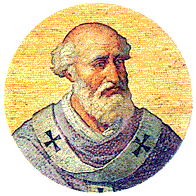
Pope Urban II, born as Odo of Châtillon or Otho de Lagery around 1042 in Châtillon-sur-Marne, France, is one of the most influential figures in medieval history, known primarily for initiating the First Crusade. His papacy marked a pivotal moment in the history of the Catholic Church and the broader Christian world. This article delves into the life, age, fame, and significant highlights of Pope Urban II’s career, offering detailed insights into his contributions to the Church and the historical context that shaped his decisions.
Early Life and Religious Formation
Odo of Châtillon was born into a noble family, although the exact details of his lineage are somewhat obscured by time. His early education was at the cathedral school in Reims, where he studied under Bruno of Cologne, the future founder of the Carthusian Order. This education laid the foundation for Odo’s deep theological knowledge and commitment to Church reform, which would later define his papacy.
Around 1070, Odo became the Archdeacon of Reims, a position that allowed him to develop a reputation for piety and administrative skill. However, his yearning for a more ascetic and spiritually rigorous life led him to join the Abbey of Cluny, one of the most important centers of the monastic reform movement in Europe. At Cluny, Odo became closely associated with the movement to reform the Church, emphasizing clerical celibacy, the eradication of simony (the buying and selling of ecclesiastical offices), and the liberation of the Church from secular influence.
Rise to Prominence: Bishop of Ostia
Odo’s reputation as a reformer caught the attention of Pope Gregory VII, one of the most significant figures in the history of the medieval Church. Gregory VII, known for his assertive efforts to reform the Church and strengthen the papacy, appointed Odo as the Bishop of Ostia in 1080. This role placed Odo in the inner circle of the papal court and solidified his position as a key advisor to the pope.
As Bishop of Ostia, Odo played a crucial role in supporting Gregory VII’s reforms, particularly in the ongoing Investiture Controversy—a conflict between the papacy and secular rulers, notably the Holy Roman Emperor, over the appointment of bishops. This controversy was a central issue of the time, as it represented a struggle for control between the Church and secular authorities.
Election as Pope Urban II
Following the death of Pope Gregory VII in 1085, the papal throne was briefly occupied by Pope Victor III, who passed away in 1087. The Church found itself in a period of instability, still grappling with the anti-pope Clement III, who had been installed by the Holy Roman Emperor Henry IV in opposition to the reformist popes. In this turbulent environment, Odo was elected pope in March 1088, taking the name Urban II, likely in honor of the martyred Pope Urban I.
Urban II’s election was not without challenges. He inherited a divided Church, with the anti-pope Clement III still holding significant influence in Rome. Moreover, the papal reform movement faced opposition from various secular rulers who were resistant to the Church’s increasing independence and authority.
Early Papacy: Challenges and Reforms
Urban II’s early years as pope were marked by efforts to consolidate his power and continue the reformist agenda of his predecessors. One of his first moves was to seek the support of the Normans in southern Italy, a powerful and relatively new force in European politics. By aligning with the Normans, Urban II sought to secure his position against both the anti-pope Clement III and the Holy Roman Emperor.
In the broader context of Church reform, Urban II was committed to the Cluniac ideals that had shaped his early monastic life. He continued to enforce clerical celibacy and sought to end the practice of simony. Additionally, he emphasized the “Truce of God,” a Church decree that sought to limit the days on which Christians could engage in warfare, particularly during sacred times such as Lent and Advent.
One of Urban II’s significant challenges was the ongoing schism with the Eastern Orthodox Church, which had been formally divided from the Roman Catholic Church since 1054. While his predecessors had made little progress in healing this rift, Urban II sought to improve relations with the Byzantine Empire, which was under increasing threat from Muslim forces.
The First Crusade: A Defining Moment
Pope Urban II’s most famous and consequential act was the initiation of the First Crusade. The catalyst for this monumental event was a plea for help from Byzantine Emperor Alexios I Komnenos, who sought military assistance against the advancing Seljuk Turks, who had captured much of Anatolia, including the holy city of Jerusalem.
In November 1095, Urban II convened the Council of Clermont in France, where he delivered a stirring sermon that called upon the Christian faithful to take up arms and reclaim the Holy Land from Muslim control. Urban framed the Crusade as a holy mission, promising remission of sins for those who participated. His call resonated deeply with the medieval Christian world, sparking a wave of enthusiasm that transcended national and class boundaries.
The First Crusade was launched in 1096, with thousands of knights, nobles, and ordinary people embarking on the perilous journey to the Holy Land. The Crusade culminated in the capture of Jerusalem in 1099, a victory that was hailed as a divine triumph in Christendom. However, Urban II did not live to see this success; he died on July 29, 1099, just two weeks after Jerusalem was taken.
The Crusades: Legacy and Controversy
The First Crusade marked a turning point in medieval history, with profound and lasting consequences for both the Christian and Muslim worlds. For the Church, it represented a significant expansion of papal authority, as the pope had successfully mobilized a pan-European military campaign. It also solidified the concept of holy war in Christian theology, a notion that would have far-reaching implications for centuries to come.
However, the Crusades also had darker aspects. The violence and brutality that accompanied the campaigns, particularly during the siege of Jerusalem, where both Muslim and Jewish inhabitants were massacred, have left a controversial legacy. Moreover, the Crusades did not ultimately achieve their long-term goals; the Holy Land remained a contested region, and subsequent Crusades were less successful and often plagued by internal conflict and mismanagement.
Ecclesiastical Reforms and Church Governance
Beyond the Crusades, Urban II’s papacy was marked by significant ecclesiastical reforms that aimed to strengthen the Church’s internal governance and its relationship with secular rulers. One of his key initiatives was the reorganization of the Church’s administrative structure, including the establishment of the Roman Curia as the central governing body of the Catholic Church. This move was part of a broader effort to professionalize the Church’s bureaucracy and ensure greater consistency in the application of canon law.
Urban II also worked to consolidate the Church’s authority over newly reconquered territories, particularly in Spain and Sicily, where Christian forces had made significant gains against Muslim rulers. In these regions, Urban sought to reestablish ecclesiastical structures and ensure that the local churches were aligned with Roman practices and doctrines.
The pope’s efforts to centralize Church authority were not without resistance. In some regions, particularly in Germany and Italy, local rulers and bishops were reluctant to cede power to the papacy. Urban II’s policies often brought him into conflict with secular authorities, but his diplomatic skills and ability to build alliances allowed him to navigate these challenges effectively.
Death and Posthumous Recognition
Pope Urban II died on July 29, 1099, in Rome, just days after the news of the capture of Jerusalem reached Europe. He was buried in St. Peter’s Basilica, and his legacy as the pope who launched the First Crusade was quickly cemented in the annals of history.
In 1881, Pope Leo XIII beatified Urban II, recognizing his contributions to the Church and his role in the Crusades. Although he has never been canonized as a saint, Urban II’s impact on the medieval Church and European history is undeniable.
Historical Context and Influence
Pope Urban II’s life and papacy must be understood within the broader context of the 11th century, a period of significant upheaval and transformation in Europe. The Church was in the midst of the Gregorian Reforms, which sought to address corruption and secular influence within its ranks. At the same time, Europe was experiencing significant political and social changes, with the rise of powerful monarchies and the expansion of feudalism.
Urban II’s ability to navigate these complex dynamics and assert the Church’s authority was a testament to his skill as a leader and diplomat. His initiation of the First Crusade was not only a religious act but also a strategic one, aimed at strengthening the Church’s influence both within Europe and in the broader Mediterranean world.
Conclusion
Pope Urban II’s legacy is one of both profound influence and considerable controversy. His decision to launch the First Crusade had far-reaching consequences, shaping the course of European and Middle Eastern history for centuries. While his actions were motivated by a desire to defend and expand Christendom, they also set the stage for conflicts that would continue for generations.
Urban II’s contributions to Church reform and governance were equally significant. His efforts to centralize and strengthen the Church’s authority helped lay the groundwork for the papacy’s increasing power in the medieval world. However, these actions also sparked resistance and conflict, highlighting the complexities of balancing spiritual leadership with political power.
As we reflect on Pope Urban II’s life and career, it is clear that he was a figure of immense importance in medieval history. His legacy, though mixed, remains a powerful reminder of the challenges and responsibilities of religious leadership in a time of great change and uncertainty.


