
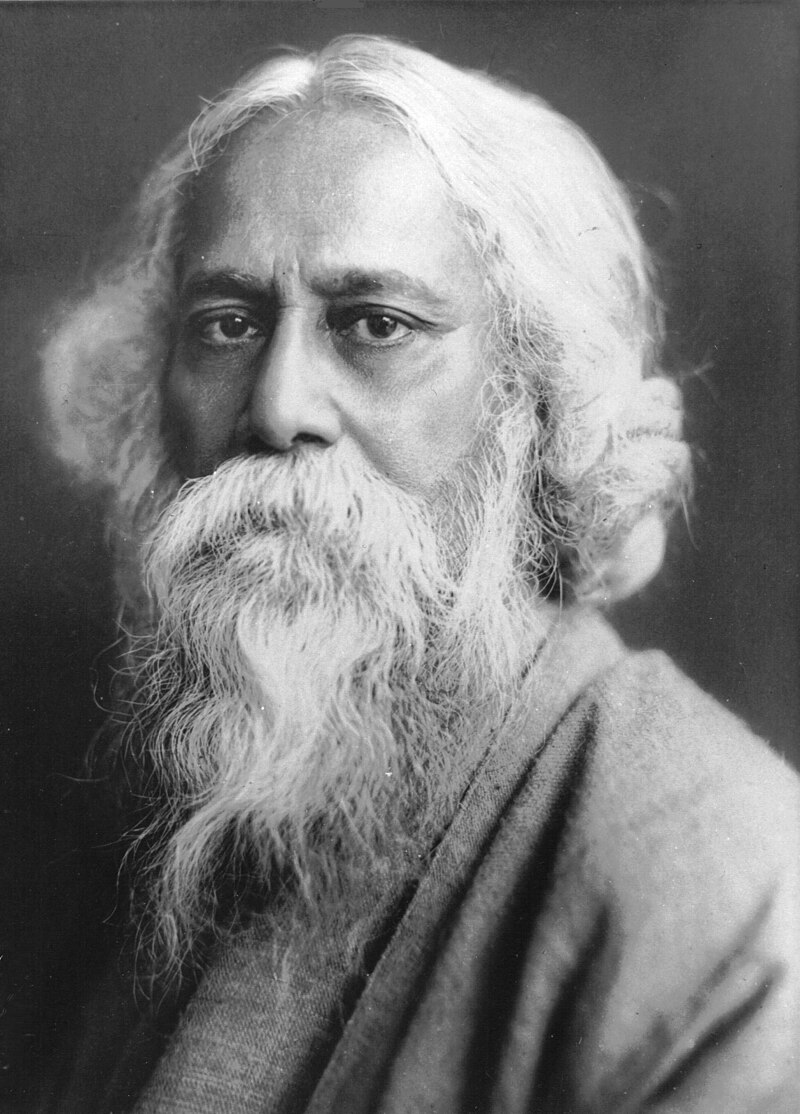
Rabindranath Tagore, an iconic figure in the realms of literature, music, and art, is a name synonymous with the rich cultural heritage of India. Born on May 7, 1861, in Calcutta, India, Tagore emerged as a towering personality whose influence transcended geographical boundaries. His multifaceted genius left an indelible mark on the world, earning him the title “Gurudev,” meaning “Revered Teacher.” This article delves into the life, achievements, and lasting legacy of Rabindranath Tagore, exploring his journey from a young prodigy to a globally renowned intellectual and artist.
Early Life and Education
Rabindranath Tagore was born into a noble and affluent family that was deeply rooted in cultural and spiritual traditions. His father, Debendranath Tagore, was a prominent reformer and mystic, which provided a conducive environment for Rabindranath’s early education. He began his studies at home, learning Bengali and English, and was exposed to the works of Bengali poets at a young age. By the time he was eight, Tagore was already composing his first poems, signaling the onset of a prodigious literary career.
At the age of 16, Tagore published his first substantial poems under the pseudonym Bhanusimha. His early works were heavily influenced by the literary and cultural environment in which he was raised, reflecting a deep connection with the natural and spiritual world.
Artistic Prowess and Philosophical Vision
Tagore’s creativity was not confined to poetry alone; his artistic endeavors extended to music, dance, and painting. He composed over 2,000 songs, many of which are still revered in Bengal and beyond. His music, known as “Rabindra Sangeet,” is celebrated for its lyrical beauty and deep philosophical undertones. Tagore’s interest in painting blossomed later in life, and his artworks were exhibited in various parts of the world, further establishing his versatility as an artist.
His philosophical outlook was deeply influenced by his spiritual upbringing and the ancient Indian texts, particularly the Upanishads. Tagore’s philosophy revolved around the concept of a harmonious existence, where the individual soul is in constant communion with the universal spirit. This is evident in his seminal work “Sadhana,” where he articulated his vision of life and spirituality, drawing upon his vast knowledge of Indian and Western thought.
A Global Influence: Travels and Cultural Integration
In 1877, Tagore was sent to the United Kingdom by his father to study law, a common path for many young men of his social standing. However, his stay in England exposed him to the richness of Western literature and culture, which profoundly influenced his worldview. Despite his appreciation for Western culture, Tagore remained deeply rooted in his Indian heritage, striving to integrate the best of both worlds.
Tagore’s extensive travels between the East and the West were not just physical journeys but intellectual and cultural exchanges. He sought to bridge the gap between different cultures, advocating for a world where diverse traditions could coexist and enrich one another. This vision was exemplified by his efforts to establish Santiniketan, a school near Calcutta, where students were encouraged to learn in harmony with nature, blending traditional Indian education with modern pedagogical methods.
Literary Achievements and the Nobel Prize
Rabindranath Tagore’s literary contributions are vast and varied. He wrote novels, short stories, plays, and essays, but it is his poetry that earned him international acclaim. His collection of poems, “Gitanjali” (Song Offerings), published in 1912, is considered a masterpiece of modern literature. The English translation of “Gitanjali” brought Tagore global recognition, and in 1913, he became the first non-European to be awarded the Nobel Prize in Literature. The Nobel Committee recognized his profound sensitivity, freshness, and beauty in his verses, which made a significant impact on Western literature.
Tagore’s Nobel Prize was not just a personal achievement but a moment of pride for India, which was still under British colonial rule. It symbolized the global recognition of Indian art and culture, paving the way for future generations of Indian writers and artists.
A Complex Relationship with Nationalism
While Tagore is often celebrated as a national icon in India, his views on nationalism were complex and, at times, controversial. Unlike his contemporary Mahatma Gandhi, who led the Indian independence movement through non-violent civil disobedience, Tagore believed in a more inclusive and reconciliatory approach. He envisioned an India where different cultures and communities could coexist in harmony, rather than being divided by rigid nationalistic boundaries.
Tagore’s perspective on nationalism was shaped by his global experiences and his belief in the unity of all humanity. He was critical of the aggressive nationalism that he saw as a source of conflict and division, not just in India but around the world. His thoughts on nationalism are eloquently expressed in his essay “Nationalism,” where he warned against the dangers of excessive national pride.
The Legacy of Santiniketan and Visva-Bharati University
One of Tagore’s most enduring contributions to Indian society was the establishment of Santiniketan, which later became Visva-Bharati University. Founded in 1901, Santiniketan was envisioned as a place of learning where students could grow in an environment free from the rigid structures of conventional education. The school emphasized a holistic approach to education, where students were encouraged to explore their creative potential and connect with nature.
Visva-Bharati, which means “India in the World,” was established as a university in 1921 and became a hub for cultural and intellectual exchange. Tagore envisioned it as a place where scholars and artists from around the world could come together to share knowledge and ideas. Today, Visva-Bharati remains a prestigious institution, carrying forward Tagore’s vision of a global, interconnected education system.
Tagore’s Final Years and Lasting Impact
Rabindranath Tagore continued to write and create until his last days. He passed away on August 7, 1941, at the age of 80, leaving behind a legacy that continues to inspire millions. His works have been translated into numerous languages, and his influence can be seen in various fields, from literature and music to education and philosophy.
Tagore’s legacy is not just confined to India; he is a global figure whose ideas resonate with people across cultures. His advocacy for universal humanism, cultural integration, and the harmonious coexistence of diverse traditions makes him a timeless figure whose relevance endures even in the modern world.
Conclusion
Rabindranath Tagore was more than just a poet or a writer; he was a visionary who sought to create a world where art, culture, and spirituality could transcend boundaries and bring people together. His life and work are a testament to the power of creativity and the enduring spirit of humanism. As we reflect on his contributions, it is clear that Tagore’s influence will continue to be felt for generations to come, both in India and around the world.


