
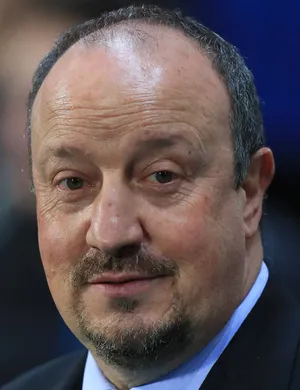
Rafael Benitez, also known simply as Rafa Benitez, is a renowned figure in the world of football. Born on April 16, 1960, in Madrid, Spain, his journey from a young player to an esteemed coach is filled with remarkable achievements and intriguing moments. This article delves into his age, rise to fame, and significant life highlights, providing detailed insights and historical context.
Early Life and Beginnings
Rafa Benitez was born into a modest family in Madrid. From an early age, he exhibited a keen interest in football, which led him to join the youth academy of Real Madrid, one of the most prestigious football clubs in the world. Despite showing promise, Benitez never made it to the first team and decided to shift his focus from playing to coaching, a decision that would shape his future.
Education and Transition to Coaching
Benitez’s transition from a player to a coach was marked by his dedication to education. He pursued a degree in Physical Education from the Polytechnic University of Madrid, graduating in 1982 with top honors. This academic background laid a strong foundation for his coaching career, providing him with the necessary knowledge and skills to excel in this demanding field.
Early Coaching Career
Benitez began his coaching career with the youth teams of Real Madrid, mirroring his early playing days. His first significant opportunity came in 1995 when he was appointed as the head coach of Real Valladolid in Spain’s top division. Under his guidance, Valladolid achieved a stable position in the league, demonstrating Benitez’s tactical acumen and leadership abilities.
The following years saw Benitez taking on roles at Osasuna and Extremadura, where he achieved a historic promotion to the top division with the latter. His early career was characterized by his ability to improve teams’ performances and achieve notable results despite limited resources.
Rise to Prominence at Valencia
Benitez’s breakthrough came during his tenure at Valencia CF, starting in 2001. In his first season, he led Valencia to win the Spanish La Liga title, breaking the dominance of Real Madrid and Barcelona. This achievement marked the beginning of Benitez’s rise to international fame.
In 2004, Benitez added another La Liga title and a UEFA Cup (now Europa League) to his accomplishments with Valencia. His tactical brilliance, particularly his emphasis on a solid and tenacious playing style, earned him recognition and respect across Europe.
Triumph at Liverpool
Benitez’s move to Liverpool in 2004 was a pivotal moment in his career. His first season saw a mixed performance in the Premier League, but it was in the UEFA Champions League where he made history. Liverpool’s journey to the 2005 Champions League final in Istanbul is considered one of the greatest comebacks in football history.
Trailing 3-0 at halftime against AC Milan, Benitez’s tactical changes and motivational prowess inspired Liverpool to level the score at 3-3 and ultimately win the match on penalties. This victory not only secured Liverpool’s fifth European Cup but also cemented Benitez’s reputation as a top-tier manager.
Continued Success and Challenges
Benitez continued to achieve success with Liverpool, winning the UEFA Super Cup in 2005 and reaching another Champions League final in 2007, though they were defeated by AC Milan this time. His tenure at Liverpool also saw the acquisition of star players like Fernando Torres, which helped the club remain competitive in both domestic and European competitions.
Despite his successes, Benitez faced challenges, including internal conflicts and fluctuating league performances. In 2010, after six years and several trophies, Benitez and Liverpool parted ways by mutual consent.
Stints at Inter Milan and Chelsea
Following his departure from Liverpool, Benitez joined Inter Milan, succeeding José Mourinho. Although he led Inter to victory in the FIFA Club World Cup, his tenure was short-lived due to internal disagreements and mixed results in the league.
In 2012, Benitez took over as interim manager at Chelsea, where he faced a divided fanbase. Despite this, he managed to secure the UEFA Europa League title, adding another European trophy to his collection.
Return to Spain and Newcastle United
In 2013, Benitez returned to Spain to manage Napoli, succeeding Walter Mazzarri. He enjoyed a successful spell, winning the Coppa Italia and the Supercoppa Italiana. His strategic approach and ability to develop young talent were evident throughout his time in Italy.
In 2015, Benitez was appointed as the head coach of Real Madrid. However, his tenure was short-lived, and he was dismissed in early 2016. Shortly after, he took on a new challenge with Newcastle United in the English Premier League. Despite inheriting a struggling team, Benitez managed to stabilize the club and led them to promotion back to the Premier League.
Recent Years and Legacy
In recent years, Benitez has continued to demonstrate his tactical expertise and leadership. His ability to adapt to different leagues and challenges has made him one of the most respected managers in football. His career is marked by significant achievements, including multiple league titles, European trophies, and historic victories.
Conclusion
Rafael Benitez’s journey from a young football enthusiast in Madrid to a globally recognized football manager is a testament to his dedication, intelligence, and tactical brilliance. His career highlights include historic victories, major trophies, and the ability to inspire and lead teams to success. Benitez’s legacy in football is secure, and his story serves as an inspiration to aspiring coaches and football fans worldwide.


