
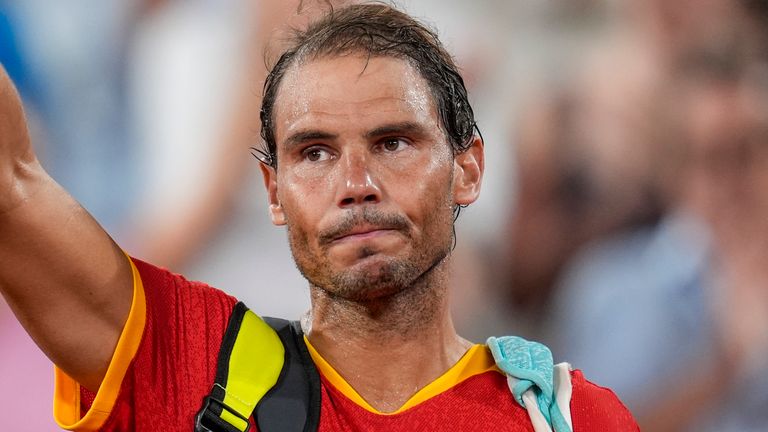
Rafael Nadal Parera, born on June 3, 1986, in Manacor, Mallorca, Spain, is not just a tennis player; he is a living legend whose name has become synonymous with grit, determination, and unparalleled success on the tennis court. Known as “Rafa” to his fans, Nadal’s journey from a young prodigy to one of the greatest athletes in the history of sports is a story of relentless pursuit of excellence, overcoming injuries, and rewriting the record books.
Early Life and Tennis Beginnings
Rafael Nadal was born into a close-knit family with a strong passion for sports. His father, Sebastien Nadal, was a successful businessman, while his mother, Ana Maria Parera, managed the household. Nadal’s introduction to tennis came at a very young age, thanks to his uncle, Toni Nadal, who recognized his nephew’s potential and began coaching him when Rafael was just five years old.
Growing up in a large family home in Manacor, which housed his grandparents, parents, uncle, and cousins, Nadal was surrounded by support. His home environment, coupled with the guidance of his uncle Toni, played a pivotal role in shaping his disciplined approach to the game. Despite his early start, Nadal’s rise to tennis stardom was not an overnight success but the result of years of dedication, hard work, and an unwavering focus on his goals.
Early Career and Breakthrough
Nadal’s professional career began at the tender age of 14 when he made his debut in satellite tournaments. His talent quickly became evident, and by the age of 15, Nadal had already secured his first ATP match win in April 2002, becoming the ninth player under the age of 16 to achieve such a feat during the Open Era.
In 2003, at just 16 years old, Nadal broke into the top 100 of the ATP rankings, signaling the arrival of a new tennis prodigy. His first significant breakthrough came at Wimbledon in 2003, where he became the youngest male player to reach the third round since Boris Becker in 1984. This performance established Nadal as a rising star in the tennis world, setting the stage for what would become one of the most storied careers in the sport’s history.
Rise to Prominence and Rivalry with Roger Federer
The year 2005 marked a turning point in Nadal’s career. He won 11 titles, including his first Grand Slam at the French Open, where he defeated Mariano Puerta in the final. His victory at Roland Garros was the beginning of his dominance on clay, a surface where he would go on to become virtually unbeatable. Nadal’s relentless style of play, characterized by his powerful topspin forehand, exceptional footwork, and never-say-die attitude, made him a formidable opponent, especially on clay courts.
One of the defining aspects of Nadal’s career has been his rivalry with Swiss tennis legend Roger Federer. Their matches are considered some of the greatest in tennis history. The rivalry began in earnest in 2004 when Nadal defeated Federer in straight sets at the Miami Open. This victory marked the start of a series of epic battles between the two, with Nadal often emerging victorious on clay, while Federer dominated on grass and hard courts.
In 2008, their rivalry reached its peak at the Wimbledon final, widely regarded as one of the greatest tennis matches ever played. Nadal defeated Federer in a grueling five-set match that lasted nearly five hours, ending Federer’s five-year reign at Wimbledon and securing his place as the world’s best player.
Dominance on Clay and Career Achievements
Nadal’s prowess on clay courts is unmatched in the history of tennis. Often referred to as the “King of Clay,” Nadal has won the French Open an astounding 14 times, more than any other player in history. His dominance on this surface is so complete that many consider him the greatest clay-court player of all time. Nadal’s ability to maintain his physical and mental toughness throughout long matches, coupled with his exceptional skill set, has made him virtually unbeatable on clay.
In addition to his success at Roland Garros, Nadal has won a total of 22 Grand Slam singles titles, placing him among the top players in tennis history. His achievements extend beyond clay, with multiple titles at Wimbledon, the Australian Open, and the US Open. Nadal’s versatility and adaptability on different surfaces are a testament to his all-around excellence as a tennis player.
Injuries and Comebacks
Nadal’s career has been marred by injuries, which have threatened to derail his success on numerous occasions. His physical style of play, which relies heavily on speed, endurance, and explosive movements, has taken a toll on his body, leading to knee, wrist, and back injuries throughout his career.
Despite these setbacks, Nadal has demonstrated an extraordinary ability to recover and return to top form. His resilience in the face of adversity is one of the defining characteristics of his career. Each time he has been written off due to injury, Nadal has made a triumphant return, often reclaiming his position at the top of the rankings and adding to his already impressive list of titles.
One of the most remarkable comebacks in Nadal’s career occurred in 2013 when he returned from a serious knee injury to win the French Open and the US Open, finishing the year as the world No. 1. His ability to overcome physical challenges and continue competing at the highest level is a testament to his determination and love for the sport.
Olympic Success and Further Milestones
In addition to his Grand Slam victories, Nadal has also enjoyed success on the Olympic stage. He won the gold medal in singles at the 2008 Beijing Olympics and added a gold medal in doubles at the 2016 Rio Olympics, further cementing his legacy as one of the greatest tennis players of all time.
Nadal’s Olympic achievements, combined with his success on the ATP Tour, have made him one of the most decorated athletes in tennis history. His career has been defined by his ability to consistently perform at the highest level, regardless of the competition or the surface.
Legacy and Impact on Tennis
Rafael Nadal’s impact on tennis extends far beyond his titles and records. He has inspired a generation of tennis players with his work ethic, sportsmanship, and humility. Nadal’s approach to the game, characterized by his intense focus, respect for his opponents, and dedication to continuous improvement, has made him a role model for aspiring athletes around the world.
Off the court, Nadal is known for his philanthropy and commitment to giving back to the community. He established the Rafa Nadal Foundation in 2008, which focuses on education and sports initiatives for underprivileged children. Through his foundation, Nadal has helped provide opportunities for young people to pursue their dreams and develop the skills needed to succeed in life.
Nadal’s influence on the game of tennis is evident in the way he has pushed the boundaries of what is possible on the court. His rivalry with Federer and later with Novak Djokovic has elevated the level of competition in men’s tennis, creating an era that many consider the greatest in the sport’s history. Nadal’s presence on the tour has brought excitement, drama, and a sense of history to every match he plays.
The Final Chapters of Nadal’s Career
As Nadal enters the later stages of his career, questions about his longevity and future in the sport naturally arise. However, Nadal has shown time and again that he is capable of defying the odds and continuing to compete at the highest level. His 2022 Australian Open victory, where he won his 21st Grand Slam title after coming back from two sets down against Daniil Medvedev, is a testament to his enduring skill and competitive spirit.
Nadal’s 2022 French Open victory further solidified his status as the greatest clay-court player of all time, bringing his total Grand Slam count to 22. As of 2024, Nadal’s participation in the Olympics in Paris, on the very courts where he has enjoyed so much success, underscores his enduring passion for the game.
Conclusion
Rafael Nadal’s journey from a young boy with a dream to a global tennis icon is a story of perseverance, dedication, and unparalleled success. His achievements on the court, combined with his character and sportsmanship, have made him one of the most beloved and respected figures in sports.
As Nadal continues to compete, his legacy is already secure. He has left an indelible mark on the world of tennis, inspiring countless individuals with his determination and love for the game. Whether he is adding to his record-breaking tally of Grand Slam titles or mentoring the next generation of players, Rafael Nadal will be remembered as one of the greatest athletes in the history of sports.


