
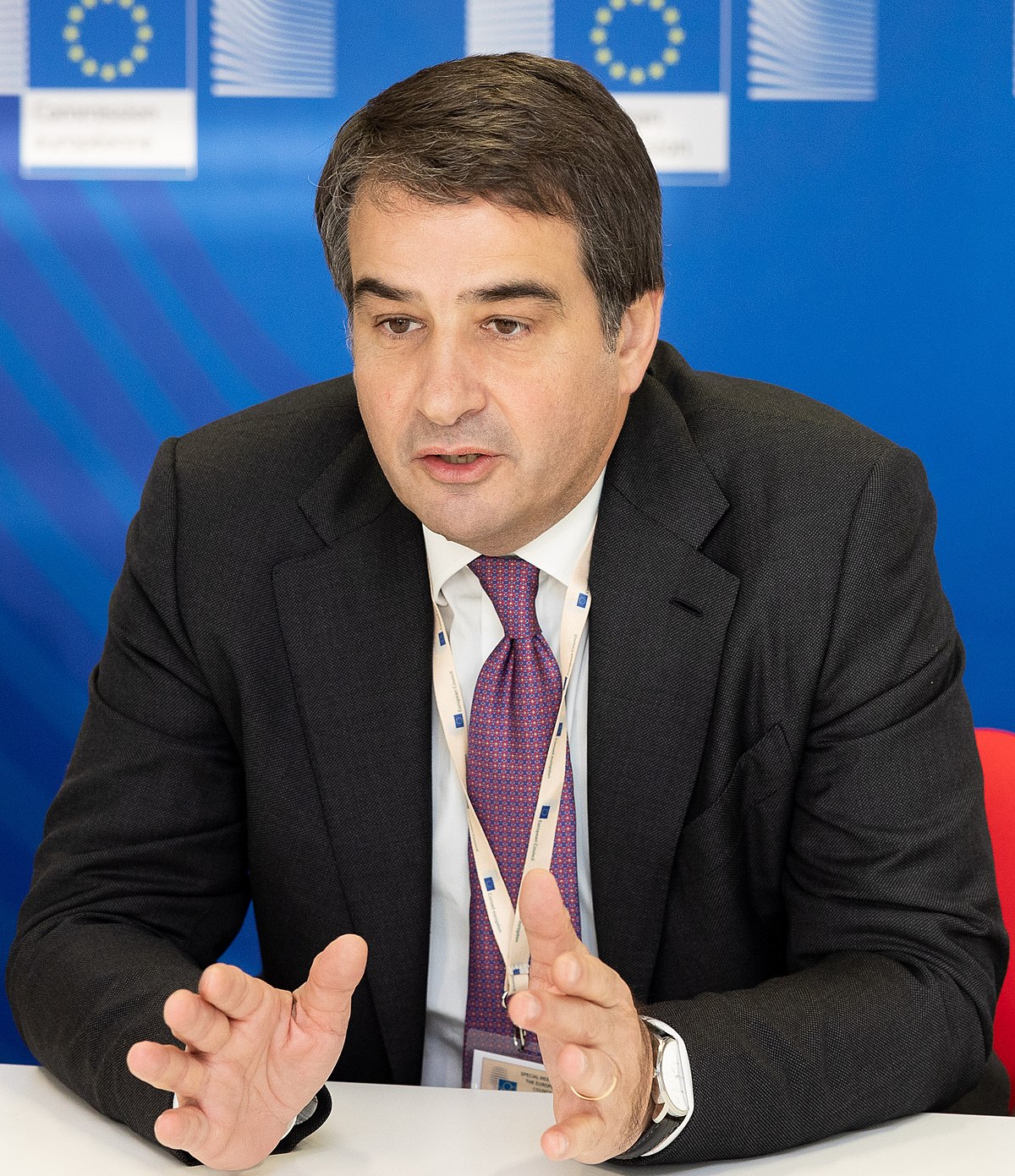
Raffaele Fitto is a prominent figure in Italian politics, particularly known for his influence within the center-right coalition. Born on August 28, 1969, in Maglie, a town in the Salento region of Puglia, Fitto has spent his career navigating the complex and often tumultuous landscape of Italian politics. From his early days in local politics to his rise as a national and European political leader, Fitto’s journey is a story of resilience, adaptation, and a deep commitment to his political ideals.
Early Life and Political Beginnings
Raffaele Fitto was born into a family deeply rooted in politics. His father, Salvatore Fitto, was a well-known Christian Democrat who served as President of the Puglia region from 1985 to 1988. This environment of political engagement and public service profoundly influenced Raffaele from a young age. However, it was the tragic and untimely death of his father in a car accident in 1988 that catalyzed his own entry into politics. This event marked a turning point for the young Fitto, who, at the age of 19, decided to follow in his father’s footsteps.
Fitto completed his early education at a scientific high school, obtaining his diploma in 1987. Although his academic performance was not outstanding, his determination and commitment to his studies grew stronger as he matured. In 1994, he graduated from the University of Bari with a degree in law, earning a respectable grade of 108 out of 110. This academic achievement provided a solid foundation for his subsequent political career.
Entering Politics: From Local to Regional Leadership
Fitto’s political career began in earnest in the early 1990s, as Italy underwent significant political upheaval with the collapse of the First Republic and the rise of new political forces. He initially joined the Christian Democracy (Democrazia Cristiana) party, the same party his father had been a part of. However, as the party disbanded in the wake of corruption scandals, Fitto aligned himself with the newly formed Italian People’s Party (Partito Popolare Italiano).
In 1995, Fitto made his first significant political move by running for the Puglia Regional Council under the banner of the United Christian Democrats (Cristiani Democratici Uniti), a faction that had splintered from the People’s Party. His election to the regional council marked the beginning of his ascent in regional politics. Shortly thereafter, he was appointed Vice President of the Puglia region, serving under Salvatore Distaso, a leading figure in the center-right coalition.
As the 1990s came to a close, Fitto’s ambitions grew. He became increasingly disillusioned with the centrist orientation of his party and sought to align more closely with the emerging center-right coalition led by Silvio Berlusconi. This led him to break away from his original party and form a new political group, the Christian Democrats for Freedom (Cristiani Democratici per la Libertà), which explicitly supported the center-right coalition.
Rise to National Prominence: Governor of Puglia
Fitto’s political fortunes continued to rise at the turn of the millennium. In 1999, he was elected to the European Parliament as a member of Forza Italia, Berlusconi’s party. However, Fitto’s tenure as a European Parliamentarian was short-lived; he resigned in 2000 to run for the presidency of the Puglia region.
Running as the candidate of the center-right coalition, Fitto won the 2000 regional elections with 53.9% of the vote, defeating Giannicola Sinisi of the center-left coalition. At the age of 30, Fitto became the youngest president of a region in Italy, a remarkable achievement that underscored his growing influence in national politics.
Fitto’s tenure as Governor of Puglia was marked by several key initiatives, particularly in the areas of healthcare and economic development. He focused on modernizing the region’s healthcare infrastructure and improving its economic competitiveness. His leadership style, characterized by pragmatism and a focus on results, earned him a solid base of support within the region. However, his administration also faced criticism, particularly from political opponents, who accused him of prioritizing the interests of his political allies over the needs of the broader population.
In the 2005 regional elections, Fitto sought re-election but was narrowly defeated by Nichi Vendola, a left-wing candidate from the Democratic Party (Partito Democratico). The loss, by just 0.6% of the vote, was a significant setback for Fitto, but it did not diminish his standing within the national political landscape.
National Politics: Ministerial Roles and Conflicts
After his tenure as Governor of Puglia, Fitto transitioned to national politics. In the 2006 general elections, he was elected to the Italian Chamber of Deputies as a representative of Forza Italia. His role in the national parliament allowed him to expand his influence and gain experience in legislative matters. Two years later, in 2008, following the formation of The People of Freedom (Il Popolo della Libertà), a new political party led by Berlusconi, Fitto was re-elected to the Chamber of Deputies and appointed Minister for Regional Affairs and Local Autonomies in Berlusconi’s fourth government.
As Minister, Fitto was responsible for overseeing the relationship between the central government and Italy’s regional and local governments. This position was particularly significant during a time when Italy was grappling with economic challenges and debates over federalism. Fitto played a key role in implementing policies aimed at decentralizing power and increasing the autonomy of regional governments, in line with the center-right’s commitment to federalism.
However, Fitto’s time as Minister was not without controversy. He became embroiled in several disputes within the government, most notably over the so-called “Nazareno Pact,” an agreement between Berlusconi’s party and the Democratic Party led by Matteo Renzi. Fitto was a vocal critic of the pact, arguing that it compromised the principles of the center-right and risked diluting its identity. His opposition to the pact led to increasing tensions with Berlusconi and, ultimately, to a split with Forza Italia.
A New Political Path: From Direzione Italia to Fratelli d’Italia
In 2015, following his departure from Forza Italia, Fitto launched a new political movement called Direzione Italia. The movement aimed to represent a more traditional and conservative wing of the center-right, in contrast to what Fitto saw as the increasingly centrist orientation of Berlusconi’s party. Fitto positioned himself as a defender of conservative values and a critic of the political establishment, seeking to build a new political force that could challenge both the center-left and the moderate elements within the center-right.
Despite its initial promise, Direzione Italia struggled to gain significant traction as an independent political entity. In 2018, recognizing the challenges of maintaining a small party in Italy’s fragmented political landscape, Fitto merged Direzione Italia with Fratelli d’Italia, the right-wing party led by Giorgia Meloni. This move aligned Fitto with a broader nationalist and sovereigntist movement that was gaining momentum in Italy and across Europe.
Fitto’s decision to join forces with Meloni proved to be a strategic success. In the 2019 European elections, the newly aligned party performed well, securing a significant share of the vote. Fitto’s role within Fratelli d’Italia grew, and he became one of the leading figures in the party. In 2020, he was selected as the center-right’s candidate for the presidency of the Puglia region, challenging the incumbent Michele Emiliano of the Democratic Party. Although Fitto lost the election, his candidacy reinforced his standing as a key player in the center-right coalition.
Current Role and Future Prospects
Following the 2022 general elections, Raffaele Fitto was appointed Minister for European Affairs, Cohesion Policy, and the National Recovery and Resilience Plan (Pnrr) in the government led by Giorgia Meloni. In this role, Fitto is responsible for overseeing Italy’s relations with the European Union, particularly in the context of the Pnrr, which is a critical component of Italy’s post-pandemic recovery strategy.
Fitto’s current position places him at the heart of Italy’s efforts to navigate the challenges posed by the COVID-19 pandemic and the economic recovery that follows. His experience in both regional and national government, as well as his deep understanding of the European political landscape, make him a key figure in shaping Italy’s future.
Personal Life and Legacy
Beyond politics, Raffaele Fitto is known for his passion for motorcycles, a hobby he has enjoyed since his youth. His personal life has been shaped by the responsibilities he assumed at a young age following his father’s death. In 2005, Fitto married Adriana Panzera, and together they have three children: Totò, Gabriele, and Anna. His family has been a constant source of support throughout his career.
Fitto’s legacy in Italian politics is one of perseverance and adaptability. Despite facing numerous challenges and setbacks, he has remained a central figure in the center-right, constantly seeking to balance his conservative principles with the demands of political pragmatism. As he continues to navigate the complex world of Italian and European politics, Fitto’s influence is likely to endure, shaping the future of the center-right in Italy for years to come.


