
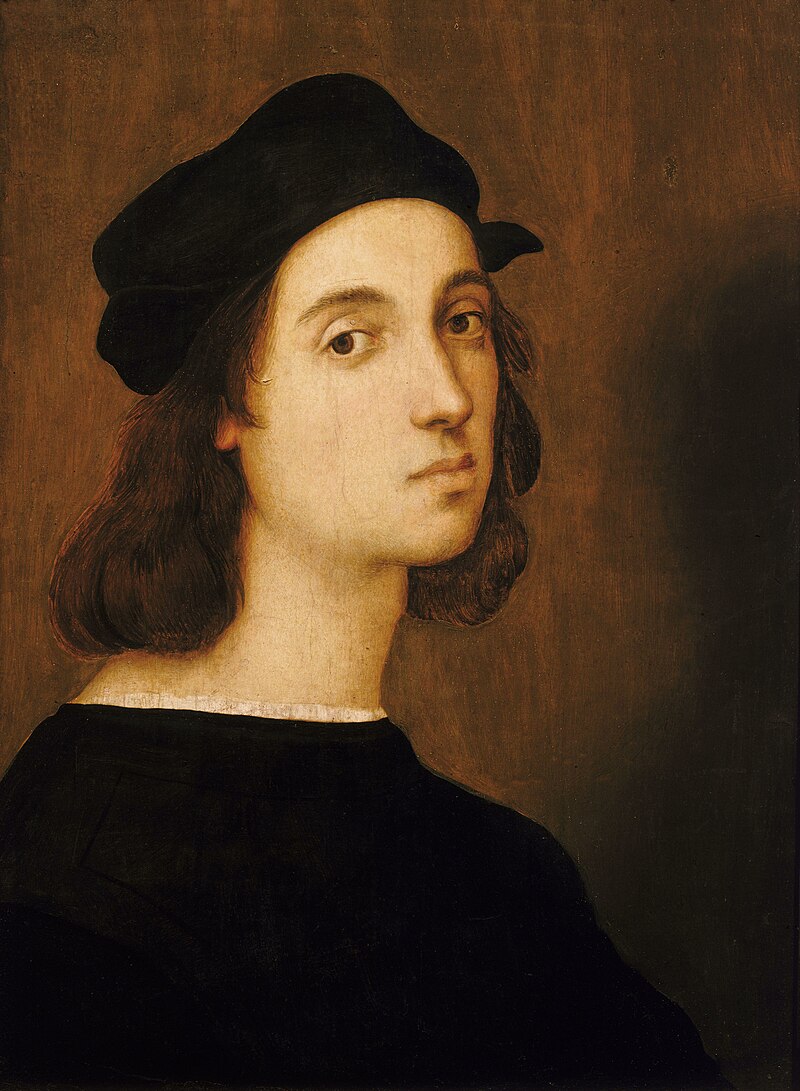
Raffaello Sanzio, often simply referred to as Raphael, is one of the most celebrated artists of the Italian Renaissance, renowned for his extraordinary contributions to painting and architecture. Born in Urbino in 1483, Raphael’s artistic legacy has endured for centuries, solidifying his place among the pantheon of great masters like Michelangelo and Leonardo da Vinci. His life, though tragically short, was marked by a prolific output of work that continues to influence the art world to this day.
Early Life and Artistic Formation
Raphael was born into an environment rich in artistic tradition. His father, Giovanni Santi, was a painter of modest repute, and it was under his guidance that Raphael began his early education in the arts. Urbino, at the time, was a hub of artistic activity, fostering a creative atmosphere that deeply influenced the young Raphael. This early exposure to the arts in Urbino laid the foundation for his later work, as he absorbed the local artistic styles and techniques that would shape his own.
As a young artist, Raphael was likely influenced by several prominent painters of the time, including Perugino and Pinturicchio. His early works, such as “The Knight’s Dream” and the now-lost “Incoronation of Saint Nicholas of Tolentino,” reflect the influence of these masters. However, even in these early pieces, Raphael’s unique style began to emerge. His ability to blend the techniques of his predecessors with his distinct approach to composition and color would soon set him apart in the art world.
The Florence Years: Artistic Maturation
In 1504, Raphael moved to Florence, a city that was at the heart of the Italian Renaissance. This period marked a significant evolution in his artistic style. Florence was home to many of the era’s greatest artists, including Leonardo da Vinci and Michelangelo, and Raphael eagerly studied their work. The influence of Leonardo is particularly evident in Raphael’s depictions of the Madonna and Child, such as in “La Belle Jardinière” and “Madonna del Cardellino.” These works demonstrate a profound understanding of human anatomy, emotion, and spatial composition, hallmarks of Leonardo’s influence.
While in Florence, Raphael’s reputation as a master painter grew rapidly. His compositions became more complex, his figures more dynamic, and his use of color more sophisticated. These developments are evident in works like “The Marriage of the Virgin,” where Raphael’s skill in creating a harmonious and balanced composition is on full display. This painting, with its intricate architectural background and masterful use of perspective, is often cited as a turning point in Raphael’s career, showcasing his growing confidence and technical prowess.
Rome: The Pinnacle of Success
Raphael’s move to Rome in 1508 marked the beginning of the most productive period of his career. Pope Julius II, recognizing Raphael’s extraordinary talent, commissioned him to decorate the private rooms of the Vatican, known as the “Stanze di Raffaello” or Raphael Rooms. These frescoes, including the renowned “School of Athens,” are considered some of Raphael’s greatest works. “The School of Athens,” in particular, is celebrated for its intricate composition, depicting a gathering of ancient philosophers and scientists, with Plato and Aristotle at the center. The painting is a masterpiece of balance and clarity, embodying the ideals of the Renaissance.
During his time in Rome, Raphael’s work extended beyond painting. After the death of the architect Bramante in 1514, Raphael was appointed as the chief architect of St. Peter’s Basilica, one of the most significant architectural projects of the time. His architectural style, much like his painting, was characterized by harmony and clarity, drawing heavily from the classical ideals of balance and proportion.
Raphael’s architectural contributions were not limited to St. Peter’s Basilica. He also designed the Chigi Chapel in Santa Maria del Popolo and worked on various other architectural projects throughout Rome. His ability to seamlessly integrate painting and architecture is a testament to his versatility and genius, further cementing his status as one of the Renaissance’s most influential figures.
Personal Life and Legacy
Despite his immense success, Raphael’s personal life was marked by both triumph and tragedy. He was well-known for his charm and good looks, which made him a favorite in the courts of Rome. However, his life was cut short when he died on April 6, 1520, at the age of 37. His death, believed to have been caused by a sudden illness, shocked the art world. Raphael was buried in the Pantheon in Rome, a fitting resting place for a man who had contributed so much to the city and to the world of art.
Raphael’s influence on art cannot be overstated. His mastery of composition, use of color, and ability to convey emotion in his work set new standards for future generations of artists. The clarity and harmony in his paintings made them models of perfection, and his influence extended well beyond his lifetime. Artists like Caravaggio and Rubens drew inspiration from Raphael’s work, and his techniques were studied and emulated by countless others.
Raphael’s Enduring Legacy in Modern Art
In the centuries following his death, Raphael’s work continued to inspire and influence the art world. During the Baroque period, artists like Caravaggio adopted Raphael’s attention to detail and his ability to capture the human experience in their work. The clarity and emotional depth of Raphael’s portraits, such as those of Pope Julius II and Leo X, set new standards for the genre, pushing artists to explore new ways of depicting the human psyche.
The Renaissance ideals of beauty and balance that Raphael so perfectly embodied continued to resonate throughout the art world, even as styles and movements evolved. His work became a touchstone for academic painters during the Neoclassical period, where artists sought to return to the clarity, order, and discipline that defined Raphael’s compositions.
In modern times, Raphael’s legacy persists as his works are studied and revered by art historians, students, and enthusiasts alike. The principles of composition, balance, and harmony that he mastered are foundational to the study of art and continue to inform contemporary artistic practice. Raphael’s ability to transcend the limitations of his medium and create works that speak to the human condition remains his greatest achievement, securing his place as one of the true masters of Western art.
The Historical Context of Raphael’s Art
Raphael’s work is deeply rooted in the historical context of the High Renaissance, a period characterized by a renewed interest in classical antiquity and a focus on humanism. This era saw a shift towards a more naturalistic and scientific approach to art, with artists striving to depict the world with greater accuracy and emotional depth. Raphael’s art reflects these ideals, particularly in his portrayal of human figures, where he combines idealized beauty with a deep sense of humanity.
The political and cultural climate of the time also played a significant role in shaping Raphael’s career. The patronage of the Catholic Church, particularly under the leadership of Popes Julius II and Leo X, provided Raphael with the resources and opportunities to undertake large-scale projects that would define his legacy. The Church’s desire to use art as a means of communicating its power and influence found a perfect vehicle in Raphael’s work, which seamlessly blended religious themes with the aesthetic ideals of the Renaissance.
Conclusion: Raphael’s Place in Art History
Raphael Sanzio’s life and work exemplify the ideals of the Renaissance—a period of extraordinary artistic achievement that forever changed the course of Western art. His ability to synthesize the lessons of his predecessors while forging his path set him apart as one of the great innovators of his time. Raphael’s work continues to be celebrated not only for its technical mastery but also for its enduring beauty and emotional resonance.
In the centuries since his death, Raphael’s influence has permeated every corner of the art world. His works are studied and admired by artists and scholars alike, and his legacy as one of the greatest artists of all time remains unchallenged. As we continue to explore and interpret his work, Raphael’s genius becomes ever more apparent, ensuring that his contributions to art will never be forgotten.


