
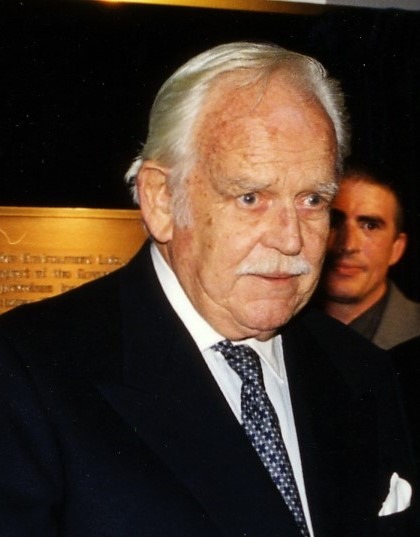
Prince Rainier III of Monaco, known formally as His Serene Highness (H.S.H.), is one of the most enduring figures in European royalty. His reign, which spanned over 50 years, was marked by significant modernization and development of the small yet affluent Principality of Monaco. Beyond his royal duties, Rainier is perhaps most famously known for his marriage to Hollywood actress Grace Kelly, a union that captured the world’s attention and solidified Monaco’s place in the global spotlight.
Early Life and Ascension to the Throne
Rainier Louis Henri Maxence Bertrand de Grimaldi was born on May 31, 1923, to Princess Charlotte, Duchess of Valentinois, and Prince Pierre of Monaco. His lineage is steeped in the history of Monaco’s ruling family, the Grimaldis, who have governed the principality since the 13th century. Rainier’s early life was one of privilege, but it was also one marked by the heavy expectations of royal duty.
Rainier’s path to the throne was secured when his mother, Princess Charlotte, renounced her succession rights in 1944. This pivotal decision made Rainier the direct heir to the throne, and he officially became Prince of Monaco on May 9, 1949, following the death of his grandfather, Prince Louis II. At just 25 years old, Rainier faced the immense responsibility of leading a small yet strategically important nation on the Mediterranean coast.
Modernizing Monaco: A Visionary Leader
One of the hallmarks of Prince Rainier III’s reign was his vision for modernizing Monaco. When Rainier ascended to the throne, Monaco was known primarily for its casino and as a tax haven, but Rainier envisioned a more diversified and robust economy. Under his leadership, Monaco underwent extensive development, transforming it from a quaint coastal town into a thriving international financial center and a hub of luxury tourism.
Rainier initiated numerous construction projects, including the reclamation of land from the sea to expand the principality’s limited territory. This expansion allowed for the development of new residential and commercial properties, attracting wealthy individuals and businesses to Monaco. Additionally, Rainier focused on enhancing Monaco’s cultural and sporting appeal. He was instrumental in promoting the Monaco Grand Prix, an annual Formula 1 race that became one of the most prestigious events in the world of motorsport.
His commitment to modernization did not come at the expense of Monaco’s traditions. Rainier maintained the principality’s unique identity, blending its rich history with modern advancements. His leadership ensured that Monaco remained a sovereign state, independent from its much larger neighbor, France, despite the pressures of the time.
The Fairy Tale Marriage: Grace Kelly and Rainier
Perhaps the most famous chapter of Prince Rainier’s life began in 1955 when he met American actress Grace Kelly at the Cannes Film Festival. Grace Kelly, a star of the silver screen known for her roles in films like Rear Window and To Catch a Thief, was the epitome of Hollywood glamour. Their meeting, orchestrated by the French magazine Paris Match, quickly blossomed into a whirlwind romance.
The couple announced their engagement in January 1956, and the world was captivated by the union of royalty and Hollywood. On April 18, 1956, Rainier and Grace were married in a lavish ceremony that was attended by celebrities, dignitaries, and royals from around the world. The wedding was broadcast live to millions of viewers, solidifying Monaco’s place in the global spotlight.
Grace Kelly’s transition from Hollywood star to Princess of Monaco was seamless. She embraced her new role with grace and elegance, becoming a beloved figure in Monaco and around the world. The couple had three children: Princess Caroline, born in 1957; Prince Albert, born in 1958; and Princess Stéphanie, born in 1965. Together, they were often referred to as the epitome of a fairy tale family.
Tragedy and Resilience
The fairy tale, however, was not without its tragic moments. On September 14, 1982, Princess Grace tragically died in a car accident on the winding roads of Monaco. Her death was a devastating blow to Rainier and the principality. Grace had not only been a beloved wife and mother but also a significant figure in Monaco’s cultural and social life. Her loss left a void that was felt not just in Monaco but around the world.
Rainier was deeply affected by Grace’s death, and he never remarried. He continued to rule Monaco with a focus on stability and continuity, ensuring that the principality remained prosperous and well-governed. Despite the personal grief, Rainier’s commitment to Monaco never wavered, and he continued to guide the principality through its many challenges.
In addition to Grace’s tragic passing, the Grimaldi family faced another devastating loss in 1990 when Princess Caroline’s husband, Stefano Casiraghi, died in a boating accident during a world offshore championship in Monte Carlo. This event further tested the resilience of the family, but Rainier’s steadfast leadership helped maintain the unity and strength of the Grimaldi family.
The Later Years and Legacy
As Rainier III entered his later years, his health began to decline. In March 2005, he was hospitalized with a severe lung infection, which was complicated by heart and kidney issues. Despite receiving the best medical care, Rainier’s condition worsened, and he passed away on April 6, 2005, at the age of 81. His death marked the end of an era for Monaco, as Rainier had been the principality’s leader for over five decades.
Rainier’s son, Prince Albert II, succeeded him as the Sovereign Prince of Monaco. Albert, who had been groomed for leadership under his father’s guidance, took on the mantle of leadership with a deep understanding of the responsibilities that came with it. He has continued his father’s legacy of modernization and environmental stewardship, while also focusing on issues such as climate change and sustainability.
Prince Rainier III’s legacy is one of transformation and stability. He took a small, relatively obscure principality and turned it into one of the most glamorous and financially stable places in the world. His leadership ensured that Monaco remained a sovereign state, respected on the international stage. Rainier’s vision and dedication to his country have left an indelible mark on Monaco, one that continues to influence the principality to this day.
The Historical Context and Influence of Rainier’s Reign
To fully appreciate Prince Rainier III’s impact on Monaco, it is important to understand the broader historical context in which he ruled. When Rainier ascended to the throne in 1949, Europe was still recovering from the devastation of World War II. The principality of Monaco, with its strategic location on the Mediterranean coast, was vulnerable to the political and economic shifts occurring across the continent.
Rainier’s foresight in modernizing Monaco’s infrastructure and economy was crucial in ensuring its survival and growth during this period. By attracting foreign investment and promoting tourism, Rainier positioned Monaco as a safe haven for the wealthy and a cultural hub. His ability to balance the demands of modernization with the preservation of Monaco’s traditions helped to solidify the principality’s identity in the post-war world.
Moreover, Rainier’s marriage to Grace Kelly played a significant role in boosting Monaco’s international profile. The union brought global attention to the small principality, making it a symbol of glamour and luxury. This newfound fame attracted tourists and investors alike, further bolstering Monaco’s economy.
Rainier’s influence extended beyond the borders of Monaco. His leadership style, characterized by a blend of pragmatism and tradition, served as a model for other small states seeking to maintain their sovereignty in a rapidly changing world. His ability to navigate the challenges of the 20th century while preserving Monaco’s independence is a testament to his political acumen and dedication to his people.
Conclusion
Prince Rainier III of Monaco was more than just a royal figurehead; he was a transformative leader whose vision and dedication reshaped the principality into a modern, prosperous, and internationally recognized state. His reign, marked by both triumph and tragedy, left an indelible legacy that continues to influence Monaco and the wider world.
Rainier’s ability to modernize Monaco while preserving its unique identity is a testament to his leadership and foresight. His marriage to Grace Kelly brought global attention to the principality, but it was Rainier’s steady hand and commitment to his country that ensured Monaco’s long-term success.
As we reflect on the life and legacy of Prince Rainier III, it is clear that his impact on Monaco and the world is profound. His story is one of resilience, vision, and a deep love for his country—qualities that continue to inspire leaders around the globe.


