
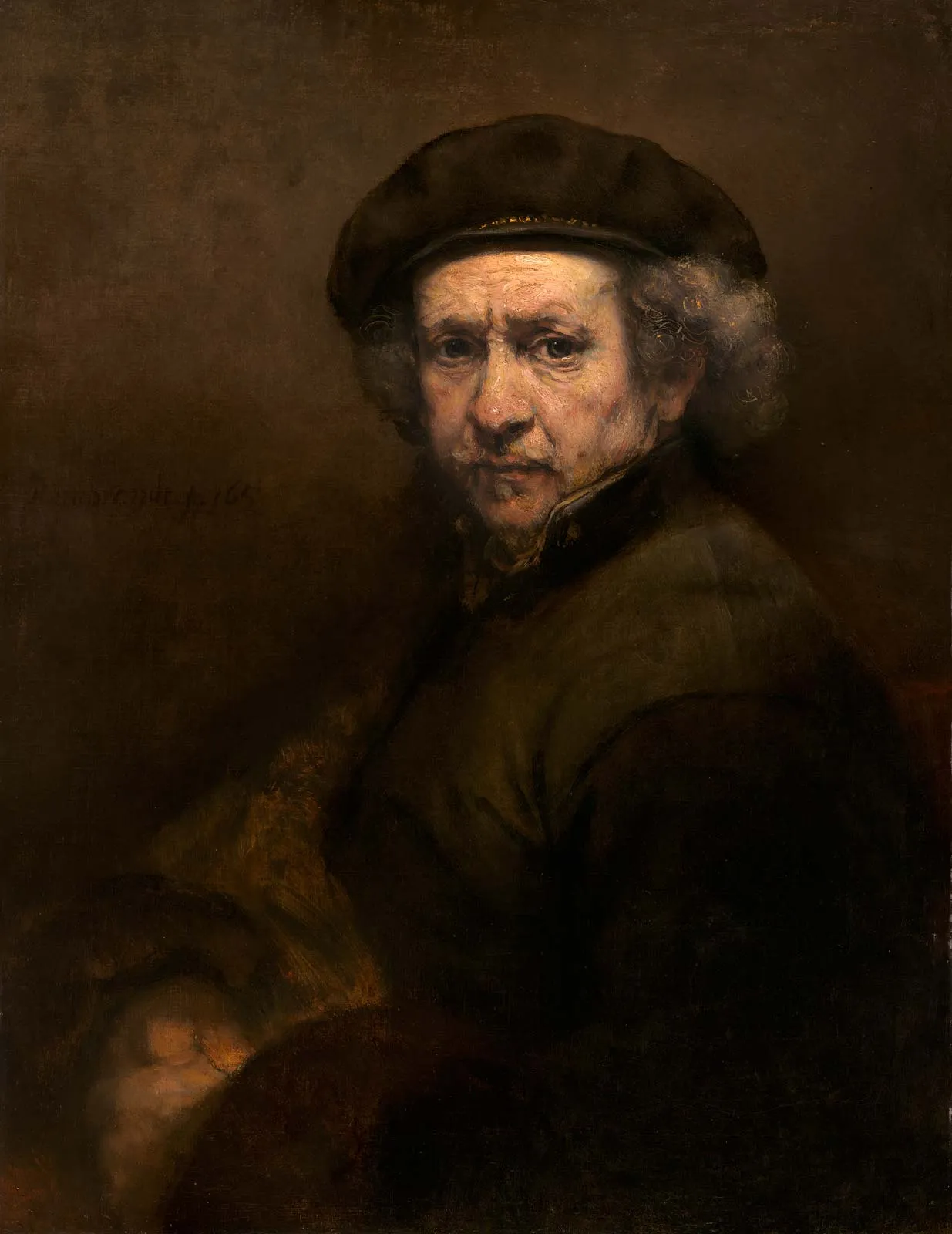
Rembrandt Harmenszoon van Rijn, born on July 15, 1606, in Leiden, Netherlands, is widely regarded as one of the greatest visual artists in history and the most important in Dutch art history. His name is synonymous with the Dutch Golden Age, a period of great wealth and cultural achievement in the Netherlands during the 17th century. Rembrandt’s work is celebrated for its innovative use of light and shadow, psychological depth, and detailed realism. This article explores the life, fame, and artistic highlights of Rembrandt, shedding light on the man behind the masterpieces.
Early Life and Artistic Beginnings
Rembrandt was born into a well-to-do family as the eighth of nine children. His father, a miller named Harmen Gerritszoon van Rijn, owned a windmill on the banks of the Rhine River, which is where the “van Rijn” part of the family name originates. His mother, Neeltgen Willemsdochter van Zuytbrouck, was a baker’s daughter. Despite his family’s relatively comfortable financial situation, Rembrandt’s parents aspired for him to achieve more than the trades and professions typical of their class.
At the age of 14, Rembrandt enrolled at the University of Leiden, one of the most prestigious universities in Europe at the time. However, it quickly became apparent that Rembrandt was more interested in art than academia. His parents recognized his talent and allowed him to leave university to pursue painting. He apprenticed first with a local artist, Jacob van Swanenburgh, who introduced him to the techniques of painting and the fundamentals of art. This apprenticeship laid the groundwork for Rembrandt’s future development as an artist.
In the early 1620s, Rembrandt moved to Amsterdam, where he studied under Pieter Lastman, a well-known history painter. Lastman’s influence on Rembrandt was profound, particularly in the areas of dramatic composition and the use of chiaroscuro (the contrast of light and dark to achieve a sense of volume in modeling three-dimensional objects and figures). Rembrandt would go on to refine these techniques, making them central to his artistic identity.
The Rise to Fame in Amsterdam
By 1631, Rembrandt had returned to Leiden, but he quickly decided to relocate permanently to Amsterdam, the economic and cultural hub of the Dutch Republic. This move marked the beginning of his meteoric rise to fame. Amsterdam’s affluent citizens were eager to have their portraits painted, and Rembrandt quickly established himself as the leading portrait artist of the city.
One of Rembrandt’s earliest masterpieces, The Anatomy Lesson of Dr. Nicolaes Tulp (1632), exemplifies his ability to capture complex psychological interactions and his mastery of light and shadow. The painting depicts Dr. Tulp demonstrating a dissection to a group of observers, a subject that combines scientific inquiry with dramatic tension. The work was a sensation and solidified Rembrandt’s reputation as a master of his craft.
Rembrandt’s success during this period was not limited to portraiture. He also produced a series of historical and biblical scenes that showcased his skill in capturing the emotional depth and human drama of these stories. Works such as The Blinding of Samson (1636) and The Night Watch (1642) highlight his ability to convey movement and emotion, drawing viewers into the narrative.
In 1634, Rembrandt married Saskia van Uylenburgh, the cousin of a wealthy art dealer. This marriage not only elevated Rembrandt’s social standing but also provided him with the financial security to pursue his art without constraint. The couple lived in a grand house in Amsterdam, filled with art and curiosities from around the world, reflecting the prosperous and cosmopolitan nature of the Dutch Golden Age.
Tragedy and Transformation
Despite his professional success, Rembrandt’s personal life was marked by tragedy. Saskia gave birth to four children, but only one, Titus, survived infancy. Saskia herself died in 1642, shortly after the birth of Titus, leaving Rembrandt devastated. The loss of his beloved wife had a profound impact on his work, leading him to explore darker, more introspective themes.
After Saskia’s death, Rembrandt’s life took a turn for the worse. His spending habits, combined with a decline in commissions, led to financial difficulties. He had to sell his house and many of his possessions to pay off debts, and in 1656, he declared bankruptcy. This period of financial hardship, however, did not diminish his creative output. In fact, some of Rembrandt’s most powerful and introspective works were created during these years.
One of the most significant works from this later period is The Jewish Bride (circa 1665-1669), a painting that captures the tender relationship between a bride and groom. The warmth and intimacy of the scene are enhanced by Rembrandt’s masterful use of light, which softly illuminates the figures against a dark background. The painting is a testament to Rembrandt’s enduring ability to convey the complexities of human emotion.
Later Years and Legacy
In his later years, Rembrandt’s work became increasingly introspective and experimental. He continued to produce portraits, self-portraits, and biblical scenes, but with a new focus on the inner life of his subjects. His self-portraits, in particular, are among the most remarkable in the history of art, providing a visual autobiography that spans his entire career. These works reveal Rembrandt’s unflinching examination of himself, capturing the aging process with a raw honesty that was unprecedented at the time.
Despite his financial troubles, Rembrandt continued to attract students and followers who were eager to learn from the master. He established a successful workshop in Amsterdam, where he taught many young artists who would go on to become important figures in their own right. Rembrandt’s influence on Dutch art was profound, and his techniques and approaches were emulated by generations of artists.
Rembrandt’s final years were marked by personal loss and continued financial difficulties. His son Titus, who had become his closest companion, died in 1668, leaving Rembrandt alone and deeply mournful. He died on October 4, 1669, in Amsterdam, at the age of 63. At the time of his death, Rembrandt was largely forgotten by the art world, his style having fallen out of fashion in favor of the more polished, classical approach of artists like Peter Paul Rubens. However, his legacy would soon be rediscovered and celebrated as one of the most significant contributions to Western art.
Artistic Legacy and Influence
Rembrandt’s contribution to art is immeasurable. His innovative use of light and shadow, known as chiaroscuro, revolutionized the way artists approached the depiction of space and volume. Rembrandt’s ability to create a sense of depth and realism through lighting became a hallmark of his style and influenced countless artists across Europe.
Moreover, Rembrandt’s psychological insight and empathy for his subjects set him apart from his contemporaries. His portraits, whether of wealthy patrons or humble workers, convey a deep humanity that transcends the specific circumstances of their creation. This universal quality has ensured that Rembrandt’s work remains relevant and admired centuries after his death.
In addition to his achievements as a painter, Rembrandt was also a prolific etcher and draftsman. His prints were highly sought after during his lifetime and continue to be prized by collectors and museums. Rembrandt’s etchings, with their intricate detail and expressive lines, expanded the possibilities of printmaking and helped to elevate the medium to the status of fine art.
Rembrandt’s influence can be seen in the work of later artists such as Francisco Goya, Eugène Delacroix, and Vincent van Gogh, who admired Rembrandt’s ability to capture the essence of his subjects. Van Gogh, in particular, regarded Rembrandt as one of his greatest inspirations, often speaking of the emotional power and honesty he saw in Rembrandt’s work.
Historical Context and Cultural Impact
Rembrandt’s life and career were deeply intertwined with the cultural and economic context of the Dutch Golden Age. The 17th century was a time of unprecedented wealth and prosperity in the Netherlands, driven by trade, colonization, and the rise of a wealthy merchant class. This economic boom led to a flourishing of the arts, as wealthy patrons sought to demonstrate their status and sophistication through the acquisition of fine art.
Amsterdam, where Rembrandt spent most of his career, was the epicenter of this cultural explosion. The city was home to a vibrant community of artists, writers, and intellectuals, and it attracted patrons from across Europe. Rembrandt’s success was, in part, due to his ability to navigate this complex social landscape, securing commissions from some of the most influential figures of the time.
However, the same economic forces that propelled Rembrandt to fame also contributed to his downfall. The Dutch economy experienced a series of downturns in the mid-17th century, leading to a decline in the market for luxury goods, including art. As a result, Rembrandt, like many artists of his time, struggled to maintain his financial stability. His bankruptcy in 1656 was a reflection of the broader economic challenges facing the Dutch Republic.
Despite these hardships, Rembrandt’s work continued to resonate with audiences, both in his own time and in the centuries that followed. His ability to capture the complexities of human emotion and experience, combined with his technical mastery, has ensured that his work remains a touchstone for artists and art lovers alike.
Conclusion: Rembrandt’s Enduring Legacy
Rembrandt Harmenszoon van Rijn’s life was marked by both extraordinary success and profound personal tragedy. His work, characterized by its innovative use of light and shadow, psychological depth, and mastery of technique, has secured his place as one of the greatest artists in history. Despite the challenges he faced, Rembrandt’s commitment to his craft never wavered, and his influence continues to be felt in the art world today.
Rembrandt’s ability to capture the essence of the human condition, in all its complexity and nuance, is what makes his work so enduring. Whether through his haunting self-portraits, his dramatic historical scenes, or his tender depictions of everyday life, Rembrandt offers us a window into the soul of humanity. His art invites us to see the world through his eyes, to experience the play of light and shadow, the drama of life and death, and the quiet beauty of the ordinary.
As we continue to study and appreciate Rembrandt’s work, we are reminded of the timeless power of art to move us, to challenge us, and to help us see the world in new ways. Rembrandt’s legacy is not just in the paintings and prints he left behind, but in the countless artists and art lovers he has inspired across the centuries. His work is a testament to the enduring power of creativity and the human spirit.
In the end, Rembrandt’s story is one of resilience, creativity, and an unwavering commitment to his vision. His life and work continue to inspire and captivate, reminding us of the enduring value of art in all its forms.


