
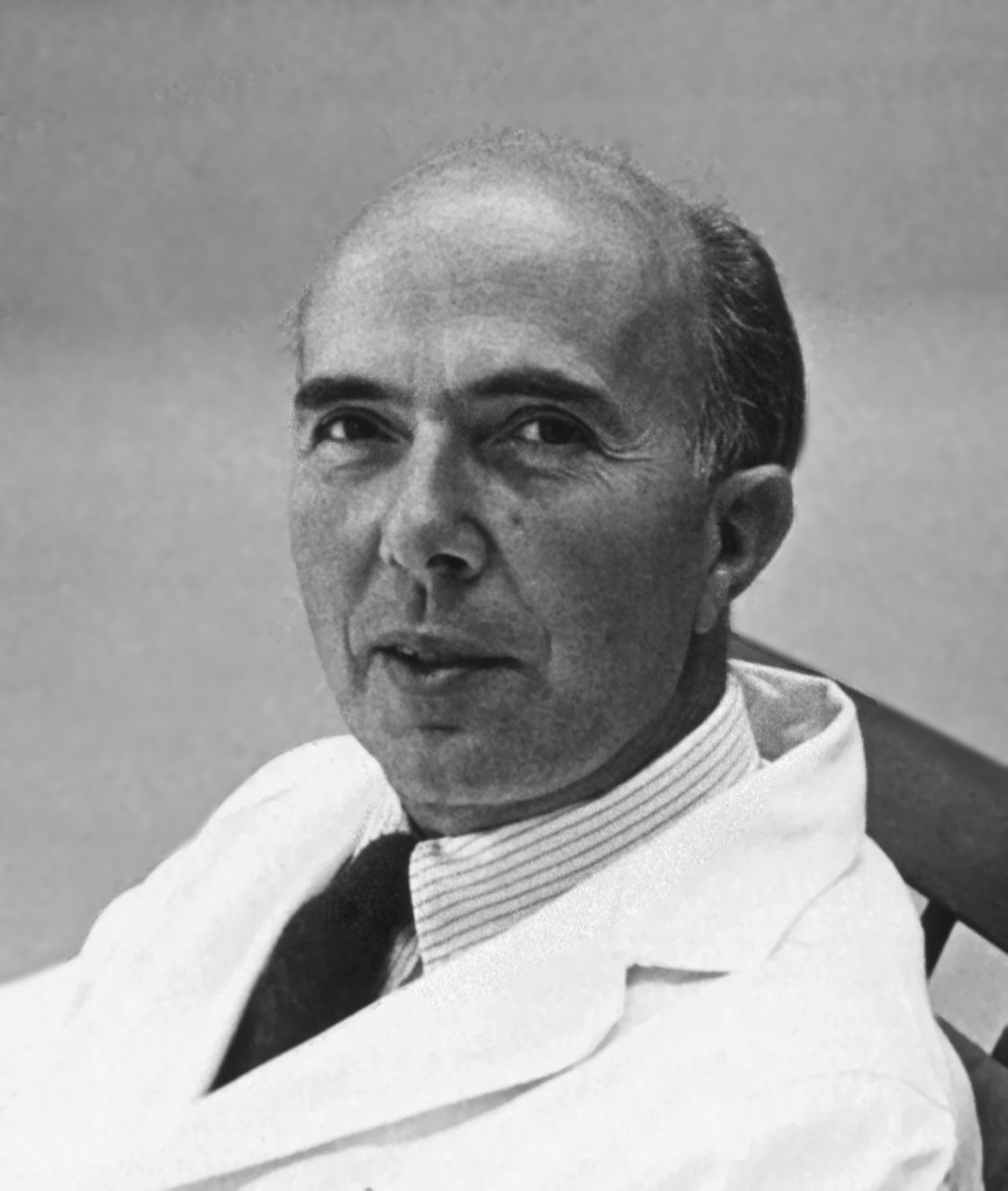
Renato Dulbecco, a towering figure in the field of molecular biology, was born on February 22, 1914, in Catanzaro, Italy. His pioneering work in virology and genetics has left an indelible mark on modern science, earning him global recognition and numerous accolades, including the prestigious Nobel Prize in Physiology or Medicine in 1975. This article delves into the life, achievements, and lasting legacy of Renato Dulbecco, exploring how his work has shaped the scientific community and beyond.
Early Life and Academic Pursuits
Renato Dulbecco’s early years were marked by precocity and academic brilliance. He enrolled in the University of Turin’s medical school at the remarkably young age of sixteen, where he would meet two other future Nobel laureates: Salvador Luria and Rita Levi-Montalcini. These early encounters would significantly influence his future scientific endeavors.
Dulbecco completed his medical degree in 1936, just before being drafted into the military, where he served as a medical officer until 1938. His military service was briefly interrupted, but he was recalled to duty during World War II, serving on the French front and later in Russia. In 1942, while in Russia, Dulbecco narrowly escaped death and spent months recovering in a hospital. This harrowing experience deepened his resolve to contribute meaningfully to humanity through scientific research.
After the war, Dulbecco returned to Italy, where he became involved in the Italian Resistance against the German occupation, serving as a medic for the partisans. This period of his life was marked by both personal and professional growth, as he began to delve deeper into scientific research. In a testament to his intellectual curiosity, Dulbecco also enrolled in the University of Turin’s physics program, which he attended from 1945 to 1947.
Moving to the United States: A New Chapter in Research
In 1947, Renato Dulbecco made a pivotal decision to move to the United States, where he would join the University of Indiana in Bloomington. This move marked the beginning of a new chapter in his career, as he transitioned from Italy’s post-war academic environment to the dynamic and rapidly advancing field of biomedical research in the United States.
At Indiana University, Dulbecco worked under the mentorship of Salvador Luria, where he honed his research skills and began making significant contributions to the study of viruses. His work soon caught the attention of the scientific community, and he was invited to join the prestigious California Institute of Technology (Caltech).
It was at Caltech, in 1955, that Dulbecco made one of his most significant early discoveries: isolating the first mutant of the poliovirus. This groundbreaking achievement laid the foundation for Albert Sabin’s development of the oral polio vaccine, which has since played a critical role in the global effort to eradicate polio.
Pioneering Work in Virology and the Nobel Prize
In 1958, Renato Dulbecco turned his attention to cancer research, specifically the study of oncogenic viruses—viruses that can cause cancer. His groundbreaking work demonstrated that the DNA of these viruses could integrate into the genetic material of a host cell, causing permanent alterations that could lead to cancer. This discovery was a monumental leap forward in our understanding of cancer and the role of viruses in its development.
Dulbecco’s research provided crucial insights into the molecular mechanisms of cancer and paved the way for further studies into the genetic basis of the disease. His work was recognized with the Albert Lasker Basic Medical Research Award in 1964, one of the most prestigious honors in the field of medical research.
The pinnacle of Dulbecco’s career came in 1975 when he was awarded the Nobel Prize in Physiology or Medicine, alongside David Baltimore and Howard Temin. The trio was honored for their work on the interaction between tumor viruses and the genetic material of cells, which has had profound implications for the field of molecular biology and oncology. Their discoveries have been instrumental in the development of modern cancer therapies and continue to influence research today.
The Human Genome Project and Later Years
In the later stages of his career, Renato Dulbecco’s visionary thinking led him to propose and champion the Human Genome Project. Launched in 1986, this ambitious international research initiative aimed to map and understand all the genes of the human species, collectively known as the genome. Dulbecco believed that decoding the human genome would revolutionize medicine by providing new insights into genetic diseases and potentially leading to the development of targeted treatments.
The Human Genome Project, which officially began in 1990, was a monumental undertaking that required the collaboration of scientists from around the world. It successfully completed in 2003, significantly ahead of schedule, and has since transformed the field of genetics. The project’s completion marked a new era in medicine, opening up new possibilities for personalized medicine, genetic testing, and the treatment of hereditary diseases.
Dulbecco’s contributions to the Human Genome Project underscored his enduring commitment to advancing scientific knowledge and improving human health. Even in his later years, he remained active in the scientific community, continuing to work and mentor young scientists.
Awards and Recognitions
Renato Dulbecco’s illustrious career was marked by numerous awards and recognitions, reflecting his profound impact on science and medicine. In addition to the Nobel Prize, Dulbecco received a long list of accolades, including the Albert and Mary Lasker Basic Medical Research Award (1964), the Louisa Gross Horwitz Prize from Columbia University (1967), and the Selman A. Waksman Award in Microbiology from the National Academy of Sciences (1974). He was also honored with the title of Grand Officer of the Italian Republic in 1981, one of Italy’s highest civilian honors.
Dulbecco was a member of several prestigious scientific organizations, including the National Academy of Sciences in the United States, the Royal Society in the United Kingdom, and the Accademia dei Lincei in Italy. His contributions to science were recognized globally, and he was frequently invited to speak at international conferences and to serve on advisory panels.
Legacy and Impact on Modern Science
Renato Dulbecco’s legacy extends far beyond his individual achievements. His pioneering work in virology and cancer research has had a lasting impact on the scientific community and has paved the way for countless advancements in the understanding and treatment of cancer. His discovery that viral DNA can integrate into host cells’ genetic material was a fundamental breakthrough that has shaped the course of modern cancer research.
Moreover, Dulbecco’s role in the Human Genome Project has left an indelible mark on the field of genetics. The project’s success has transformed our understanding of the human genome and has opened up new avenues for research and medicine. The knowledge gained from the Human Genome Project continues to influence a wide range of fields, from oncology to personalized medicine.
Dulbecco’s work has also inspired generations of scientists who have built upon his discoveries to make their contributions to the field of molecular biology. His commitment to research and his dedication to advancing scientific knowledge serve as a model for aspiring scientists worldwide.
Conclusion
Renato Dulbecco’s life was one of extraordinary achievement and lasting impact. From his early years in Italy to his groundbreaking work in the United States, Dulbecco’s contributions to science have shaped our understanding of viruses, cancer, and the human genome. His legacy is one of innovation, perseverance, and a relentless pursuit of knowledge.
As we look back on Dulbecco’s life and career, it is clear that his work has had a profound and enduring influence on the fields of virology, oncology, and genetics. His discoveries continue to resonate in modern science, providing a foundation for ongoing research and new breakthroughs.
Renato Dulbecco passed away on February 20, 2012, just two days before his 98th birthday. His passing marked the end of an era in molecular biology, but his contributions to science will continue to inspire and inform future generations.


