
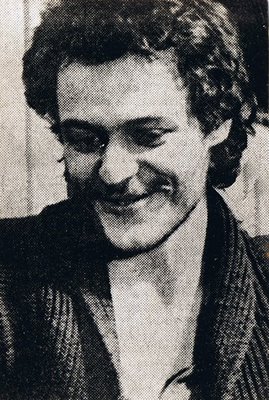
Renato Vallanzasca, a name that still echoes in the annals of Italian criminal history, is a figure whose life is as complex as it is controversial. Born on February 14, 1950, in Milan, Italy, Vallanzasca’s life story is one of defiance, audacity, and notoriety. Often referred to as the “King of the Underworld” and the “Beautiful René,” Vallanzasca’s criminal career spanned several decades, marked by a series of high-profile crimes, escapes, and a magnetic, if dangerous, charisma that both repelled and fascinated the public. This article delves into his life, exploring the key events that shaped his infamy, the cultural impact of his actions, and the enduring legacy of one of Italy’s most notorious criminals.
Early Life and Introduction to Crime
Renato Vallanzasca’s descent into a life of crime began at a young age. Growing up in the tough streets of Milan, Vallanzasca quickly made a name for himself as a rebellious and fearless youth. By the mid-1960s, while still in his teens, he had already established himself as a local gang leader in the Comasina district, a northern suburb of Milan. His early forays into criminal activities, including theft and robbery, quickly escalated, allowing him to live a life of luxury far beyond his means.
Vallanzasca’s first significant brush with the law occurred when he was just eight years old. In a notorious incident, he released animals from a local circus as a prank, causing chaos in the community. This event was a harbinger of the trouble to come, leading to his first stint in a juvenile detention center, the infamous “Beccaria.” This early incarceration marked the beginning of a life that would be spent largely behind bars, interspersed with brief periods of freedom filled with violent crimes.
Rise to Power: The 1970s
By the late 1960s, Vallanzasca had solidified his position as a leading figure in Milan’s criminal underworld. His gang, known for their daring robberies and brutal methods, became synonymous with fear in the Lombardy region. Vallanzasca’s good looks and charismatic personality earned him the nickname “Beautiful René,” a moniker that belied the ruthlessness of his actions.
The early 1970s marked a turning point in Vallanzasca’s life. On February 14, 1972, Vallanzasca was arrested following a supermarket robbery, just days after the crime. This arrest would lead to his first major prison sentence—four and a half years. During this time, Vallanzasca’s reputation continued to grow, but not for good behavior. He became notorious for participating in prison riots and constantly plotting escapes, driven by an obsessive desire for freedom.
One of the most audacious of these escape attempts occurred in July 1976. Vallanzasca, feigning illness by deliberately infecting himself with hepatitis through the ingestion of rotten eggs and injections of urine, was transferred to a hospital. On July 28, with the help of a complicit police officer, he managed to escape, setting off a manhunt that would lead to a series of violent confrontations with the law.
A Bloody Trail: Crimes and Capture
After his escape in 1976, Vallanzasca resumed his life of crime with renewed vigor. His gang was involved in numerous robberies, kidnappings, and murders, leaving a trail of blood across Italy. One of the most infamous incidents was the murder of a police officer at a checkpoint in Montecatini. Although no witnesses could identify the killer, the method and brutality of the execution bore all the hallmarks of Vallanzasca’s handiwork.
The escalation of violence continued with a bank employee killed in Andria on November 13, 1976, followed by the deaths of a doctor, a traffic officer, and three more police officers. Vallanzasca’s notoriety reached its peak when he turned to kidnapping as a means of securing large ransoms. On December 13, 1976, Emanuela Trapani was abducted by Vallanzasca’s gang. She was eventually released on January 22, 1977, after a ransom of one billion lire was paid.
However, Vallanzasca’s reign of terror could not last forever. On February 15, 1977, exhausted and wounded, he was finally apprehended by the police. This arrest marked the end of his freedom for the foreseeable future, as he was sentenced to life in prison. Vallanzasca’s name had become synonymous with crime, but also with a certain twisted heroism, as the public often romanticized his life of lawlessness.
Notoriety and Media Portrayal
Renato Vallanzasca’s life was as much a product of the media as it was of his own making. The Italian public, fascinated by his exploits, began to see him not just as a criminal, but as a larger-than-life figure who embodied the spirit of rebellion against authority. This perception was further cemented by the 1977 film “La banda Vallanzasca,” directed by Mario Bianchi, which dramatized his life and crimes. Vallanzasca’s persona as the “King of the Underworld” became a part of popular culture, influencing countless books, films, and television series.
Vallanzasca himself did little to discourage this myth-making. In prison, he continued to captivate the public’s imagination with his repeated escape attempts, his charisma, and his involvement in high-profile incidents. One such incident occurred on March 20, 1981, while Vallanzasca was imprisoned in Novara. During a riot, Vallanzasca was accused of a particularly gruesome act: decapitating a fellow inmate and using the severed head as a football. This act of gratuitous violence shocked the nation and led to his transfer to a maximum-security prison, where he would face even harsher conditions.
Escapes and Continued Defiance
Despite the increased security, Vallanzasca’s determination to escape never waned. On July 18, 1987, in one of his most daring escapes, Vallanzasca managed to slip through a porthole on the Flaminia ferry while being transported under heavy guard to the Asinara prison. This escape, facilitated by a mix-up in cabin assignments by his guards, saw him travel on foot from Genoa to Milan, where he gave an interview to Radio Popolare before disappearing once again.
His time on the run was short-lived. On August 7, 1987, Vallanzasca was captured at a police checkpoint while attempting to reach Trieste. Despite being armed, he surrendered without resistance. Once back in prison, he divorced his wife, Giuliana Brusa, but his obsession with freedom remained undiminished. On December 31, 1995, he made yet another attempt to escape, this time from the Nuoro prison. However, the plan was foiled, possibly due to a tip-off.
Throughout his incarcerations, Vallanzasca continued to attract admirers, particularly women. He received hundreds of letters from admirers who were drawn to his dangerous allure, and he even formed close relationships with some of his female lawyers, leading to suspicions and accusations of their involvement in his escape attempts.
Later Years and Legacy
By the 1990s, Vallanzasca had accumulated four life sentences and over 260 years of additional prison time. He was directly responsible for at least seven murders, four of which he committed personally. In 1999, Vallanzasca collaborated with journalist Carlo Bonini to publish his autobiography, providing a first-person account of his life of crime. The book offered insights into his motivations, his regrets, and his reflections on a life lived on the edge of legality.
Despite his notoriety, Vallanzasca’s health began to decline in the early 2000s. He was transferred to the high-security prison in Voghera, where he was kept under strict surveillance as a “special detainee.” In 2005, after being granted a brief three-hour leave to visit his elderly mother in Milan, Vallanzasca formally requested a pardon from the Italian government, a move that sparked significant public debate.
Vallanzasca’s life story continues to captivate the public, serving as a reminder of a tumultuous period in Italian history when organized crime and violent gangs were a daily reality. His legacy is one of infamy, but also of fascination—a complex figure who, despite his many crimes, remains a subject of enduring interest.
Conclusion: The Enduring Legacy of Renato Vallanzasca
Renato Vallanzasca’s life is a testament to the allure of the outlaw figure in popular culture. His exploits, marked by violence, charisma, and an unyielding defiance of authority, made him a legend in his own time. Yet, beneath the romanticized image lies the reality of a man who caused untold suffering through his actions. Today, Vallanzasca is a figure both reviled and admired, a symbol of the darker side of human nature and the consequences of a life lived outside the law.
As society continues to grapple with the legacy of figures like Vallanzasca, his story serves as a cautionary tale about the seductive power of crime and the high cost of a life spent in pursuit of freedom at any cost.


