
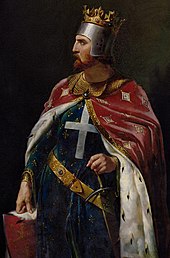
Riccardo Cuor di Leone, also known as Richard the Lionheart, was born on September 8, 1157, in Oxford, England. His name is synonymous with bravery, chivalry, and military prowess, and he is one of the most iconic figures in English and European medieval history. Known formally as Richard I of England, he earned the epithet “Lionheart” due to his exceptional courage and leadership on the battlefield. This article delves into the life, reign, and enduring legacy of Richard the Lionheart, exploring the key events that defined his rule and his lasting impact on history.
Early Life and Education
Richard was the third of five sons born to King Henry II of England and Eleanor of Aquitaine, one of the most powerful and influential women of the medieval period. Richard’s upbringing was steeped in the political and military culture of his parents’ vast dominions, which spanned across England and large portions of France, including Normandy, Anjou, and Aquitaine.
Richard spent much of his youth in Aquitaine, a region in what is now southwestern France, which he would later come to rule. He was deeply influenced by the chivalric culture of the French court, where he received an education in the arts of war and governance. Richard was a skilled poet and composer, writing in the langue d’oc, a regional dialect of southern France. His early exposure to the principles of knighthood and the troubadour tradition of courtly love would shape his character and his reputation as a chivalrous leader.
In 1168, at just eleven years old, Richard was granted the title of Duke of Aquitaine by his mother. Four years later, at the age of fifteen, he was also given the title of Count of Poitiers. Despite his young age, Richard demonstrated early on that he was a capable leader, showing both political acumen and military skill. His loyalty, however, was often divided between his parents, who had a tumultuous relationship, and this would influence the trajectory of his life and reign.
Rise to Power and Early Rebellions
Richard’s early years were marked by political turmoil and family conflict. The 1173-1174 Revolt of the Young King, led by Richard’s elder brother Henry the Young King, against their father, King Henry II, was a significant event in Richard’s life. Although initially aligned with his father, Richard eventually sided with his brothers in their rebellion against their father’s rule. The revolt ultimately failed, and Richard was forced to swear fealty to his father. However, this conflict foreshadowed the ongoing tensions within the Plantagenet family that would shape Richard’s path to the throne.
Following the revolt, Richard was tasked with suppressing uprisings in his territories in Aquitaine. His success in these endeavors earned him a reputation as a formidable military leader. In 1179, he decisively crushed a rebellion led by the powerful nobleman Geoffrey de Rancon, solidifying his control over Aquitaine and securing the loyalty of many previously rebellious barons.
Richard’s military exploits in Aquitaine were not without controversy. His methods were often brutal, and his suppression of revolts was marked by acts of extreme cruelty. Despite this, Richard’s success in maintaining order in his territories demonstrated his effectiveness as a ruler and his determination to assert his authority.
Conflict with His Father and Ascent to the Throne
As Richard’s power grew, so did the tensions between him and his father, King Henry II. By the early 1180s, Richard’s ambitions extended beyond Aquitaine, and he began to challenge his father’s authority more openly. A key point of contention was Richard’s refusal to pay homage to his elder brother, Henry the Young King, which led to a new round of family conflict.
The death of Henry the Young King in 1183 changed the dynamics within the Plantagenet family. Richard, now the eldest surviving son, became the primary heir to his father’s vast dominions. However, the relationship between Richard and Henry II continued to deteriorate. In 1187, Richard aligned himself with Philip II of France, one of his father’s chief rivals, in a bid to secure his own position and future.
The final break between Richard and his father came in 1189 when Richard, with the support of Philip II, launched a military campaign against Henry II. The campaign culminated in the Battle of Ballans, where Henry II was defeated. Gravely ill and facing the collapse of his power, Henry II was forced to acknowledge Richard as his heir. Henry II died shortly thereafter, and Richard ascended to the throne as King Richard I of England on July 6, 1189.
The Third Crusade and the Lionheart’s Legacy
One of the defining events of Richard’s reign was his participation in the Third Crusade, a military expedition to the Holy Land aimed at recapturing Jerusalem from Muslim control. Richard’s decision to embark on the crusade was motivated by both religious zeal and a desire to enhance his reputation as a chivalrous warrior king.
Richard’s leadership during the crusade earned him widespread acclaim. He played a central role in several key battles, including the Siege of Acre and the Battle of Arsuf, where his tactical brilliance and personal bravery were on full display. Although the crusade ultimately failed to recapture Jerusalem, Richard secured a treaty with the Muslim leader Saladin that allowed Christian pilgrims to access the holy city. This achievement bolstered Richard’s reputation as a great military leader and cemented his status as one of the foremost figures of the medieval Christian world.
Richard’s return journey from the Holy Land was fraught with peril. He was shipwrecked and forced to travel incognito through Europe, but he was ultimately captured by Duke Leopold V of Austria. Richard’s imprisonment and the subsequent ransom demanded for his release placed a significant financial strain on England. Despite this, Richard’s popularity remained high, and his subjects were willing to pay the exorbitant ransom to secure his freedom.
The Later Years and Final Battles
After his release from captivity in 1194, Richard returned to England to reclaim his throne and suppress the rebellion led by his younger brother John, who had attempted to seize power during Richard’s absence. Richard’s decisive actions quickly restored order, and John was forced to submit to his brother’s authority.
With England secured, Richard turned his attention back to his continental territories, where Philip II of France had taken advantage of Richard’s absence to expand his influence. The ongoing conflict between Richard and Philip culminated in the Battle of Gisors in 1198, where Richard emerged victorious. However, the war between England and France was far from over, and Richard’s final years were consumed by this struggle.
Richard’s reign came to an abrupt end in 1199 when he was mortally wounded during the siege of Châlus-Chabrol, a castle in the Limousin region of France. The circumstances of his death were both ironic and tragic: Richard was struck by a crossbow bolt while inspecting the castle’s defenses, and the wound became infected. On April 6, 1199, Richard the Lionheart died, leaving behind a legacy that would endure for centuries.
Richard’s Legacy and Historical Significance
Richard the Lionheart’s legacy is complex and multifaceted. On one hand, he is remembered as a paragon of chivalry, a warrior king whose bravery and leadership inspired legends and songs throughout medieval Europe. His exploits during the Third Crusade, in particular, have become the stuff of legend, immortalized in both historical chronicles and popular culture.
However, Richard’s reign was also marked by significant challenges and shortcomings. His focus on military campaigns, particularly the Third Crusade, came at a great cost to England, both financially and politically. Richard spent little time in England during his reign, and his absences contributed to the instability that plagued the kingdom during his rule. The heavy taxes imposed to fund his ransom and military endeavors were deeply unpopular and sowed the seeds of future unrest.
Despite these challenges, Richard’s reputation as a great king and military leader has endured. His charismatic leadership and his ability to inspire loyalty among his followers set him apart from many of his contemporaries. Richard’s life and reign have been the subject of numerous historical works, as well as a rich body of literature and art that continues to shape the popular imagination.
Conclusion
Richard the Lionheart remains one of the most iconic figures in medieval history. His life was a testament to the ideals of chivalry and martial prowess that defined the era, and his legacy has had a lasting impact on both English and European history. While his reign was marked by conflict and challenges, Richard’s reputation as a warrior king and a symbol of bravery and leadership endures to this day. His story continues to captivate historians, scholars, and enthusiasts alike, ensuring that the legend of Richard the Lionheart will never be forgotten.


