
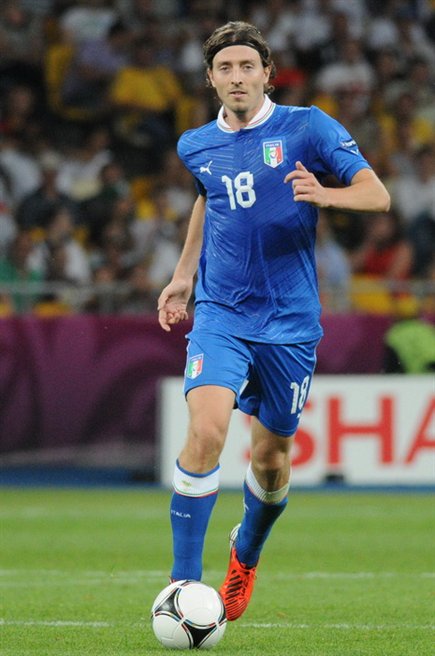
Riccardo Montolivo, born on January 18, 1985, in Caravaggio, Italy, is a retired Italian footballer whose career is a fascinating journey through the highs and lows of professional soccer. Known for his exceptional skills as a midfielder, Montolivo’s life story is one of perseverance, dedication, and an unwavering commitment to the beautiful game. From his early days in local youth academies to his role as captain of one of Italy’s most prestigious football clubs, Montolivo’s career offers a compelling narrative of success, challenges, and personal growth.
Early Life and Beginnings in Football
Riccardo Montolivo was born in Caravaggio, a small town in the Lombardy region of Italy. His mother, of German descent, played a significant role in his upbringing, teaching him the German language, which would later become a unique aspect of his identity. Montolivo’s passion for football was evident from a young age, and he began his journey in the sport at the local “Scuola Calcio Caravaggio,” where he first developed his skills.
Montolivo’s talent quickly caught the attention of scouts, and he soon moved to Bergamo to join the Atalanta youth academy, one of Italy’s most renowned football schools. It was here that Montolivo’s abilities as a midfielder began to flourish. His vision, passing accuracy, and composure on the ball set him apart from his peers, and it wasn’t long before he was promoted to Atalanta’s first team.
Rise to Prominence with Atalanta
Riccardo Montolivo made his professional debut with Atalanta during the 2003-2004 season in Serie B, Italy’s second division. At just 18 years old, he displayed maturity and skill beyond his years, quickly becoming a key player for the team. In that season, Montolivo made 41 appearances and scored four goals, helping Atalanta secure promotion to Serie A, the top tier of Italian football.
Montolivo’s performances in Serie B were a testament to his potential, and he continued to impress after Atalanta’s promotion to Serie A. In the 2004-2005 season, he made his Serie A debut on September 12, 2004, in a match against Lecce. Despite Atalanta’s struggles that season, which eventually led to their relegation, Montolivo’s talent was undeniable. He made 32 appearances and scored three goals, catching the eye of several top clubs in Italy.
Move to Fiorentina and International Recognition
In the summer of 2005, Riccardo Montolivo’s career took a significant step forward when he was transferred to Fiorentina, initially on a co-ownership deal. Montolivo’s time at Fiorentina was marked by steady growth and development as he adapted to the demands of playing for a club with higher ambitions.
During the 2006-2007 season, Montolivo cemented his place in Fiorentina’s starting lineup, contributing to the team’s successful campaign. He scored two goals that season and became a pivotal figure in the midfield. His performances on the domestic front were complemented by his debut in European competitions, as Fiorentina qualified for the UEFA Cup (now the UEFA Europa League).
By the 2009-2010 season, Montolivo had risen to the rank of team captain, following the departures of Dario Dainelli and Martin Jørgensen. As captain, Montolivo led Fiorentina through some of the most challenging and rewarding moments in the club’s history. His leadership on and off the pitch earned him the respect of teammates, coaches, and fans alike.
Montolivo’s success at Fiorentina also caught the attention of the Italian national team selectors. He had already been a regular fixture in the Italy Under-21 squad, where he made 20 appearances and scored three goals, participating in the UEFA European Under-21 Championships in 2006 and 2007. His consistent performances at the club level earned him a call-up to the senior national team.
On October 17, 2007, at the age of 22, Montolivo made his debut for the Italian national team in a friendly match against South Africa. This was a significant milestone in his career, marking the beginning of his journey with the Azzurri. Although he was initially included in the provisional squad for UEFA Euro 2008, he did not make the final 23-man roster. However, he represented Italy at the 2008 Beijing Olympics, where he played a crucial role in the team’s campaign, even scoring a goal in the group stage match against South Korea.
Peak Years at AC Milan
The peak of Riccardo Montolivo’s career came with his move to AC Milan in 2012. Milan, one of Italy’s most storied football clubs, announced Montolivo’s arrival in May 2012. He signed a four-year contract, signaling a new chapter in his career. Montolivo was brought in to help revitalize a Milan team that was in transition, following the departure of several key players.
Montolivo quickly became an integral part of the Milan squad. His technical ability, leadership qualities, and experience made him a natural fit for the Rossoneri. On November 25, 2012, Montolivo captained Milan for the first time in a match against Juventus, a significant honor that highlighted his importance to the team.
The following season, after the departure of Massimo Ambrosini, Montolivo was officially named Milan’s captain. This was a testament to his leadership skills and the respect he commanded within the squad. As captain, Montolivo led Milan through a period of rebuilding, as the club sought to reclaim its place among Europe’s elite.
One of the highlights of Montolivo’s time at Milan was winning the Supercoppa Italiana on December 23, 2016. Milan defeated Juventus 5-4 on penalties in Doha, and Montolivo played a crucial role in the team’s triumph. This victory was a significant achievement for Montolivo and Milan, as it marked the club’s return to winning silverware.
Challenges and Final Years at Milan
Despite his success, Montolivo’s time at Milan was not without challenges. The club underwent several managerial changes during his tenure, and the team struggled to find consistency in their performances. Additionally, Montolivo faced personal challenges, including injuries that limited his playing time and impacted his form.
In the summer of 2017, Milan made a high-profile signing in Leonardo Bonucci, who was immediately named the new captain. This decision marked a turning point in Montolivo’s career at Milan, as he was no longer the team’s leader on the pitch. Although Montolivo remained a valued member of the squad, his role was significantly reduced.
By June 2019, Montolivo’s contract with Milan was set to expire, and he announced his departure from the club with a heavy heart. His final years at Milan were marked by frustration and disappointment, as he struggled to regain his place in the team. However, despite these challenges, Montolivo remained a respected figure in Italian football, known for his professionalism and dedication to the sport.
International Career and Legacy
Riccardo Montolivo’s international career with Italy was a mixed bag of experiences. While he was often in and out of the squad, he still made significant contributions when called upon. After his debut in 2007, Montolivo became a regular part of the Italian national team setup, participating in several major tournaments, including the 2009 FIFA Confederations Cup and the 2010 FIFA World Cup in South Africa.
Montolivo’s role in the national team was often that of a versatile midfielder who could adapt to various tactical systems. His calmness on the ball and ability to read the game made him a valuable asset for Italy’s coaches. However, injuries and competition for places meant that Montolivo’s international career did not reach the heights of some of his contemporaries.
Despite these challenges, Montolivo’s legacy in Italian football is secure. He is remembered as a player who combined technical skill with tactical intelligence, making him one of the most reliable midfielders of his generation. His leadership at both Fiorentina and Milan, as well as his contributions to the national team, have left an indelible mark on Italian football.
Post-Retirement Life and Reflections
After retiring from professional football, Riccardo Montolivo has remained involved in the sport, albeit in a different capacity. He has transitioned into a role as a football pundit and analyst, sharing his insights and expertise with a new generation of fans. Montolivo’s deep understanding of the game, honed over years of experience, has made him a respected voice in Italian football media.
Montolivo’s reflections on his career are characterized by a sense of pride in his achievements, tempered by an awareness of the challenges he faced. He has spoken candidly about the pressures of professional football and the sacrifices required to succeed at the highest level. Montolivo’s story is one of resilience, adaptability, and a lifelong passion for the game.
Conclusion: A Career of Highs and Lows
Riccardo Montolivo’s career is a story of highs and lows, of triumphs and setbacks. From his early days at Atalanta to his leadership roles at Fiorentina and Milan, Montolivo consistently demonstrated his quality as a midfielder and a leader. His international career, though not as illustrious as some, still showcased his talents on the world stage.
In the end, Montolivo’s legacy is one of perseverance and dedication. He faced numerous challenges throughout his career, but he always approached them with professionalism and determination. As a player, captain, and now as a pundit, Riccardo Montolivo has left a lasting impact on Italian football.
His journey is a reminder that success in sports is not just about talent, but also about character, resilience, and the ability to overcome adversity. Montolivo’s story is one that will continue to inspire future generations of footballers and fans alike.


