
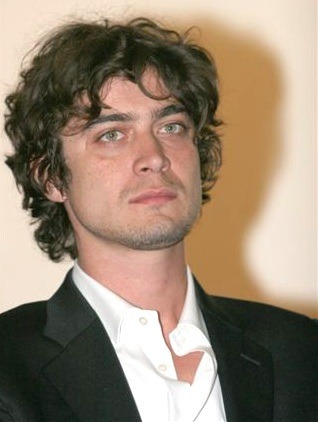
Riccardo Scamarcio, a name synonymous with Italian cinema, is one of the most prominent actors of his generation. Born on November 13, 1979, in Trani, a picturesque town in the Puglia region of Italy, Scamarcio has carved out a significant space for himself in the world of film. His journey from a rebellious teenager to a celebrated actor is both inspiring and fascinating, showcasing his determination and passion for the craft.
Early Life and Background
Riccardo Scamarcio was born into a creative family; his mother was a painter, and this artistic environment undoubtedly influenced his future career. However, his path to fame was not straightforward. Scamarcio was not particularly inclined towards academics and often found himself at odds with the traditional education system. His repeated withdrawals from high school led to tensions within his family, but these challenges also pushed him to explore his true passion—acting.
At the age of 16, Scamarcio made a bold decision that would change the course of his life. On the advice of a friend, he moved to Rome to pursue acting at the prestigious Centro Sperimentale di Cinematografia. Here, he honed his skills under the guidance of renowned mentors such as Mirella Bordoni, Mino Bellei, Marco Baliani, and Nicolai Karpov. This formal training laid the foundation for his future success in the film industry.
Rise to Fame: The Breakthrough Years
Scamarcio’s career began with a series of roles in television and theater, which provided him with valuable experience and exposure. His first significant television appearance was in the series “Compagni di scuola” (2001), where he worked alongside notable actors like Brando De Sica, Cristiana Capotondi, and Laura Chiatti.
However, it was his role in the 2004 film “Tre metri sopra il cielo” (Three Steps Over Heaven) that catapulted him to stardom. Directed by Luca Lucini, this film was based on the popular novel by Federico Moccia and became a cultural phenomenon among Italian teenagers. Scamarcio’s portrayal of the rebellious 19-year-old Step resonated deeply with audiences, establishing him as a teen idol and a rising star in Italian cinema. The film’s success was further cemented by Scamarcio receiving the Globo d’Oro for Best New Actor, a significant recognition of his talent.
Versatility and Growth as an Actor
Following the success of “Tre metri sopra il cielo,” Scamarcio continued to demonstrate his versatility as an actor. In 2005, he starred in the romantic comedy “L’uomo perfetto” (The Perfect Man), where he showcased his ability to navigate different genres. That same year, he appeared in “Romanzo criminale” (Crime Novel), directed by Michele Placido. In this film, Scamarcio played the role of Il Nero, a dangerous criminal, which marked a departure from his earlier roles and highlighted his range as an actor.
Scamarcio’s collaborations with esteemed directors continued to grow, and in 2007, he starred alongside Monica Bellucci in “Manuale d’amore 2 – Capitoli successivi” (Manual of Love 2). The film featured one of the most talked-about erotic scenes in Italian cinema, further enhancing Scamarcio’s status as a sex symbol. His roles in films such as “Mio fratello è figlio unico” (My Brother is an Only Child) and “Go Go Tales” directed by Abel Ferrara, further solidified his position as one of Italy’s most sought-after actors.
International Recognition and Continued Success
As Scamarcio’s career progressed, he began to attract international attention. His role in the 2010 film “Mine vaganti” (Loose Cannons) directed by Ferzan Ozpetek, was particularly well-received. The film, which dealt with themes of family, tradition, and sexuality, was a critical success and introduced Scamarcio to a broader audience.
In 2017, Scamarcio took a significant step towards international stardom by appearing in “John Wick: Chapter 2,” where he played the role of Santino D’Antonio, a powerful and menacing antagonist opposite Keanu Reeves. This role marked Scamarcio’s entry into Hollywood and showcased his ability to hold his own in a high-octane, action-packed film.
Personal Life and Relationships
Riccardo Scamarcio’s personal life has often been the subject of media attention, particularly his long-term relationship with actress Valeria Golino, who is 14 years his senior. The couple met on the set of the 2005 film “Texas” and were together for over a decade. Their relationship was one of the most talked-about in Italian cinema, with both Scamarcio and Golino being high-profile figures in the industry. However, the couple eventually parted ways in 2016.
Following his breakup with Golino, Scamarcio began a relationship with Angharad Wood, an English talent agent. The couple welcomed their first child, a daughter named Emily, in 2020. Scamarcio’s life as a father has been a new chapter, adding depth and perspective to his already rich life experiences.
Recent Work and Ongoing Legacy
In recent years, Scamarcio has continued to take on challenging and diverse roles. In 2021, he starred in “Tre piani” (Three Floors), directed by Nanni Moretti, one of Italy’s most acclaimed filmmakers. The film, which explores the lives of three families living in the same apartment building, received critical acclaim and further demonstrated Scamarcio’s maturity as an actor.
In 2023, Scamarcio appeared in the thriller “Assassinio a Venezia” (A Haunting in Venice), the third installment in the Hercule Poirot series directed by Kenneth Branagh. This role placed Scamarcio alongside a star-studded cast and continued his streak of high-profile projects.
Legacy and Influence
Riccardo Scamarcio’s journey from a small town in Puglia to international stardom is a testament to his talent, determination, and ability to adapt to different challenges. Over the years, he has evolved from a teen heartthrob to a respected actor known for his versatility and depth. His contributions to Italian cinema have been significant, and his influence extends beyond the screen, inspiring a new generation of actors.
Scamarcio’s career is a reflection of the changing landscape of Italian cinema, where traditional narratives are being redefined, and new voices are emerging. His ability to balance commercial success with critical acclaim is rare, making him a unique figure in the entertainment industry.
Conclusion
Riccardo Scamarcio is not just an actor; he is a symbol of contemporary Italian cinema. His career, marked by a series of diverse and compelling roles, is a journey of artistic exploration and personal growth. As he continues to take on new challenges, both in Italy and abroad, Scamarcio’s legacy as one of the most important actors of his generation is assured.


