
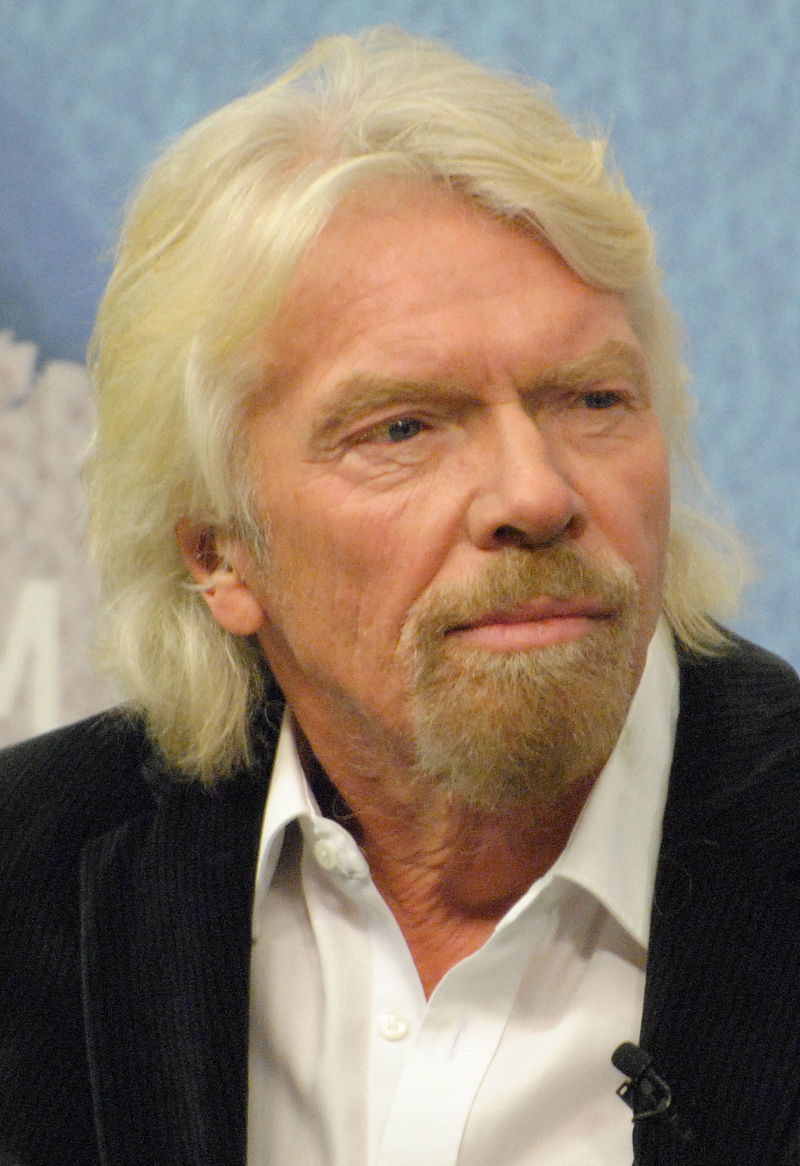
Richard Branson, born Richard Charles Nicholas Branson on July 18, 1950, in Shamley Green, Surrey, United Kingdom, is a name synonymous with entrepreneurial audacity, innovation, and a never-ending quest for adventure. As the founder of the Virgin Group, Branson has established himself as one of the most successful and influential businessmen of his time. With a net worth estimated in the billions, Branson’s life is a testament to the power of perseverance, creativity, and an unyielding desire to push the boundaries of what is possible.
Early Life and Entrepreneurial Beginnings
Richard Branson’s early life was not indicative of the massive success he would later achieve. Born into a middle-class family, Branson struggled academically due to dyslexia, a condition that made traditional schooling particularly challenging. He attended the Stowe School, where his academic performance was less than stellar. Despite these challenges, Branson exhibited an entrepreneurial spirit from a young age. At just 16, he dropped out of school to start his first business venture: a magazine called “Student.”
The magazine was initially a small, local publication, but Branson’s tenacity and business acumen quickly turned it into a nationwide success. He funded the magazine by soliciting advertisements from major brands, showcasing his early talent for negotiation and marketing. The magazine’s success was an early indication of Branson’s ability to identify opportunities and execute them with precision.
The principal of Stowe School once remarked that Branson would either end up in jail or become a millionaire—a statement that would prove prophetic, though in Branson’s case, it was the latter that came true.
The Birth of Virgin: A Revolutionary Brand
Branson’s first major venture outside of publishing came in the form of a mail-order record business, which he started in 1970 at the age of 20. The business, which he named Virgin Records, was an instant hit, thanks in part to Branson’s innovative approach to pricing and customer service. The name “Virgin” was chosen because Branson and his business partners were entirely new to the world of business—a group of “virgins,” so to speak.
Virgin Records’ first physical store opened on Oxford Street in London, and it quickly became a hub for music enthusiasts. In 1972, Branson expanded Virgin Records into a recording label. The company’s first signing was Mike Oldfield, whose album “Tubular Bells” became a massive success, selling millions of copies worldwide. This success laid the foundation for Virgin Records to sign some of the biggest names in music, including the Sex Pistols, Rolling Stones, and Genesis. By the late 1970s, Virgin Records had become one of the most prominent record labels in the world.
The 1980s saw Virgin Records continuing its upward trajectory. The label’s success was cemented when the Sex Pistols’ controversial album “Never Mind the Bollocks, Here’s the Sex Pistols” topped the UK charts, despite—or perhaps because of—the controversy it generated. Virgin Records was now a household name, and Branson’s reputation as a maverick entrepreneur was firmly established.
Diversification and the Virgin Empire
Richard Branson’s success with Virgin Records was just the beginning. The 1980s marked a period of significant diversification for the Virgin brand. Branson expanded into a wide range of industries, including aviation, retail, and telecommunications. In 1984, Branson founded Virgin Atlantic Airways, challenging the dominance of British Airways in the UK airline industry. Virgin Atlantic quickly gained a reputation for exceptional customer service and innovative offerings, such as in-flight entertainment systems, which were a novelty at the time.
The launch of Virgin Atlantic was not without its challenges. British Airways engaged in what Branson described as a “dirty tricks” campaign, attempting to undermine Virgin Atlantic through a series of unethical practices. Branson sued British Airways and won, using the settlement money to further invest in his airline. This episode only served to enhance Branson’s image as a tenacious and principled entrepreneur willing to take on the establishment.
Branson’s ventures were not limited to aviation. Throughout the 1990s, the Virgin Group expanded into a variety of sectors, including Virgin Megastores, Virgin Mobile, and Virgin Trains. Each of these ventures was marked by Branson’s signature approach: offering consumers better value, better service, and a better experience than the competition. By the end of the 1990s, Virgin had become one of the most recognized and respected brands in the world, with operations in over 30 countries.
In 1992, Branson made the difficult decision to sell Virgin Records to EMI for £500 million. The sale was an emotional moment for Branson, who reportedly cried after signing the deal. However, the sale allowed him to focus on expanding the Virgin brand into new and exciting areas.
Virgin Galactic: The Final Frontier
One of Richard Branson’s most ambitious projects is Virgin Galactic, a space tourism company that aims to make commercial space travel a reality. The idea for Virgin Galactic was born out of Branson’s lifelong fascination with space and his desire to push the boundaries of human exploration. The company was founded in 2004, with the goal of offering suborbital space flights to the general public.
Virgin Galactic’s journey has been filled with both triumphs and setbacks. In 2014, the company suffered a major tragedy when one of its test flights ended in disaster, resulting in the death of a pilot. Despite this setback, Branson remained committed to the project, and Virgin Galactic has since made significant progress. In 2021, Branson himself became one of the first civilians to fly into space on a Virgin Galactic spacecraft, a moment that was both a personal and professional milestone.
Virgin Galactic represents the culmination of Branson’s career-long philosophy of pushing boundaries and exploring new frontiers. It also reflects his belief that space exploration should not be the exclusive domain of governments and large corporations but should be accessible to all.
The Branson Leadership Style: Visionary and Maverick
Richard Branson’s leadership style is often described as unconventional, visionary, and maverick. Unlike many corporate leaders who prioritize profits above all else, Branson has always placed a strong emphasis on employee satisfaction, customer experience, and social responsibility. His management philosophy is built around the idea that if you take care of your employees, they will take care of your customers, and the profits will follow.
Branson is also known for his willingness to take risks. Throughout his career, he has ventured into industries where he had little prior experience, relying on his ability to learn quickly and surround himself with talented individuals who share his vision. This willingness to take risks has led to some failures, but it has also been the driving force behind Virgin’s many successes.
Another hallmark of Branson’s leadership is his focus on branding. He understands the power of a strong brand and has worked tirelessly to ensure that the Virgin name is associated with quality, innovation, and fun. Whether it’s airlines, music, or space travel, the Virgin brand is a key component of Branson’s success.
Philanthropy and Social Responsibility
Beyond his business ventures, Richard Branson is also deeply committed to philanthropy and social causes. He has used his wealth and influence to support a wide range of initiatives, from environmental conservation to humanitarian aid. In 2004, he founded The Virgin Unite Foundation, the charitable arm of the Virgin Group, which supports causes such as health, education, and climate change.
Branson has also been a vocal advocate for action on climate change. He has invested in renewable energy projects and has called on governments and businesses to take more aggressive action to combat global warming. His work in this area earned him the United Nations Correspondents Association Citizen of the Year Award in 2010.
In addition to his environmental efforts, Branson has been involved in numerous humanitarian initiatives. He has worked to combat HIV/AIDS in Africa, supported disaster relief efforts, and championed the rights of indigenous peoples. His philanthropic work is driven by a belief that businesses have a responsibility to give back to society and that wealth should be used to make a positive impact on the world.
A Legacy of Innovation and Adventure
Richard Branson’s life is a testament to the power of innovation, risk-taking, and a relentless pursuit of one’s passions. From his early days selling records out of a London shop to launching commercial space flights, Branson has consistently pushed the boundaries of what is possible. His willingness to challenge the status quo, coupled with his charismatic leadership and commitment to social responsibility, has made him one of the most admired and influential figures in the world.
Branson’s story is not just about business success; it is also about living life to the fullest. Whether it’s crossing the Atlantic in a hot air balloon, setting world records, or exploring the final frontier of space, Branson has always approached life with a sense of adventure and a desire to experience everything the world has to offer.
As he continues to innovate and explore new frontiers, there is no doubt that Richard Branson’s legacy will be one of extraordinary achievement and lasting impact. He has shown that with vision, courage, and a bit of daring, anything is possible.


