
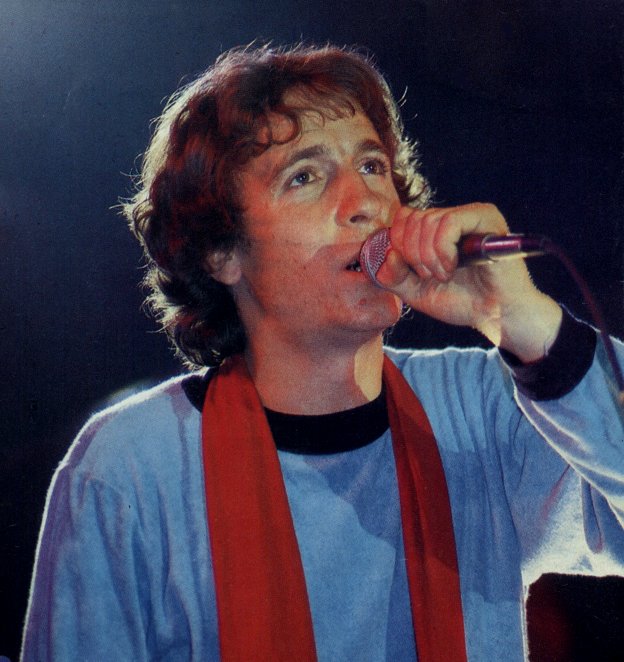
Rino Gaetano, born Salvatore Antonio Gaetano on October 29, 1950, in Crotone, Italy, is a name that resonates with timeless influence in the landscape of Italian music. Known for his biting satire, sharp wit, and ability to blend social commentary with catchy tunes, Gaetano remains a beloved figure in Italian culture. His life, though tragically short, was marked by a series of unforgettable songs that continue to be celebrated decades after his untimely death.
Early Life and Beginnings in Music
Rino Gaetano was born into a humble family in the southern Italian town of Crotone. His early years were marked by economic hardship, which eventually led his family to relocate to Rome in search of better opportunities. This move would prove significant, as Rome became the backdrop for Gaetano’s formative years and the launchpad for his musical career.
Gaetano’s initial interest in music was somewhat unconventional. He began his artistic journey with a passion for theater, showing a particular affinity for comedic roles. However, it wasn’t long before his attention shifted to music. He taught himself to play the guitar and started writing his own songs, influenced by the folk traditions of Southern Italy as well as the burgeoning pop and rock scenes of the time.
His early attempts to break into the music industry were met with resistance. Gaetano’s unique style—an ironic, often absurdist take on Italian life—was out of step with the more serious, politically charged music popular in Italy during the late 1960s and early 1970s. Despite these challenges, Gaetano persisted, fueled by a desire to carve out a niche for himself in the Italian music scene.
First Steps in the Music Industry
Gaetano’s first foray into the recording industry came under the pseudonym “Kammamuri’s,” with the release of the single “I Love You Marianna” in 1972. The single, like much of his early work, was largely ignored by the public and dismissed by critics. Gaetano’s approach—humorous and detached—did not fit into the prevailing musical trends, which favored more earnest and ideologically driven content.
However, Gaetano’s persistence paid off with the release of his debut album, “Ingresso libero” in 1974. Though the album did not achieve immediate commercial success, it marked Gaetano’s first real step into the music industry. The album showcased his eclectic style, blending elements of folk, rock, and pop with his signature lyrical wit. Despite the album’s modest reception, it established Gaetano as a unique voice in Italian music.
Breakthrough: “Ma il cielo è sempre più blu”
Gaetano’s breakthrough came in 1975 with the release of the single “Ma il cielo è sempre più blu” (“But the Sky is Always Bluer”). The song, with its infectious rhythm and seemingly nonsensical lyrics, quickly became a hit, climbing to the top of the Italian charts. “Ma il cielo è sempre più blu” remains one of Gaetano’s most iconic songs, a track that encapsulates his ability to combine social critique with a sense of irony and playfulness.
The song’s success catapulted Gaetano into the limelight, and he quickly became known for his ability to address serious societal issues in a way that was both entertaining and thought-provoking. His lyrics often touched on themes of social inequality, political corruption, and the absurdities of everyday life, delivered in a manner that was both accessible and deeply resonant with the Italian public.
Rising Fame: “Mio fratello è figlio unico”
Building on the success of “Ma il cielo è sempre più blu,” Gaetano released his second album, “Mio fratello è figlio unico” (“My Brother is an Only Child”) in 1976. The album was a critical success and featured several tracks that have since become classics in Italian music. The title track, in particular, stands out for its poignant exploration of alienation and identity, themes that resonated deeply with many listeners.
Another standout track from the album, “Berta filava,” became a hit in its own right. The song, with its catchy melody and whimsical lyrics, further established Gaetano as a major figure in the Italian music scene. His ability to blend humor with incisive social commentary set him apart from his contemporaries and endeared him to a growing fan base.
During this period, Gaetano solidified his reputation as a “cantautore” (singer-songwriter) who was unafraid to challenge the status quo. His songs, while often light-hearted on the surface, carried deeper messages about the state of Italian society, making him a unique voice in a musical landscape dominated by more conventional approaches to songwriting.
Peak of Success: “Aida” and “Nuntereggae più”
The late 1970s saw Gaetano reach the peak of his career with the release of two albums that would further cement his place in Italian music history. In 1977, he released “Aida,” an album that took a more serious tone, exploring themes of nostalgia, national identity, and the passage of time. The title track, “Aida,” is a melancholic reflection on Italy’s past, using the figure of Aida, an iconic symbol of Italian opera, as a metaphor for the country’s history and identity.
In 1978, Gaetano released “Nuntereggae più,” an album that marked a return to his more playful, satirical style. The title track, “Nuntereggae più,” is a scathing critique of Italian politics and society, delivered in a rapid-fire, reggae-influenced style. The song lists a litany of figures from the Italian political and cultural elite, criticizing their hypocrisy and excesses. “Nuntereggae più” became one of Gaetano’s most controversial and talked-about songs, further solidifying his reputation as a sharp-tongued social critic.
That same year, Gaetano achieved mainstream recognition with his performance at the Sanremo Music Festival, one of Italy’s most prestigious music competitions. His entry, “Gianna,” was a playful, ironic song that stood in stark contrast to the more traditional ballads typically featured at the festival. “Gianna” became a massive hit, earning Gaetano third place in the competition and further expanding his audience.
Later Career and Personal Struggles
Despite his success, Gaetano’s later career was marked by increasing artistic and personal challenges. In 1979, he released the album “Resta vile maschio dove vai” (“Stay Cowardly, Man, Where Are You Going?”), which featured the hit single “Ahi Maria.” The album, while successful, marked the beginning of a period of artistic crisis for Gaetano, who struggled with the pressures of fame and the expectations placed on him by both his audience and the music industry.
Gaetano’s final album, “E io ci sto” (“And I Am Here”), released in 1980, reflected his growing disillusionment with the music industry and his own career. The album, darker and more introspective than his previous work, received mixed reviews and did not achieve the same level of success as his earlier releases. During this period, Gaetano began exploring other artistic avenues, including collaborations with artists like Riccardo Cocciante and the jazz-fusion group New Perigeo.
Tragic Death and Legacy
Tragically, Rino Gaetano’s life was cut short on June 2, 1981, when he was killed in a car accident in Rome at the age of 30. His untimely death shocked the Italian music world and left many fans mourning the loss of a unique and irreplaceable voice.
Gaetano’s death has often been compared to that of Fred Buscaglione, another Italian musician known for his offbeat style and untimely death. Both artists were seen as outsiders in the Italian music industry, and both left behind a legacy that continues to influence and inspire new generations of musicians.
In the years since his death, Rino Gaetano’s music has only grown in popularity and significance. His songs, with their blend of humor, satire, and social commentary, continue to resonate with audiences, and his influence can be seen in the work of many contemporary Italian artists. Gaetano’s legacy is also preserved through numerous tributes, covers, and re-releases of his music, ensuring that his contributions to Italian culture are not forgotten.
Posthumous Recognition and Cultural Impact
Rino Gaetano’s influence extends far beyond his brief but impactful career. In the decades following his death, Gaetano has become something of a cult figure in Italian music, celebrated not only for his musical talents but also for his role as a social commentator and cultural critic. His songs are frequently covered by contemporary artists, and his influence can be seen in the work of many Italian musicians who came after him.
In 2007, the Italian television network Rai aired a biographical miniseries titled “Rino Gaetano – Ma il cielo è sempre più blu,” which chronicled his life and career. The series was well-received and helped introduce Gaetano’s music to a new generation of fans. In addition, numerous compilation albums and reissues of his work have been released, further cementing his status as an icon of Italian music.
Gaetano’s music has also found a new audience among younger listeners, many of whom were not even born during his lifetime. His songs, with their timeless appeal and sharp social commentary, continue to resonate with listeners who appreciate his unique blend of humor and insight.
Conclusion: The Enduring Legacy of Rino Gaetano
Rino Gaetano’s life and career, though tragically short, left an indelible mark on Italian music and culture. His ability to combine humor, satire, and social critique in his songs made him a unique and influential figure in the Italian music scene. Despite the challenges he faced, both personally and professionally, Gaetano’s work continues to be celebrated and cherished by fans old and new.
As we reflect on Rino Gaetano’s contributions to music and culture, it is clear that his legacy will endure for generations to come. His songs, with their blend of wit, irony, and social commentary, remain as relevant today as they were when they were first written. Rino Gaetano may have left us too soon, but his voice, his music, and his message continue to inspire and resonate, ensuring that the sky is always a little bluer because of him.


