
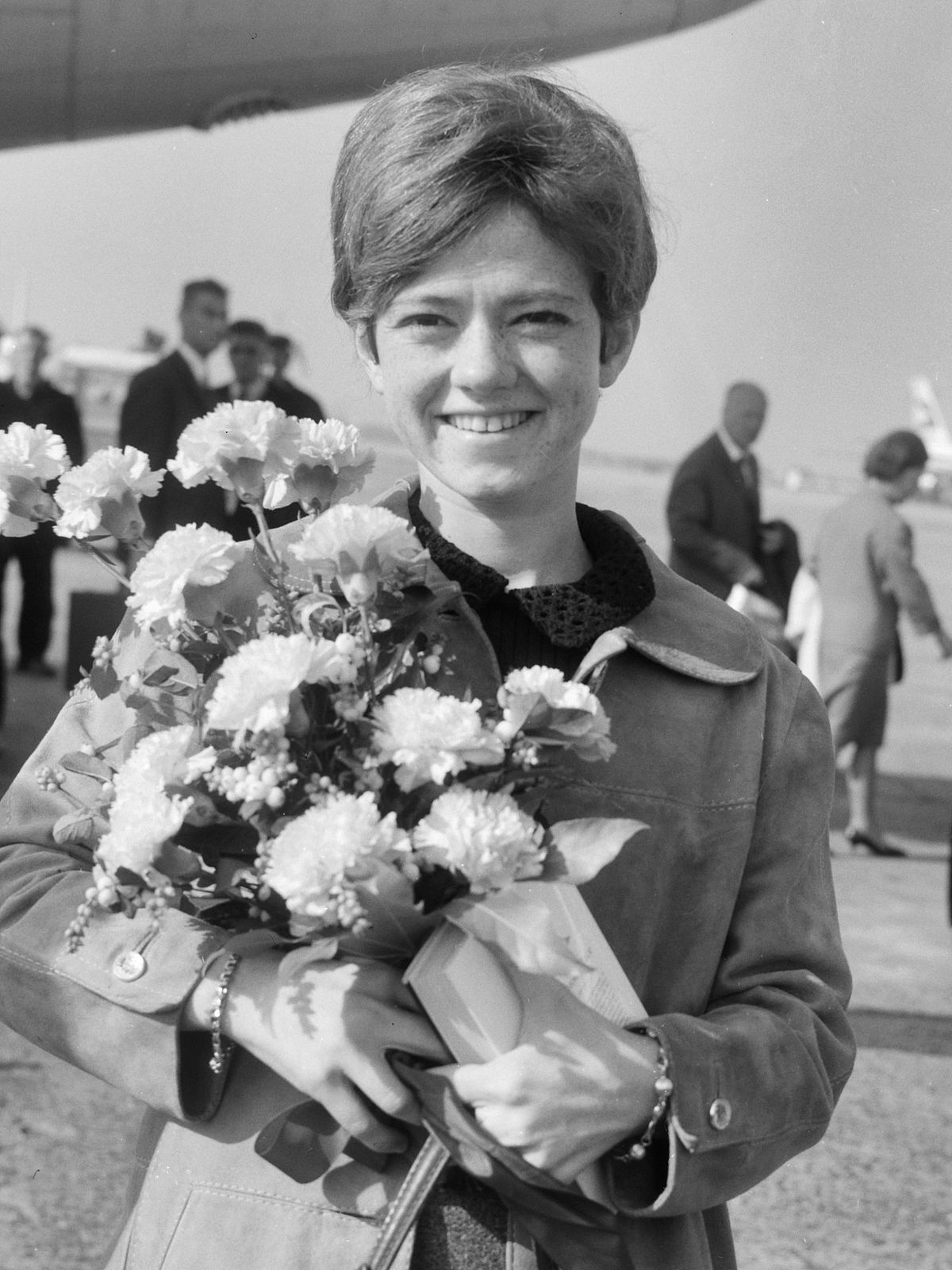
Rita Pavone, born on August 23, 1945, in Turin, Italy, is a name that resonates with fans of classic Italian music and international pop culture. With a career spanning several decades, Pavone has made a significant mark as a singer, actress, and television personality. Her unique voice, energetic performances, and vibrant personality have earned her a place among the most beloved entertainers of her time.
Early Life and the Path to Stardom
Rita Pavone’s journey to fame began in the bustling city of Turin, where she was born into a modest family. From a young age, Pavone showed a keen interest in music and performance. Her first taste of the spotlight came at the tender age of 14, when she participated in a local children’s talent show called “Telefoniade” at the Teatro Alfieri in Turin. This early experience, where she performed songs like Al Jolson’s “Swanee” and Renato Rascel’s “Arrivederci Roma,” ignited her passion for the stage and set her on the path to a lifelong career in entertainment.
Pavone’s early performances were characterized by her strong, emotive voice and her ability to connect with audiences, even at such a young age. She quickly became a regular performer in Turin’s local music venues, gaining a reputation as “the female Paul Anka” due to her fondness for covering the Canadian singer’s hits.
Breakthrough and National Fame
Rita Pavone’s big break came in 1962 when she participated in the first edition of the “Festival degli Sconosciuti” (Festival of the Unknowns) in Ariccia, a music competition organized by the famous Italian singer Teddy Reno. Her victory in the festival was a turning point, not only because it launched her career but also because it marked the beginning of her professional and personal relationship with Reno. Despite the controversy surrounding their relationship due to the age difference and Reno’s previous marriage, the two would marry six years later and remain partners both on and off the stage.
Following her win at the festival, Pavone signed a recording contract with RCA Italiana, one of the most prestigious music labels in Italy. Her debut single “La Partita di Pallone,” written by Edoardo Vianello, became an instant hit, catapulting her to national fame. The song’s catchy melody and Pavone’s spirited delivery resonated with the Italian public, making her a household name almost overnight.
Over the next few years, Pavone released a string of successful singles, including “Sul Cucuzzolo,” “Come te non c’è nessuno,” and “Alla mia età.” These songs not only showcased her vocal versatility but also solidified her status as one of Italy’s leading pop stars. Her energetic stage presence and tomboyish charm made her especially popular among younger audiences, who saw in her a fresh and relatable figure in the Italian music scene.
International Success and the Golden Years
The mid-1960s marked the peak of Rita Pavone’s career, both in Italy and internationally. Her appeal transcended national borders, and she became one of the few Italian artists to achieve significant success in foreign markets. Pavone’s international breakthrough came with her role in the television series “Il Giornalino di Gian Burrasca” (Gian Burrasca’s Little Newspaper), directed by Lina Wertmüller. Pavone’s portrayal of the mischievous Gian Burrasca, combined with the memorable theme song “Viva la Pappa col Pomodoro,” cemented her status as a cultural icon in Italy.
The success of “Il Giornalino di Gian Burrasca” opened doors for Pavone internationally. She was invited to perform on major American television programs, including the famous “Ed Sullivan Show,” where she appeared alongside legends like Ella Fitzgerald, Duke Ellington, and The Supremes. Her performances in the United States were met with great enthusiasm, and she became one of the first Italian pop singers to gain a foothold in the competitive American music market.
During this period, Pavone released several albums in English, including “The International Teen-Age Sensation,” “Small Wonder,” and “Remember Me.” These albums were well-received and helped her build a substantial fan base outside Italy. Her international success was not limited to the United States; she also found popularity in countries like France, Germany, and Spain, where her songs topped the charts and earned her a dedicated following.
The Personal and Professional Challenges of the Late 1960s
Despite her professional success, the late 1960s brought significant personal and professional challenges for Rita Pavone. Her marriage to Teddy Reno in 1968, which had been the subject of much public scrutiny, coincided with a period of transition in her career. The image of the carefree, youthful singer that had endeared her to millions was complicated by her new role as a wife and, later, a mother.
This shift in her public image, coupled with changes in the music industry, led to a decline in her popularity. Pavone left RCA Italiana and signed with Ricordi, where she attempted to reinvent herself by recording music aimed at a more mature audience. However, her new material, including songs for children, did not resonate with the public as strongly as her earlier work.
In 1969, Pavone participated in the prestigious Sanremo Music Festival with the song “Zucchero,” but the song only placed 13th, signaling a downturn in her career. Around this time, she also faced increased competition from emerging artists and the changing tastes of the public, which were moving away from the bubbly pop tunes that had defined her early success.
A New Chapter: Reinvention and Continued Success
The 1970s marked a period of reinvention for Rita Pavone. While her chart-topping days were behind her, she remained a significant presence in the Italian entertainment industry. Pavone embraced a more diverse range of projects, including television hosting, acting, and recording new music. In 1972, she returned to the Sanremo Festival with the song “Amici Mai,” and although it did not achieve commercial success, it demonstrated her resilience and determination to continue her career.
Pavone also made a successful transition to television, where she hosted several shows and participated in popular variety programs. One of her notable projects during this time was the television special “Ciao Rita,” in which she showcased her talents not only as a singer but also as a presenter, dancer, and comedian. This versatility endeared her to a new generation of viewers and helped sustain her career during a challenging period for the music industry.
In addition to her television work, Pavone continued to release music, albeit with a more selective approach. Some of her notable songs from this era include “Finalmente Libera” (a cover of Barbra Streisand’s “Free Again”) and “La Suggestione,” written by Claudio Baglioni. These songs reflected a more mature and introspective side of Pavone, showcasing her growth as an artist.
Later Years and Legacy
As the years passed, Rita Pavone’s presence in the entertainment industry became less frequent, but her influence remained strong. In the 1980s and 1990s, she focused on her family and personal life, occasionally appearing in television shows and theatrical productions. Her last album of original material, “Gemma e le Altre,” was released in 1989, marking the end of an era for one of Italy’s most beloved pop stars.
However, Pavone’s legacy as a trailblazer in Italian music and entertainment continued to be celebrated. Her songs remained popular on radio and in compilations, and she was frequently honored for her contributions to Italian culture. In 2006, Pavone officially announced her retirement from the entertainment industry, although she occasionally returned for special performances and appearances.
In 2010, Pavone made a brief return to the stage, performing alongside Renato Zero at his concert in Rome, where she sang some of her classic hits, including “Fortissimo” and “Come te non c’è nessuno.” This performance was a testament to her enduring appeal and the affection that audiences still held for her.
In 2020, after a 48-year absence, Rita Pavone made a highly anticipated return to the Sanremo Music Festival with the song “Niente (Resilienza 74).” Although the song did not win, her participation was a symbolic moment, celebrating her resilience and longevity in an industry that had changed dramatically since her debut.
Historical Context and Impact
Rita Pavone’s career must be understood within the broader context of post-war Italy, a period of rapid social and cultural change. Her rise to fame coincided with the economic boom of the 1960s, a time when Italy was transforming from a war-torn nation into a modern consumer society. Pavone’s music, with its youthful energy and optimistic themes, reflected the spirit of this era and resonated with a generation eager to embrace new cultural influences.
Pavone’s success also highlights the increasing globalization of popular culture during the 1960s. Her ability to cross national boundaries and achieve international fame was a testament to the power of music to bridge cultural divides. She was part of a wave of European artists who found success in the United States and other international markets, contributing to the global exchange of musical styles and ideas.
Conclusion
Rita Pavone is more than just a pop star; she is a cultural icon whose influence extends far beyond her music. Her career, which has spanned over six decades, is a testament to her talent, versatility, and enduring appeal. From her early days as a teenage sensation to her later years as a seasoned entertainer, Pavone has left an indelible mark on the world of music and entertainment.
As we reflect on Rita Pavone’s life and career, it is clear that her contributions to Italian and international culture are both significant and enduring. Her music continues to be celebrated by fans of all ages, and her legacy as one of Italy’s greatest pop icons remains firmly intact. Whether through her classic hits, her memorable television appearances, or her influence on future generations of artists, Rita Pavone’s impact on the world of entertainment is undeniable.


