
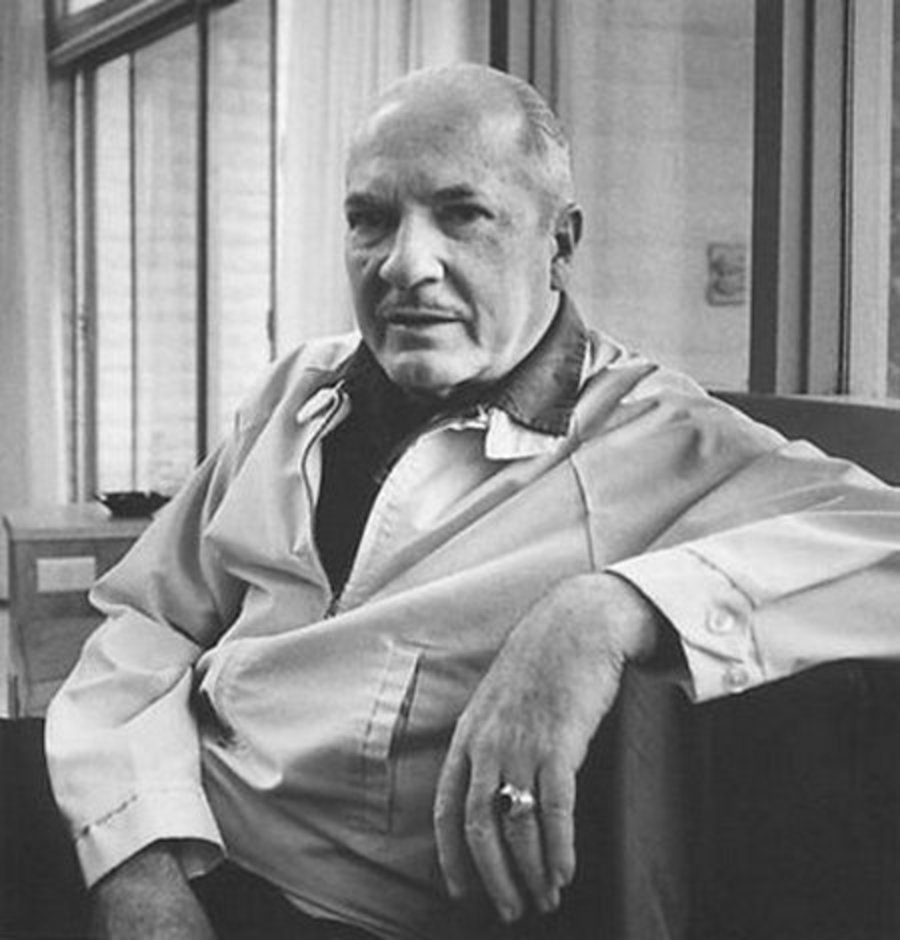
Robert Anson Heinlein, often regarded as one of the most significant and influential science fiction writers of the 20th century, was born on July 7, 1907, in Butler, Missouri. Over his illustrious career, Heinlein made a profound impact on both the science fiction genre and American literature as a whole. His works are known not just for their imaginative storytelling but also for their deep exploration of social, political, and ethical issues. This article delves into Heinlein’s life, his rise to fame, and the highlights of his career, providing a comprehensive overview for readers interested in the man behind some of the most iconic science fiction novels ever written.
Early Life and Education
Robert Heinlein was the youngest of seven children, growing up in a modest household in the small agricultural town of Butler, Missouri. His early years were marked by a strong curiosity about the world around him, particularly in the fields of science and technology. This curiosity would later fuel his career as a science fiction writer, where he would explore complex ideas about the future of humanity.
In the early 1920s, Heinlein’s family moved to Kansas City, where he attended Central High School. His academic prowess was evident early on, and he eventually enrolled at the University of Missouri. However, his educational path took a turn when one of his brothers joined the Navy, inspiring Heinlein to pursue a career in the military. In 1925, he left the university and enrolled at the U.S. Naval Academy in Annapolis, where he graduated with a degree in Naval Science in 1929.
Military Career and Early Adulthood
Heinlein’s naval career was a defining period in his life. He served as a gunnery officer on several ships, including cruisers and aircraft carriers, during a time of significant geopolitical change. However, his military career was cut short in 1934 when he contracted tuberculosis, a serious illness that forced him to retire from active duty. Heinlein left the Navy with the rank of Lieutenant and a modest pension, which marked the beginning of a new chapter in his life.
During his recovery, Heinlein resumed his academic pursuits, studying advanced mathematics, engineering, physics, and architecture at the University of California, Los Angeles. However, his health remained fragile, leading him to relocate to Colorado for a more favorable climate. This period was marked by a series of different jobs, including working for mining companies and dabbling in real estate. He even attempted a brief career in politics, running unsuccessfully for the California State Assembly as a Democrat.
The Rise to Literary Fame
Heinlein’s literary career began almost by accident. In 1939, he entered and won a short story contest organized by Astounding Science Fiction magazine with his story “Life-Line.” This success sparked a prolific writing career that would span nearly five decades. Heinlein quickly became known for his ability to blend hard science with compelling narratives, a hallmark of his work that set him apart from many of his contemporaries.
His early stories often featured strong themes of individualism, self-reliance, and the questioning of authority. Heinlein’s works were not just escapist fiction but were deeply rooted in the social and political issues of his time. This was particularly evident in his novel “Starship Troopers” (1959), which is perhaps one of his most controversial works. The novel, which explores the life of a soldier in a futuristic military society, has been both praised and criticized for its depiction of militarism and its perceived endorsement of authoritarianism.
Major Works and Contributions
Heinlein’s bibliography is extensive, but a few works stand out as particularly significant. “The Man Who Sold the Moon” (1950) is one of his early masterpieces, depicting a visionary entrepreneur who spearheads humanity’s first steps towards lunar colonization. This novel showcases Heinlein’s belief in the potential of capitalism and private enterprise to drive human progress.
“Stranger in a Strange Land” (1961) is another landmark work, telling the story of Michael Valentine Smith, a human raised by Martians who returns to Earth with a radically different perspective on life and society. The novel became a cultural touchstone during the 1960s, particularly among the counterculture movement. It challenged conventional views on religion, sexuality, and social norms, and it introduced the word “grok” into the English language, meaning to understand something deeply and intuitively.
In “The Moon is a Harsh Mistress” (1966), Heinlein explores themes of revolution and libertarianism through the story of a lunar colony’s struggle for independence from Earth. This novel is often cited as one of Heinlein’s most politically charged works, reflecting his growing interest in libertarian ideas and his skepticism of centralized authority.
Personal Life and Philosophical Views
Heinlein’s personal life was as complex as his novels. He was married three times, first to Leslyn MacDonald, whose last name, combined with his middle name, formed his primary pseudonym, “Anson MacDonald.” His second wife, Virginia Gerstenfeld, whom he married in 1948, was a significant influence on his work and life. The couple shared a deep bond, and Virginia often served as a sounding board for Heinlein’s ideas.
Heinlein’s philosophical views evolved over time, reflecting the changing social and political landscape of mid-20th century America. He was a strong advocate of individual freedom and personal responsibility, and these themes are prevalent throughout his work. However, his views were often contradictory and complex, leading to debates about whether his work should be classified as libertarian, authoritarian, or something else entirely.
One of the most striking aspects of Heinlein’s work is his exploration of gender roles and sexuality. While some critics have accused him of being misogynistic, others argue that he was ahead of his time in advocating for sexual freedom and challenging traditional gender norms. “Stranger in a Strange Land,” for example, presents a utopian vision of a society where all taboos surrounding sex and relationships are abolished.
Legacy and Influence
Robert A. Heinlein’s influence on the science fiction genre and popular culture is immeasurable. He was the first science fiction writer to break into the mainstream literary market, paving the way for future generations of writers. His works have been adapted into films, television shows, and even operas, and his ideas continue to resonate with readers and thinkers today.
Heinlein was the first author to win the Hugo Award for Best Novel four times, solidifying his place as a titan of the genre. His impact extends beyond literature; he was a mentor and inspiration to other science fiction greats, including Isaac Asimov and Arthur C. Clarke. Heinlein’s work also influenced real-world scientific and technological developments, particularly in the fields of space exploration and military strategy.
Conclusion
Robert A. Heinlein was a visionary writer who used the medium of science fiction to explore some of the most pressing issues of his time. His works continue to challenge and inspire readers, offering a unique blend of adventure, philosophical inquiry, and social commentary. From his early days in the Navy to his rise as one of the most celebrated authors of the 20th century, Heinlein’s life was a testament to the power of imagination and the written word.
His legacy endures, not only in the pages of his novels but also in the broader cultural and intellectual landscape. Heinlein’s ability to foresee the future, both technologically and socially, and his willingness to confront uncomfortable truths about human nature, make him a figure of enduring relevance in an ever-changing world.


