
Introduction
Robert Doisneau is a name synonymous with the art of photography, particularly within the realm of humanist photography. Born on April 14, 1912, in Gentilly, a suburb of Paris, Doisneau became one of the most iconic photographers of the 20th century. His work captures the essence of everyday life, especially in the streets of Paris, and has left an indelible mark on the history of photography. This article explores the life, career, and enduring legacy of Robert Doisneau, focusing on his artistic journey, key achievements, and the historical context that shaped his work.
Early Life and Formative Years
Robert Doisneau was born into a modest family in Gentilly, a suburb that would profoundly influence his aesthetic and worldview. He initially trained as a lithographer at the École Estienne in Paris, but the call of the streets and the allure of real-life experiences led him to abandon this path in favor of photography. In the 1930s, photography was still a relatively new and often misunderstood medium, yet Doisneau was determined to explore its potential.
His early work was marked by an unconventional approach, focusing on subjects that were often overlooked or deemed unimportant by mainstream culture. Doisneau’s commitment to capturing the raw, unpolished aspects of life in the suburbs of Paris set him apart from his contemporaries. His subjects were not the glamorous or the famous, but the ordinary people, the workers, and the children who populated the less affluent areas of the city.
The Humanist Photography Movement
Robert Doisneau is best known as a leading figure in the humanist photography movement. This movement, which emerged in the mid-20th century, sought to document the human condition in all its forms—joyful, tragic, and mundane. Doisneau’s work epitomizes this approach, with his images often highlighting the dignity and resilience of people living in difficult circumstances.
One of the defining characteristics of Doisneau’s photography is its deep empathy for the subject. He had a unique ability to capture moments of tenderness, humor, and humanity, often in the most unexpected places. His photographs are not just visual records; they are narratives that tell the stories of the people and places he encountered.
Capturing Paris: A City Through the Lens
Doisneau’s relationship with Paris was a lifelong affair. The city served as both his muse and his canvas, and he spent decades wandering its streets, parks, and cafes, camera in hand. His images of Paris are some of the most iconic in the history of photography, offering a glimpse into the everyday lives of Parisians in the mid-20th century.
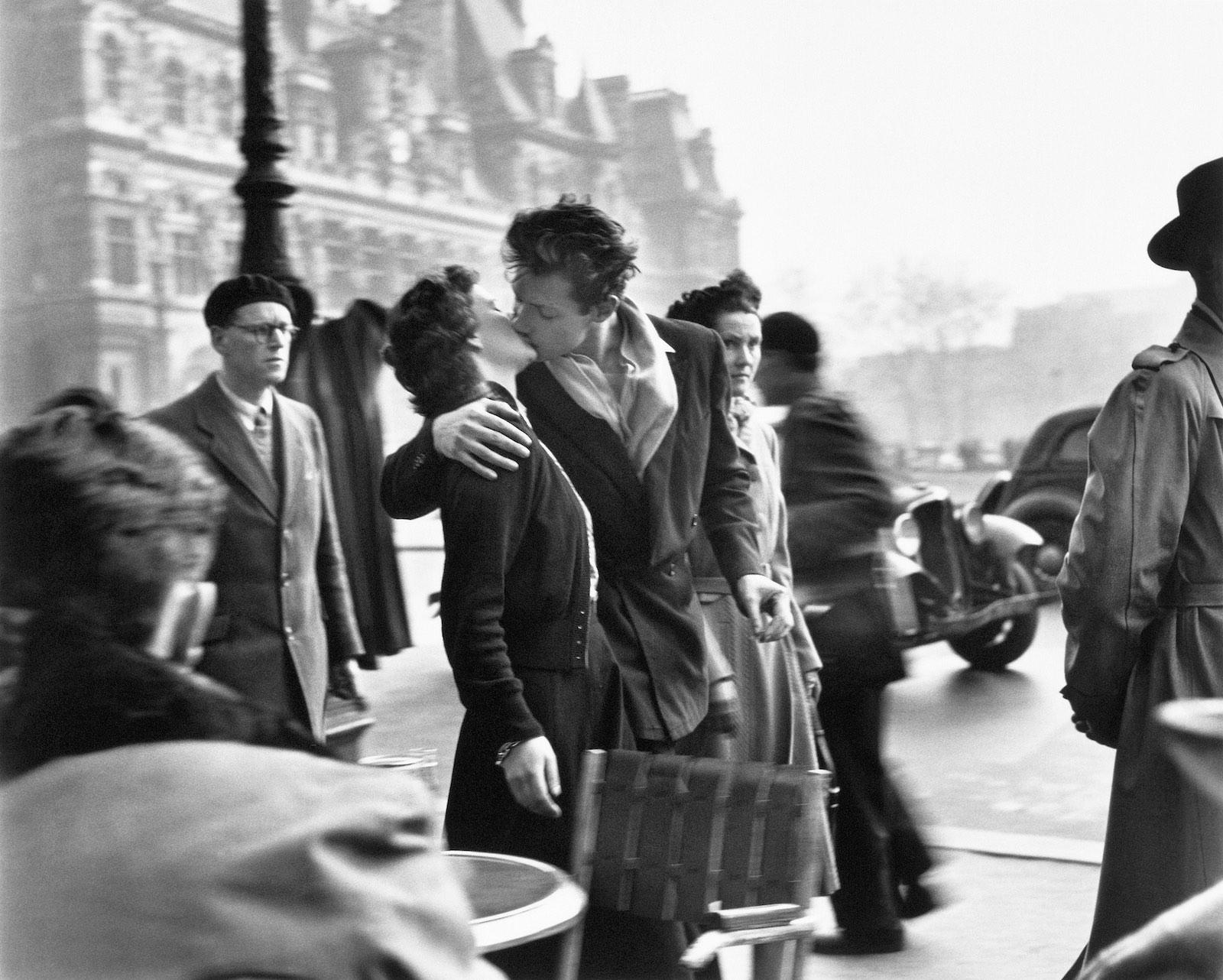
One of his most famous works is Le baiser de l’hôtel de ville (The Kiss by the Town Hall), taken in 1950. This photograph, which depicts a young couple kissing amidst the hustle and bustle of Paris, has become one of the most enduring symbols of romance and the vitality of city life. It exemplifies Doisneau’s ability to find beauty in the ordinary, to freeze fleeting moments of emotion and turn them into timeless pieces of art.
Doisneau’s Paris is not the glamorous city of fashion and luxury often depicted in magazines and films. Instead, it is a city of small cafes, street markets, and working-class neighborhoods. His photographs of Paris are populated by children playing in the streets, couples strolling by the Seine, and elderly men reading newspapers in the park. These images capture the soul of the city, portraying it as a place where life unfolds in simple, yet profound ways.
Artistic Philosophy and Technique
Robert Doisneau’s approach to photography was deeply personal and intuitive. He often described himself as a “fisher of images,” someone who patiently waited for the right moment to capture a scene. This approach required not only technical skill but also a keen sense of observation and an understanding of human nature.
Doisneau’s photography is characterized by its spontaneity and its emphasis on natural, unposed moments. He believed that photography should be a reflection of life as it is, rather than as it is staged or idealized. This philosophy is evident in his work, which often features candid shots of people going about their daily lives, unaware that they are being photographed.
Despite his preference for spontaneity, Doisneau was also meticulous in his craft. He carefully composed his shots, paying close attention to light, shadow, and composition. His images are often marked by a sense of balance and harmony, with each element of the photograph contributing to the overall narrative.
Impact on the Art World and Legacy
Robert Doisneau’s work has had a profound impact on the world of photography and beyond. He helped to elevate photography to the status of fine art, demonstrating that it could be a powerful medium for expressing complex ideas and emotions. His images have been exhibited in galleries and museums around the world, and his influence can be seen in the work of countless photographers who followed in his footsteps.
Doisneau’s legacy extends beyond his photographs. He was a key figure in the development of the humanist photography movement, which continues to inspire photographers to this day. His work has been celebrated in numerous publications, and his photographs remain some of the most recognizable and beloved images of the 20th century.
In addition to his artistic achievements, Doisneau was also a mentor and collaborator to many other photographers. His generosity and willingness to share his knowledge and experience helped to nurture a new generation of photographers who carried on his commitment to capturing the human condition.
Publications and Recognition
Throughout his career, Robert Doisneau published several books and collections of his photographs. Some of the most notable include Robert Doisneau: Three Seconds of Eternity and Robert Doisneau, Il fotografo poeta, which was published by Federico Motta Editore in 1996 with a preface by Lalla Romano. These publications, along with numerous exhibitions and retrospectives, have helped to solidify Doisneau’s place in the pantheon of great photographers.
Doisneau received numerous accolades for his work, including several prestigious awards. His contributions to photography were recognized not only in France but around the world, and he remains one of the most celebrated photographers of the 20th century.
The Later Years and Passing
In his later years, Robert Doisneau continued to photograph and document the world around him, although at a slower pace. He remained committed to his craft until the very end, always driven by a deep curiosity and a desire to capture the beauty of everyday life.
Doisneau passed away on April 1, 1994, at the age of 81. His death marked the end of an era, but his legacy lives on through his photographs, which continue to inspire and move people around the world.
Conclusion
Robert Doisneau’s life and work are a testament to the power of photography to capture the essence of humanity. Through his lens, Doisneau documented the world in a way that was both honest and poetic, revealing the beauty and complexity of everyday life. His images of Paris, in particular, have become iconic representations of the city and its people, immortalizing moments that might otherwise have been forgotten.
As we reflect on Doisneau’s contributions to the art of photography, it is clear that his work will continue to resonate for generations to come. His photographs are not just images; they are windows into a world that is at once familiar and extraordinary, a world where the ordinary becomes art and where every moment is worth capturing.


