
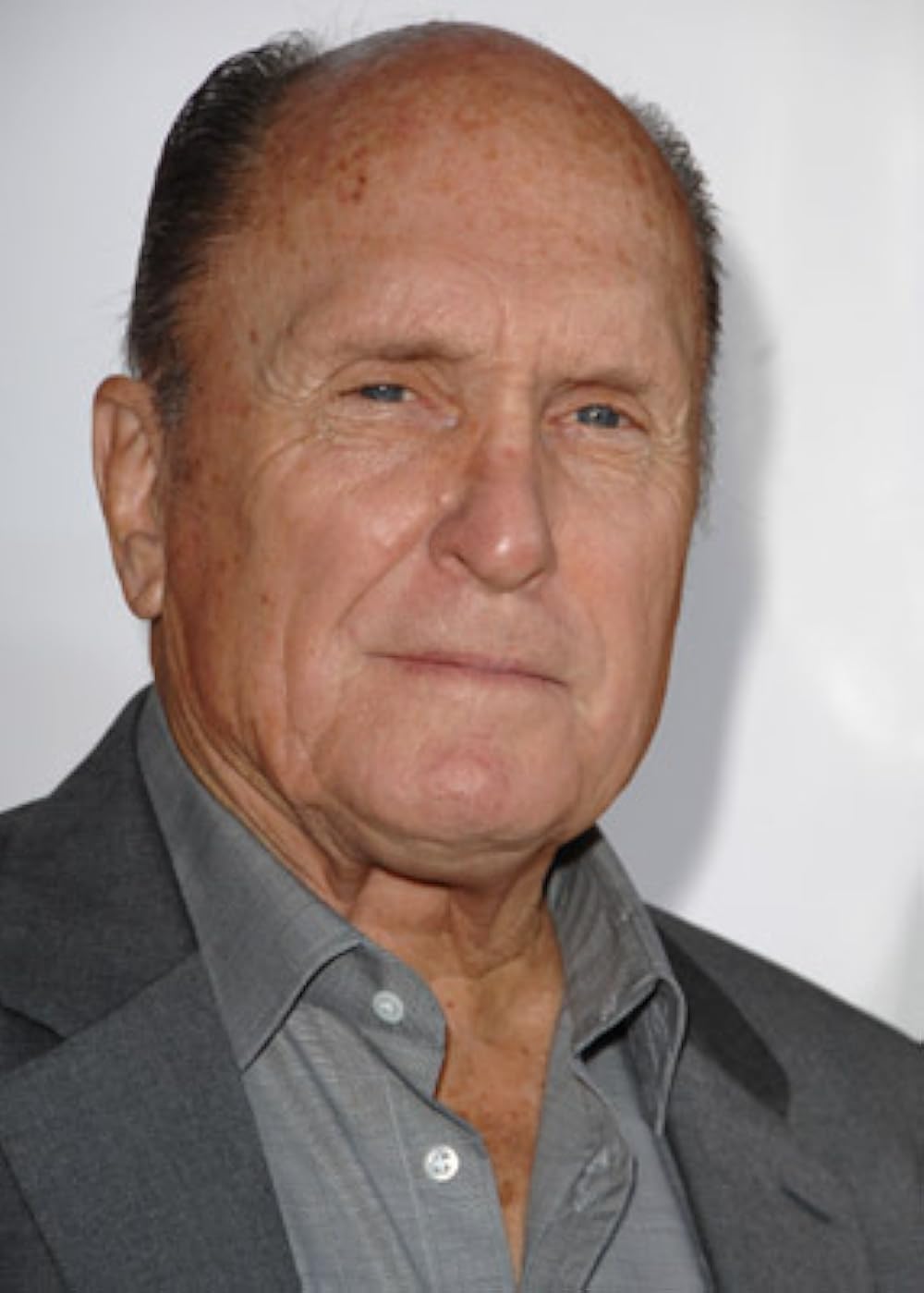
Robert Duvall, born on January 5, 1931, in San Diego, California, is an iconic figure in Hollywood, known for his extraordinary acting career that has spanned over six decades. With a talent that has graced both stage and screen, Duvall’s contributions to the world of cinema have earned him a reputation as one of the most versatile and respected actors of his generation. This article delves into the life, fame, and key highlights of Robert Duvall, exploring his journey from a young theater actor to an Academy Award-winning star.
Early Life and Background
Robert Selden Duvall was born into a military family; his father, William Howard Duvall, was a Rear Admiral in the United States Navy, and his mother, Mildred Virginia Hart, was an amateur actress. Growing up, Duvall moved frequently due to his father’s naval career, which exposed him to various parts of the country. Despite this transient lifestyle, he developed an early interest in acting, influenced by his mother’s passion for the arts.
Duvall attended Severn School in Maryland and later graduated from Principia College in Illinois with a degree in history and political science. After serving a brief stint in the United States Army during the Korean War, Duvall decided to pursue his true passion—acting. He enrolled in the prestigious Neighborhood Playhouse School of the Theatre in New York City, where he studied under the legendary acting teacher Sanford Meisner.
During his time in New York, Duvall shared an apartment with fellow aspiring actors Dustin Hoffman and Gene Hackman, both of whom would also go on to become Hollywood legends. The trio struggled through the early years of their careers, taking on small roles in theater productions and television shows.
Early Career and Breakthrough
Robert Duvall’s professional acting career began on the stage in the 1950s, where he honed his craft in Off-Broadway productions. His early theater work included performances in plays such as The Midnight Caller and A View from the Bridge. However, it was his transition to film that would eventually catapult him to stardom.
Duvall made his film debut in 1962 with a small but memorable role in To Kill a Mockingbird, where he portrayed Boo Radley, a reclusive and mysterious character. Although his screen time was limited, Duvall’s performance left a lasting impression on audiences and critics alike, showcasing his ability to convey deep emotion with minimal dialogue.
Following this breakthrough, Duvall continued to build his career with supporting roles in films such as Captain Newman, M.D. (1963) and The Chase (1966). However, it was during the 1970s that he truly found his stride, becoming a prominent figure in American cinema.
The Golden Era: 1970s Success
The 1970s were a defining decade for Robert Duvall, as he starred in a series of iconic films that solidified his place in Hollywood. His versatility as an actor allowed him to take on a wide range of roles, from military officers to lawyers, and even eccentric personalities.
One of Duvall’s most notable roles came in 1972 when he was cast as Tom Hagen, the consigliere to the Corleone family in The Godfather. Directed by Francis Ford Coppola, the film is considered one of the greatest in cinema history. Duvall’s portrayal of Hagen, a calm and composed advisor, earned him widespread acclaim and an Academy Award nomination for Best Supporting Actor. He reprised the role in The Godfather Part II (1974), further cementing his association with the legendary film series.
Duvall’s collaboration with Coppola continued with Apocalypse Now (1979), where he played the flamboyant and fearless Lieutenant Colonel Bill Kilgore. The film, set during the Vietnam War, featured one of Duvall’s most famous lines: “I love the smell of napalm in the morning.” His performance earned him a Golden Globe Award and another Academy Award nomination, further establishing him as a leading actor of his generation.
Other significant films from this era include MASH (1970), where Duvall played Major Frank Burns in Robert Altman’s anti-war comedy, and Network (1976), directed by Sidney Lumet, where Duvall portrayed the ruthless television executive Frank Hackett. These roles showcased his ability to navigate between drama and satire, making him one of the most sought-after actors of the decade.
Awards and Recognition
Throughout his career, Robert Duvall has received numerous accolades for his work in film and television. His first Academy Award win came in 1983 for his role in Tender Mercies, where he played Mac Sledge, a washed-up country singer seeking redemption. Duvall’s understated and deeply emotional performance won him the Oscar for Best Actor, a testament to his ability to bring complex characters to life with authenticity and grace.
In addition to his Oscar win, Duvall has received several other nominations throughout his career, including for his roles in The Great Santini (1979), The Apostle (1997), and The Judge (2014). He has also won four Golden Globe Awards, a BAFTA Award, and an Emmy Award, further solidifying his status as one of the most decorated actors in Hollywood.
Directorial Ventures and Later Career
In addition to his work as an actor, Robert Duvall has also ventured into directing. His directorial debut came in 1983 with the film Angelo My Love, a drama about the lives of Romani people in New York City. Duvall’s interest in the Romani culture stemmed from his time living in Europe, and the film was praised for its authentic portrayal of a marginalized community.
Duvall’s most significant directorial effort came in 1997 with The Apostle, a film he also wrote and starred in. The film tells the story of a charismatic but flawed preacher who seeks redemption after a violent act. The Apostle was a passion project for Duvall, who financed the film himself after struggling to find studio backing. The film received critical acclaim, earning Duvall an Academy Award nomination for Best Actor and winning two Independent Spirit Awards.
In the 2000s, Duvall continued to take on a variety of roles, appearing in films such as Gone in 60 Seconds (2000), John Q (2002), and Open Range (2003), the latter of which he co-starred with Kevin Costner. His ability to seamlessly transition between genres, from action films to dramas, demonstrated his versatility as an actor even in the later stages of his career.
Robert Duvall in the 2010s and Beyond
Even as he entered his 80s, Robert Duvall showed no signs of slowing down. In the 2010s, he appeared in several notable films, including Get Low (2009), Jack Reacher (2012), and The Judge (2014), the latter of which earned him his seventh Academy Award nomination. In The Judge, Duvall played the role of a tough, aging judge who is estranged from his son, portrayed by Robert Downey Jr. The film was praised for the chemistry between Duvall and Downey, and Duvall’s performance was lauded as one of the highlights of his later career.
In 2015, Duvall directed and starred in Wild Horses, a modern-day Western that explored themes of family and justice. Although the film received mixed reviews, it was a testament to Duvall’s continued passion for storytelling and his willingness to take creative risks.
Personal Life and Legacy
Robert Duvall’s personal life has been marked by a series of marriages and long-term relationships. He has been married four times, with his current wife, Luciana Pedraza, being a significant presence in his life. The couple, who share a passion for tango, split their time between the United States and Argentina, where they have a ranch.
Duvall’s legacy as an actor is undeniable. His ability to inhabit a wide range of characters, from Southern preachers to military officers, has made him one of the most respected and versatile actors in Hollywood history. His contributions to cinema, both as an actor and a director, have left an indelible mark on the industry, inspiring countless actors and filmmakers.
Conclusion
Robert Duvall’s career is a testament to the power of perseverance, talent, and a deep love for the craft of acting. From his early days in the theater to his iconic roles in some of the most celebrated films in cinema history, Duvall has consistently demonstrated a commitment to excellence. His ability to bring depth and authenticity to every role he undertakes has earned him a place among the greatest actors of all time.
As we look back on his illustrious career, it is clear that Robert Duvall’s impact on Hollywood will continue to be felt for generations to come. His dedication to his art, his willingness to take on challenging roles, and his unwavering integrity have made him a true legend in the world of film.


