
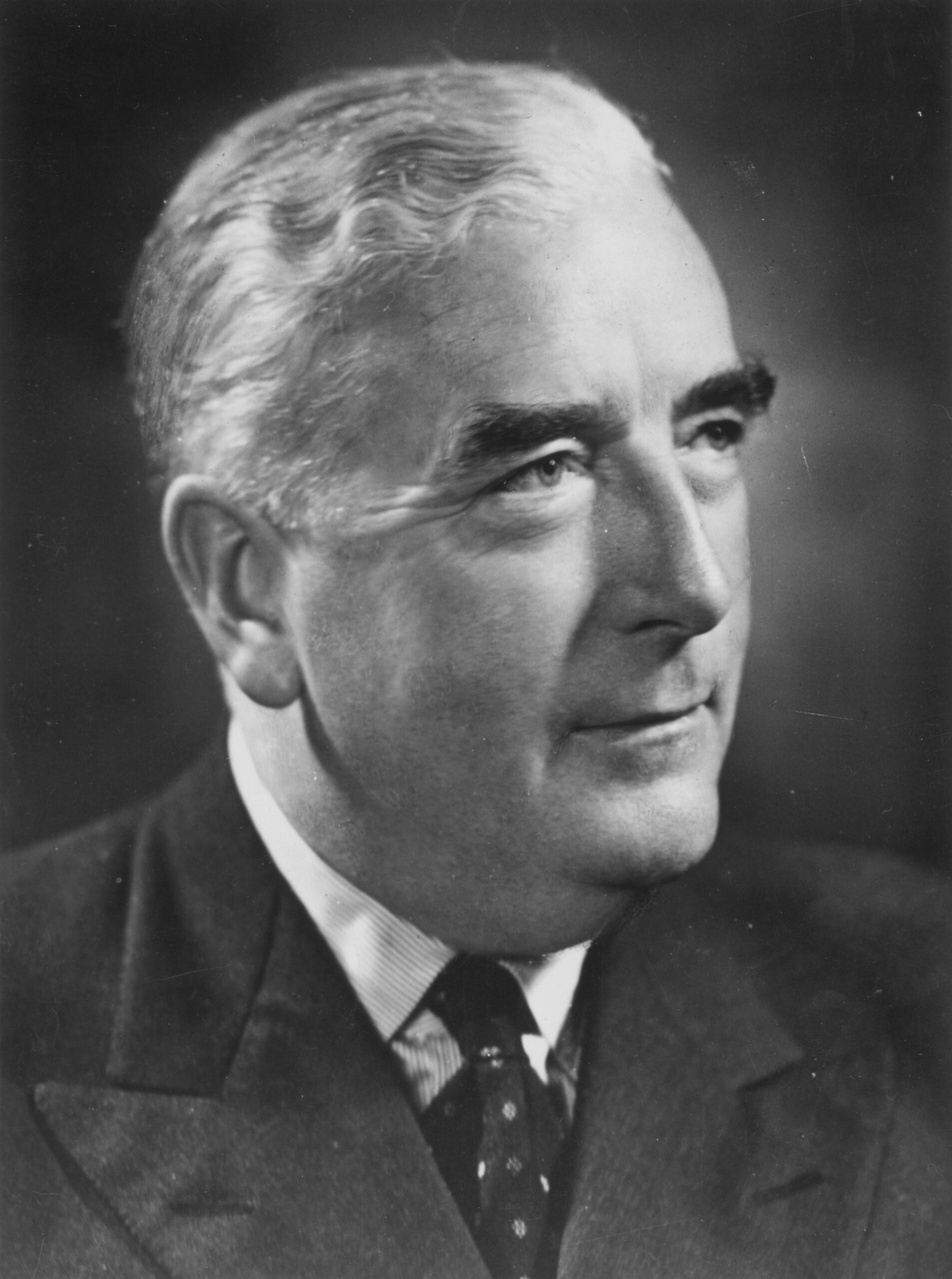
Robert Gordon Menzies, born on December 20, 1894, in Jeparit, Australia, was a towering figure in Australian political history. Serving as the 12th Prime Minister of Australia, Menzies holds the record as the country’s longest-serving prime minister, with a total of 18 years and six months in office. His legacy is not just defined by his political longevity but also by his profound impact on Australia’s domestic and foreign policies during a period marked by global upheaval and transformation. This article provides a comprehensive exploration of Robert Menzies’ life, his rise to fame, and the key highlights of his remarkable career.
Early Life and Education
Robert Menzies was born into a family deeply involved in public service and politics. His father, James Menzies, was a warehouseman who later became a member of the Victorian Parliament. Robert’s Scottish heritage was a significant aspect of his identity, earning him the nickname “Ming,” derived from the Scottish pronunciation of “Menzies.” This sense of pride in his ancestry would later play a role in shaping his public persona and political ideals.
Menzies was an outstanding student, and his academic prowess led him to the University of Melbourne, where he studied law. He graduated in 1918, a year after the conclusion of World War I, which had begun when he was just 19 years old. Although Menzies did not serve in the military during the war—a decision that later became a point of criticism from his political opponents—he quickly established himself as one of Melbourne’s most prominent lawyers.
Entry into Politics
Menzies’ legal career provided him with a platform to enter politics, and in 1928, he invested his savings in a campaign that successfully saw him elected to the Victorian Parliament. His political rise was swift, and by 1932, he was serving as Deputy Premier of Victoria. His sharp intellect and legal expertise made him a formidable figure within the political landscape of the time.
In 1934, Menzies made the transition to federal politics, winning a seat in the Australian Parliament as a member of the United Australia Party (UAP), a conservative political party. He quickly became a key figure in the government of Prime Minister Joseph Lyons, serving as Attorney-General and Minister for Industry. Menzies’ influence within the UAP grew rapidly, and he was soon recognized as the natural successor to Lyons.
The Road to Prime Ministership
Menzies’ ambition to lead the country became evident as he climbed the political ranks. However, his ascent was not without controversy. He earned the nickname “Pig Iron Bob” during an industrial dispute in the late 1930s, when dockworkers refused to load scrap iron bound for Japan, fearing it would be used for military purposes. Menzies, as Minister for Industry, insisted that the workers fulfill their contract, a stance that alienated some sections of the electorate but also demonstrated his commitment to the rule of law.
The outbreak of World War II in 1939 was a turning point for Menzies. When Prime Minister Joseph Lyons died suddenly on April 7, 1939, Menzies was seen as his natural successor. After a brief interim period under the leadership of Earle Page, Menzies was elected leader of the UAP and became Prime Minister of Australia on April 26, 1939.
Menzies’ First Term as Prime Minister
Robert Menzies’ first term as Prime Minister was fraught with challenges. As the leader of a nation at war, he faced immense pressure both domestically and internationally. Despite his best efforts to rally the nation, Menzies’ leadership was questioned, partly due to his decision not to enlist during World War I, which his political adversaries used to undermine his credibility.
In 1941, Menzies traveled to Britain to consult with Winston Churchill and other Allied leaders on the war strategy. However, his absence from Australia during such a critical time exacerbated tensions within his government. Upon his return, he found that his political support had eroded, leading to his resignation as Prime Minister on August 28, 1941. Arthur Fadden, leader of the Country Party, succeeded him, but Menzies’ political career was far from over.
The Formation of the Liberal Party and Return to Power
After his resignation, Menzies contemplated leaving politics altogether. However, the political landscape in Australia was shifting, and Menzies saw an opportunity to redefine the conservative movement in the country. In 1944, he began organizing a series of conferences with the goal of creating a new political party that would unite various conservative and liberal elements under one banner. This effort culminated in the founding of the Liberal Party of Australia in 1945.
The Liberal Party, under Menzies’ leadership, quickly became a formidable force in Australian politics. Although the party faced a significant defeat in the 1946 elections, Menzies persevered, believing that the tide would eventually turn in his favor. His perseverance paid off in 1949, when the Liberal Party won a decisive victory, and Menzies once again became Prime Minister.
Menzies’ Second Term: Domestic Achievements
Menzies’ second term as Prime Minister was marked by significant domestic achievements. His government oversaw a period of economic growth and stability, driven by a post-war boom that saw rapid industrialization, increased immigration, and substantial investment in infrastructure.
One of Menzies’ key domestic policies was the expansion of Australia’s immigration program. He believed that a larger population was essential for the country’s economic development and national security. Under his leadership, Australia welcomed millions of immigrants, particularly from Europe, who contributed to the nation’s growth and multiculturalism.
Menzies also placed a strong emphasis on education, believing that it was crucial for Australia’s future prosperity. His government increased funding for universities and established new institutions of higher learning. This focus on education laid the foundation for Australia’s modern education system and helped to cultivate a highly skilled workforce.
In addition to his domestic policies, Menzies was a staunch defender of individual freedoms and the rule of law. He opposed the expansion of government powers and was a vocal critic of socialism, which he saw as a threat to personal liberty and economic prosperity. His conservative values resonated with a broad section of the Australian electorate, ensuring his political dominance for much of the 1950s and 1960s.
Foreign Policy and Cold War Leadership
Menzies’ tenure as Prime Minister coincided with the early years of the Cold War, a period of heightened tension between the Western powers and the Soviet Union. Menzies was a committed anti-communist, and his foreign policy was heavily influenced by his desire to protect Australia from the spread of communism.
One of the key moments in Menzies’ foreign policy was his decision to commit Australian troops to the Korean War in 1950. This move demonstrated Australia’s willingness to support its allies, particularly the United States, in the fight against communism. Menzies also strengthened Australia’s ties with Britain and the United States, ensuring that the country remained closely aligned with the Western powers during the Cold War.
Menzies’ anti-communist stance was further reinforced by the Petrov Affair in 1954, a major espionage scandal that involved the defection of a Soviet diplomat in Australia. The affair exposed the existence of a Soviet spy network in Australia and heightened fears of communist infiltration. Menzies used the affair to galvanize support for his government, which won the 1954 election with a significant majority.
Throughout his time in office, Menzies maintained a close relationship with the British monarchy, particularly with Queen Elizabeth II. His admiration for the British Empire and its traditions was evident in his public speeches and policies. However, Menzies also recognized the importance of Australia’s relationship with the United States, particularly as Britain’s influence in the Asia-Pacific region waned. This dual allegiance to both Britain and the United States defined Australia’s foreign policy during Menzies’ time in office.
Economic Prosperity and the “Menzies Era”
The period of Menzies’ second term is often referred to as the “Menzies Era,” a time of unprecedented economic prosperity and social stability in Australia. The post-war economic boom saw rapid growth in manufacturing and construction, fueled by a surge in exports and government investment in infrastructure projects.
Menzies’ government played a crucial role in facilitating this economic expansion. His policies encouraged private enterprise and foreign investment, which helped to create jobs and boost the economy. The government also implemented measures to support the agricultural sector, which remained a key pillar of the Australian economy.
The “Menzies Era” was also marked by significant social change. The influx of immigrants transformed Australia’s demographic landscape, making the country more diverse and multicultural. This period saw the emergence of a new middle class, which enjoyed rising living standards and greater access to education and healthcare.
Menzies’ political dominance during this period was reflected in his repeated electoral victories. He led the Liberal Party to victory in seven consecutive federal elections, a testament to his popularity and the stability of his government.
Retirement and Legacy
Robert Menzies retired from politics in January 1966, bringing an end to his long and illustrious career. His successor as Prime Minister and leader of the Liberal Party was Harold Holt, who had served as Menzies’ Minister for Finance. After his retirement, Menzies remained active in public life, traveling to the United States for lectures and publishing two volumes of memoirs.
Menzies’ legacy is a complex one. He is remembered as a skilled and pragmatic leader who presided over a period of economic growth and social change in Australia. His commitment to conservative values and individual freedoms shaped the direction of Australian politics for decades. However, his close ties to Britain and his reluctance to embrace a more independent Australian identity have been critiqued by some historians.
Despite these criticisms, Menzies’ impact on Australian history is undeniable. He played a central role in shaping the nation’s political landscape and left a lasting imprint on its institutions and society. Menzies’ name remains synonymous with stability, prosperity, and strong leadership, making him one of Australia’s most significant historical figures.
Conclusion: The Enduring Influence of Robert Menzies
Robert Menzies’ life and career offer a window into a transformative period in Australian history. His leadership during times of war, economic expansion, and social change helped to define the direction of the nation. Menzies’ ability to navigate the challenges of his time with pragmatism and resolve ensured his place as a central figure in Australia’s political legacy.
As we reflect on the life of Robert Menzies, we are reminded of the complexities of leadership and the enduring impact of one man’s vision on the course of a nation’s history. His contributions to Australia’s political and economic development continue to be felt today, and his legacy as the country’s longest-serving Prime Minister remains a testament to his enduring influence.


