
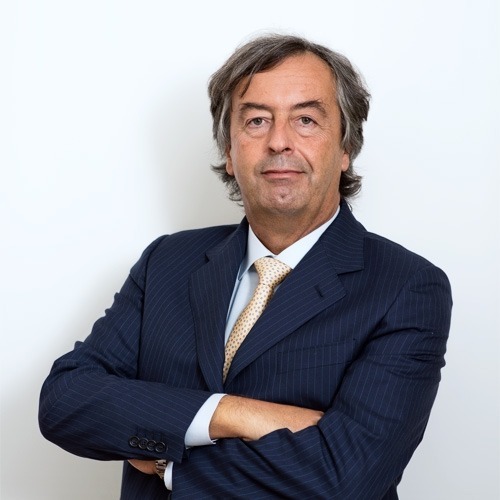
Roberto Burioni is a prominent Italian virologist, academic, and science communicator who gained widespread recognition for his expertise in immunology and his vocal stance on the importance of vaccinations. Born on December 10, 1962, in Pesaro, Italy, Burioni’s career trajectory has positioned him as one of the most influential voices in contemporary medical science, especially in the context of the public health debates surrounding vaccines.
Early Life and Education
Roberto Burioni’s journey into the world of science began in his hometown of Pesaro, where he displayed an early affinity for learning. He pursued his secondary education at the Liceo Classico Raffaello in Urbino, a prestigious institution that laid the groundwork for his intellectual development. Following his graduation, Burioni enrolled at the Università Cattolica del Sacro Cuore in Rome, where he studied Medicine and Surgery. This was the beginning of a distinguished academic career that would see him delve deeply into the specialized fields of allergology and immunology.
After obtaining his medical degree, Burioni continued his education by specializing in Clinical Allergology and Immunology at the Università Politecnica delle Marche. His pursuit of knowledge didn’t stop there; he furthered his studies by completing a Ph.D. in Microbiological Sciences at the University of Genoa. These qualifications established Burioni as an expert in the mechanisms of immune responses, particularly in relation to infectious diseases.
His academic prowess was complemented by several international experiences. As a visiting student, Burioni spent time at the Centers for Disease Control and Prevention (CDC) in Atlanta, Georgia, and the Wistar Institute at the University of Pennsylvania, where he worked in the laboratory of Hilary Koprowski, a pioneer in virology. His time at these institutions allowed him to hone his research skills and deepen his understanding of infectious diseases on a global scale.
In 1989, Burioni expanded his horizons by joining the Center for Molecular Genetics at the University of California, San Diego, as a visiting scientist. His career in research continued to flourish as he later worked at the Scripps Research Institute, a world-renowned institution in biomedical research.
Academic Career and Research Contributions
The 1990s were a significant period for Burioni’s career as he began to establish himself as a leading researcher in Italy. He initially worked as a researcher at the Università Cattolica del Sacro Cuore in Rome before moving to the Università Politecnica delle Marche in 1994. Here, he continued to develop his expertise in virology and immunology, focusing particularly on the development of monoclonal antibodies, a field in which he would make significant contributions.
Burioni’s research primarily centered on the immune response to human pathogens. His work involved the refinement of therapeutic approaches based on recombinant human monoclonal antibodies and the use of molecular tools for the early diagnosis of infectious diseases. These efforts were crucial in advancing the medical community’s understanding of how to combat various infectious agents, including viruses that pose a significant threat to public health.
In 2004, Burioni’s academic career took a decisive turn when he was appointed as an associate professor at the Università Vita-Salute San Raffaele in Milan. His role as an educator was as impactful as his research, and by 2007, he had become a full professor of Microbiology and Virology. At San Raffaele, he led a research laboratory dedicated to immunological studies, where he continued his work on monoclonal antibodies and other innovative therapies.
The Rise to Fame: Advocacy for Vaccination
Roberto Burioni’s ascent to fame did not occur within the quiet halls of academia but rather in the public arena, where he became a staunch advocate for vaccination. His involvement in the national debate on vaccines in Italy began to gain significant attention in the late 2010s, a time when misinformation about vaccines was becoming increasingly pervasive, particularly on social media platforms.
In October 2016, Burioni published his first book, Il vaccino non è un’opinione (The Vaccine is Not an Opinion), aimed at debunking myths and misinformation about vaccines. The book was a response to the growing anti-vaccine movement, which had gained traction in Italy and elsewhere. Burioni’s clear and scientifically grounded arguments resonated with the public, earning him the Premio Asimov for scientific dissemination in 2017, an award organized by the Gran Sasso Science Institute.
The turning point in Burioni’s public visibility came in May 2016, during a televised debate on the Rai 2 program Virus – Il contagio delle idee, hosted by Nicola Porro. During the show, Burioni faced off against Red Ronnie, a popular Italian music critic who expressed anti-vaccine sentiments, calling vaccination “madness.” Burioni’s rebuttal was concise but limited by the constraints of the show’s format. Frustrated by his inability to fully address the issue on air, Burioni took to Facebook to elaborate on his position.
His Facebook post went viral, garnering over 5 million views and nearly 50,000 shares. The post sparked a widespread protest against scientific misinformation and solidified Burioni’s role as a public defender of science. His straightforward approach and willingness to confront misinformation head-on made him a polarizing figure, but also a crucial one in the fight to maintain public trust in vaccines.
Burioni’s advocacy continued as he published more books, each one addressing different aspects of public health and scientific literacy. His 2018 book, Balle Mortali (Deadly Lies), further explored the consequences of misinformation, particularly in the context of health.
The Burioni Phenomenon: Media Presence and Scientific Advocacy
As Burioni’s fame grew, so did his influence. He became a regular presence on Italian television and radio, where he discussed the importance of vaccinations and the dangers of pseudoscience. His media appearances often involved debates with those who promoted unscientific views, making him a central figure in Italy’s public health discourse.
In 2019, Burioni launched MedicalFacts.it, a website dedicated to scientific dissemination, particularly in the medical field. The website was designed to counteract the spread of false information by providing accessible, accurate, and reliable content on health-related topics. Through this platform, Burioni reached an even broader audience, continuing his mission to educate the public.
Burioni’s efforts in public health advocacy did not go unnoticed. He received numerous awards for his work, including the Jano Planco d’Oro in 2017, the UNAMSI Annual Prize for Medicine in 2017, the Campione della Scienza award in 2019, and the Evidence Award from the GIMBE Foundation in Bologna, also in 2019. These accolades recognized Burioni’s contributions to science communication and his role in promoting evidence-based medicine.
Roberto Burioni and the COVID-19 Pandemic
The COVID-19 pandemic, which emerged in 2020, provided yet another platform for Burioni to demonstrate his commitment to public health. As the virus spread globally, Burioni became a key figure in Italy’s response to the pandemic. He focused on disseminating accurate information about the virus, preventive measures, and the importance of isolation to curb the spread.
During this period, Burioni published another book, Virus – la grande sfida (Virus: The Great Challenge), in which he explored the history of pandemics and the role of science in combating them. The proceeds from the book were donated to scientific research on coronaviruses, further cementing Burioni’s dedication to public health.
Burioni’s contributions during the pandemic extended beyond his writing and media appearances. He was actively involved in advising on public health measures and advocating for the rapid development and distribution of COVID-19 vaccines. His voice was one of reason and scientific rigor in a time of uncertainty and fear, making him a trusted source of information for millions of Italians.
Conclusion
Roberto Burioni’s life and career are a testament to the power of science and the importance of clear, evidence-based communication in the public sphere. From his early days as a medical student to his role as a leading voice in the fight against misinformation, Burioni has consistently demonstrated a commitment to improving public health. His work has not only advanced the field of immunology but has also played a crucial role in shaping public discourse around vaccines and infectious diseases.
As we look back on his achievements, it is clear that Roberto Burioni’s influence extends far beyond the laboratory. He has become a symbol of scientific integrity and a beacon of truth in an age where misinformation can spread as quickly as a virus. His legacy will undoubtedly continue to inspire future generations of scientists, educators, and public health advocates.


