
Introduction
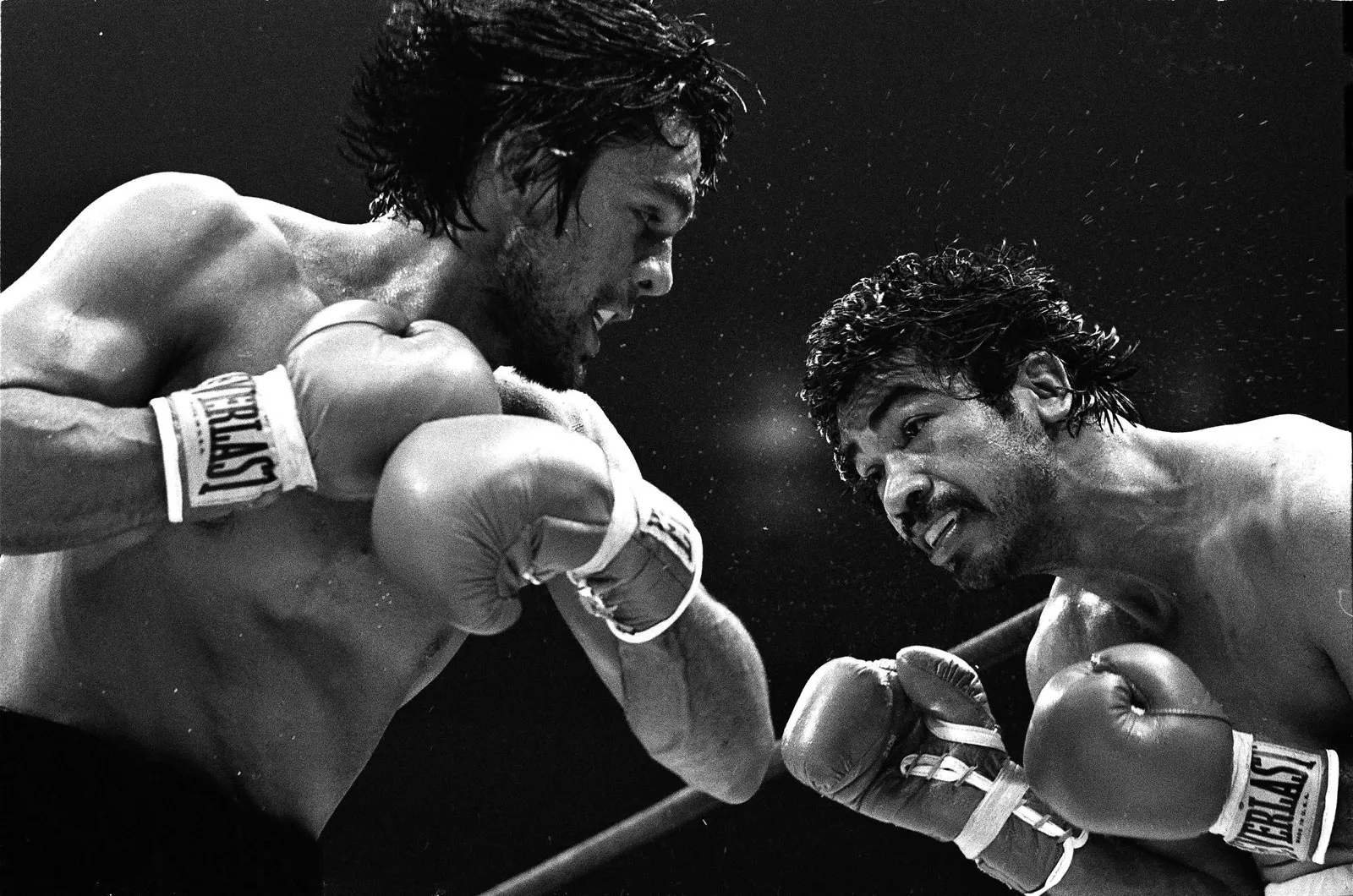
Roberto Durán, widely known by his moniker “Manos de Piedra” or “Hands of Stone,” is one of the most celebrated figures in the history of boxing. Born on June 16, 1951, in Panama, Durán’s career is a remarkable tale of resilience, power, and skill that transcended the sport of boxing and made him an international icon. His journey from a humble beginning in Panama to becoming a four-division world champion is a testament to his unparalleled talent and tenacity. This article delves into the life and career of Roberto Durán, exploring the significant moments that defined his rise to fame, his battles in the ring, and his enduring legacy in the world of sports.
Early Life and Career Beginnings
Roberto Durán Samaniego was born in the impoverished neighborhood of El Chorrillo in Panama City. Growing up in a challenging environment, Durán discovered boxing at a young age, which quickly became his passion and escape from the harsh realities of life. His natural talent for the sport was evident early on, and by the time he was 16, Durán had turned professional, debuting in the bantamweight division. On February 23, 1968, Durán won his first professional fight against Carlos Mendoza, marking the beginning of an illustrious career.
Durán’s early career was characterized by a rapid rise through the ranks. He quickly moved from bantamweight to lightweight, amassing an impressive record of 28 victories with 24 coming by way of knockout. His ferocity in the ring earned him the nickname “Manos de Piedra,” a fitting tribute to his devastating punching power. This period of his career set the stage for his eventual ascent to global stardom.
The Rise to Prominence: Lightweight Champion
Roberto Durán’s breakthrough came in 1972 when, at the age of 21, he faced Scottish boxer Ken Buchanan for the WBA lightweight title at Madison Square Garden in New York City. Buchanan was a formidable opponent, with a record of 43 wins and just one loss. However, Durán’s relentless aggression and powerful punching proved too much for the champion. In a controversial bout that ended with Durán delivering a punch after the bell in the 13th round, Buchanan was unable to continue, and Durán was declared the winner. With this victory, Durán claimed his first world title and established himself as one of the top fighters in the sport.
Durán’s reign as the WBA lightweight champion was dominant. He successfully defended his title multiple times, often winning by knockout. However, his first significant challenge came in 1973 when he faced Esteban de Jesús, a Puerto Rican boxer who handed Durán his first professional loss. The non-title bout saw Durán hit the canvas in the first round, and although he fought back, he ultimately lost by unanimous decision. Despite this setback, Durán’s reputation remained intact, and he would soon get his chance at redemption.
Redemption and Continued Success
In 1974, Roberto Durán and Esteban de Jesús met again, this time with the WBA lightweight title on the line. The rematch was highly anticipated, and Durán was determined to avenge his earlier defeat. In a grueling contest, Durán was knocked down again in the first round, but this time he rose to dominate the fight, eventually knocking out de Jesús in the 11th round. This victory not only solidified Durán’s status as the undisputed lightweight champion but also showcased his resilience and fighting spirit.
Durán and de Jesús would meet for a third time in 1978, in what would be Durán’s final fight as a lightweight. The bout, held at Caesars Palace in Las Vegas, ended in another knockout victory for Durán, reaffirming his superiority in the lightweight division. With nothing left to prove at lightweight, Durán made the decision to move up in weight, setting his sights on the welterweight division.
The Move to Welterweight and the Legendary Battles
Roberto Durán’s transition to the welterweight division marked a new chapter in his career. His most famous and perhaps most significant fight in this weight class came on June 20, 1980, when he faced the then-undefeated WBC welterweight champion, Sugar Ray Leonard. Leonard was the favorite, known for his speed and finesse, but Durán’s relentless pressure and powerful punches overwhelmed him. The fight, held in Montreal, was a brutal and closely contested battle, but Durán emerged victorious by unanimous decision, claiming the WBC welterweight title. This victory cemented Durán’s place as one of the greatest boxers of his era.
The rematch between Durán and Leonard took place just five months later on November 25, 1980, in New Orleans. The fight, famously known as the “No Más” fight, ended in controversy. After being outboxed and frustrated by Leonard’s tactics, Durán suddenly quit in the eighth round, saying “No más” (“No more”). The abrupt end to the fight shocked the boxing world and remains one of the most talked-about moments in the sport’s history. Despite the setback, Durán’s legacy was far from over.
Achievements Across Weight Divisions
After the “No Más” fight, Roberto Durán continued to compete, moving up to the super welterweight division. On June 16, 1983, his 32nd birthday, Durán challenged Davey Moore for the WBA super welterweight title. Durán delivered a masterful performance, dominating Moore and winning by a technical knockout in the eighth round. With this victory, Durán became a three-division world champion, further enhancing his legacy as one of boxing’s all-time greats.
Durán’s quest for greatness didn’t stop there. In 1989, he moved up to the middleweight division and faced Iran Barkley for the WBC middleweight title. Despite being considered past his prime, Durán showed his enduring skill and toughness, winning a close split decision to capture his fourth world title in a fourth weight class. This achievement placed Durán in the rarefied company of fighters who had won world titles in four different weight divisions.
Later Career and Retirement
As Durán entered his late thirties and forties, his career began to wind down, but he remained active in the ring. In 1989, he fought Sugar Ray Leonard for the third time, this time at super middleweight. The fight, held in Las Vegas, ended in a unanimous decision win for Leonard, but Durán’s competitive spirit was undiminished.
Durán continued to fight sporadically throughout the 1990s, with varying degrees of success. Notably, in 1994, he faced Vinny Pazienza twice, losing both bouts by decision. Despite these setbacks, Durán remained a fan favorite, known for his fearless approach and willingness to fight anyone, regardless of the odds.
Roberto Durán’s final fight took place on July 14, 2001, at the age of 50. After a career spanning five decades, Durán officially retired following a car accident in Argentina that left him with severe injuries. He finished his career with an impressive record of 103 wins (70 by knockout) and 16 losses.
Legacy and Impact on Boxing
Roberto Durán’s impact on boxing is immeasurable. Known for his ferocity, relentless pressure, and iron will, Durán exemplified the qualities of a true champion. His ability to win world titles in four different weight classes, from lightweight to middleweight, is a testament to his versatility and skill. Durán’s career is also notable for the quality of his opposition; he fought and defeated some of the greatest fighters of his era, including Sugar Ray Leonard, Ken Buchanan, and Iran Barkley.
Durán’s influence extends beyond his accomplishments in the ring. He is revered in his native Panama as a national hero, and his success helped to raise the profile of boxing in Latin America. His life and career have been the subject of numerous documentaries, books, and films, most notably the 2016 biographical film “Hands of Stone,” in which Édgar Ramírez portrayed Durán and Robert De Niro played his trainer, Ray Arcel.
Conclusion
Roberto Durán’s legacy as one of the greatest boxers of all time is secure. His career, marked by incredible highs and some controversial moments, is a testament to his resilience, skill, and unyielding determination. Durán’s story is not just about boxing; it’s about the triumph of the human spirit, the pursuit of greatness, and the ability to overcome adversity. As we look back on his life and career, Roberto Durán stands as an enduring symbol of excellence in the sport of boxing, and his influence will continue to inspire future generations of fighters.


