
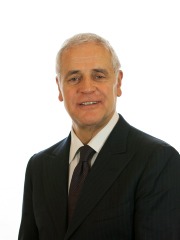
Roberto Formigoni, born on March 30, 1947, in Lecco, Italy, is a significant figure in Italian politics, known for his long-standing influence in both regional and national spheres. As one of the most notable Italian politicians of his generation, Formigoni’s career spans several decades, marked by notable achievements, controversies, and a complex legacy that continues to shape discussions in Italy today.
Early Life and Education
Roberto Formigoni grew up in a devout Catholic family, the eldest of three siblings. His parents, Doralice Baroni and Emilio Formigoni, instilled in him strong religious and moral values, which would later play a critical role in his political and personal life. He attended the prestigious Manzoni High School in his hometown before enrolling at the Catholic University of Milan, where he earned a degree in Philosophy in 1971. His academic journey didn’t stop there; Formigoni furthered his education by studying Political Economy at the Sorbonne in Paris, a move that broadened his intellectual horizons and exposed him to diverse political and economic ideologies.
During his university years, Formigoni’s involvement in religious activities intensified, particularly after meeting Don Luigi Giussani, the founder of the Catholic movement “Communion and Liberation.” This encounter was pivotal, leading him to join Gioventù Studentesca, a Christian student movement, and eventually becoming a prominent member of Communion and Liberation. By 1970, at the age of 23, Formigoni had become a Memores Domini, a lay association within the movement that emphasizes religious devotion and service.
Political Beginnings and Rise to Prominence
Formigoni’s political career began early, with his involvement in the Christian Democracy (DC) party, a dominant force in Italian politics during the mid-20th century. His political ascent was swift; in 1975, he founded the “Movimento Popolare” (Popular Movement), a political group closely aligned with Communion and Liberation, serving as its president until 1987. The movement was instrumental in mobilizing Catholic voters and shaping the Christian Democratic agenda during a time of significant political upheaval in Italy.
In 1984, Formigoni made his mark on the European stage, becoming the top vote-getter in the European Parliament elections on the DC ticket, with over 450,000 votes. His tenure in the European Parliament was distinguished by his election as President of the Political Commission and later as Vice-President of the Parliament. His influence in European politics was solidified with his re-election in 1989, showcasing his ability to navigate both Italian and European political landscapes effectively.
Domestically, Formigoni’s career continued to flourish. He was elected as a Member of the Italian Chamber of Deputies in 1987, representing the Christian Democrats. His role in the Chamber’s Foreign Affairs Committee was highlighted by his leadership of a parliamentary mission to Baghdad in 1990, where he successfully negotiated the release of 450 European hostages, including 250 Italians, from the regime of Saddam Hussein. This diplomatic success further elevated his status within Italian politics.
Transition to Regional Leadership
The early 1990s were a period of transformation in Italian politics, marked by the Tangentopoli scandal, which exposed widespread corruption within the political system. The Christian Democratic Party (DC) was rebranded as the Italian People’s Party (PPI), and Formigoni, along with Rocco Buttiglione, positioned himself within the more moderate faction of the party. This period also saw the founding of the Christian Democratic United (CDU) party, with Formigoni playing a central role in its development.
In 1995, Formigoni’s political career took a significant turn when he was elected President of the Lombardy Region, Italy’s wealthiest and most industrialized region. His election was backed by an alliance with Forza Italia, the political party founded by Silvio Berlusconi, and the Polo per le Libertà, a center-right coalition. Formigoni’s leadership in Lombardy marked the beginning of an unprecedented period of regional dominance, as he would go on to win four consecutive terms as President.
During his first term, Formigoni implemented several controversial policies, including the introduction of the “buono scuola” (school voucher) system, designed to provide financial assistance to families for private school tuition. While intended to promote educational choice, critics argued that the policy disproportionately benefited private schools at the expense of public education and bypassed constitutional restrictions on direct funding of private institutions.
Continued Success and Challenges
Formigoni’s success in Lombardy was reaffirmed in 2000 when he was re-elected with 62.4% of the vote, defeating Mino Martinazzoli. His administration continued to focus on educational reforms and regional development, but his policies remained a subject of debate and criticism. The school voucher system, in particular, became a flashpoint, with opponents claiming it funneled substantial public funds to a small percentage of students in private schools.
In 2005, Formigoni secured a third term as President, defeating the center-left candidate Riccardo Sarfatti. By this time, his influence in Lombardy was firmly established, and his political strategies became a model for other regional leaders in Italy. His administration’s focus on public-private partnerships and infrastructural development projects, such as the construction of Palazzo Lombardia, a new regional government headquarters, exemplified his approach to governance. However, these projects also attracted criticism for their high costs and environmental impact, particularly the destruction of the Bosco di Gioia, a historic green space in Milan.
Formigoni’s political career was not without its setbacks. His name was frequently mentioned in national politics, and in 2006, he was elected to the Italian Senate as a representative of Forza Italia. However, he chose to relinquish this position after three months, opting to focus entirely on his role as President of Lombardy. His re-election in 2010 for a fourth term, with 56.11% of the vote, was met with legal challenges and accusations of electoral irregularities, but these were ultimately dismissed by the courts.
Legal Troubles and Downfall
Despite his political acumen, Formigoni’s career was marred by legal controversies. In 2012, he became embroiled in the “Maugeri” and “San Raffaele” scandals, which involved allegations of corruption and the misappropriation of funds in the healthcare sector. The arrest of Pierangelo Daccò, a close associate of Formigoni, on charges of embezzling €70 million from the Maugeri Foundation, brought the scandal to the forefront. It was revealed that Daccò had financed several luxury trips for Formigoni and his family, leading to accusations of bribery and corruption.
The ensuing legal battles culminated in Formigoni being sentenced to six years in prison in 2016 for corruption. The sentence was later upheld by the Italian Supreme Court in February 2019, leading to his imprisonment. This marked a dramatic fall from grace for a politician who had once been one of Italy’s most powerful regional leaders.
Legacy and Impact
Roberto Formigoni’s legacy is a complex one, reflecting both his significant contributions to Italian regional politics and the controversies that ultimately overshadowed his career. As the longest-serving President of Lombardy, his tenure saw substantial economic growth and infrastructural development in the region. His policies on education, healthcare, and regional governance left an indelible mark on Lombardy, influencing the direction of the region for years to come.
However, his legal troubles and the corruption scandals that defined the later years of his career serve as a cautionary tale about the risks of power and the importance of ethical governance. Formigoni’s story is a reminder of the delicate balance between political ambition and moral responsibility, a theme that resonates in contemporary political discourse not just in Italy, but globally.
In summary, Roberto Formigoni’s life and career encapsulate the complexities of modern politics, where achievements are often accompanied by challenges and controversies. His influence on Italian politics, particularly in Lombardy, remains significant, but his legacy is forever tainted by the scandals that led to his eventual downfall.


