
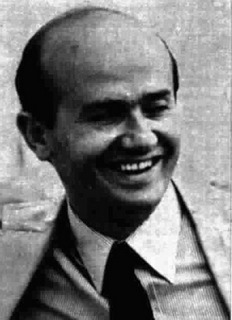
Roberto Gervaso was an influential Italian journalist, historian, and author, renowned for his sharp wit, penetrating aphorisms, and a prolific career that spanned several decades. Born on July 9, 1937, in Rome, Gervaso’s life was marked by his deep engagement with history, literature, and journalism. He passed away on June 2, 2020, in Milan at the age of 82, leaving behind a legacy that continues to resonate in the literary and journalistic circles.
Early Life and Education
Roberto Gervaso grew up in post-war Italy, a period marked by reconstruction and a profound cultural shift. This environment played a pivotal role in shaping his intellectual curiosity and his future career. Gervaso pursued higher education in both Italy and the United States, where he obtained a degree in Modern Literature. His studies laid a strong foundation for his future work, particularly his approach to history and literature, which combined rigorous scholarship with a flair for engaging storytelling.
The Beginnings of a Prolific Career
Gervaso’s career in journalism began in earnest in the early 1960s. He quickly established himself as a prolific writer, contributing to numerous newspapers and magazines. His work was not confined to the written word; Gervaso also made significant contributions to radio and television. His sharp commentary and incisive analysis made him a sought-after commentator on both political and cultural issues.
One of the key elements of Gervaso’s writing was his ability to distill complex ideas into pithy, memorable statements. This talent for aphorism made his work widely quoted and helped cement his reputation as a leading public intellectual. His aphorisms were not just clever turns of phrase but often carried deep insights into human nature and society.
Collaboration with Indro Montanelli: “Storia d’Italia”
One of the most significant milestones in Gervaso’s career was his collaboration with Indro Montanelli, another giant of Italian journalism. Together, they authored six volumes of the “Storia d’Italia,” a monumental work that chronicled Italian history from the fall of the Roman Empire to the modern era. This work was not just a historical account but also a reflection on the nature of power, politics, and society in Italy.
The “Storia d’Italia” series was lauded for its accessibility and narrative style, making it popular among both scholars and general readers. Gervaso’s contribution to the series was characterized by his sharp analysis and his ability to make history come alive. This work remains a cornerstone of his legacy and a testament to his skill as a historian.
Television and Radio: Reaching a Wider Audience
In addition to his work in print, Gervaso was a familiar face and voice on Italian television and radio. From 1996 to 2005, he hosted the program “Peste e Corna e… Gocce di storia” on Retequattro, where he provided commentary on both historical and contemporary issues. His ability to connect with the audience, combined with his sharp wit and deep knowledge, made the program a success.
Gervaso’s television work extended beyond commentary. In 2002, he presented the program “Storie dell’altro secolo,” which focused on historical narratives. Through these programs, Gervaso brought history to life for a broad audience, demonstrating his commitment to educating the public and his belief in the importance of understanding history to navigate the present.
Literary Achievements and Recognition
Over the course of his career, Roberto Gervaso authored 40 books, many of which have been translated into multiple languages, including English, Spanish, Portuguese, French, German, Japanese, Bulgarian, and Polish. His works covered a wide range of topics, from biographies to historical analysis, and were characterized by their rigorous scholarship and engaging style.
Among his most notable works are biographies of significant historical figures such as Cagliostro and Casanova. These biographies were not just accounts of these figures’ lives but also explorations of the broader social and cultural contexts in which they lived. Gervaso’s ability to weave these narratives into compelling stories earned him numerous literary accolades, including two prestigious Bancarella Prizes, which are awarded to authors of popular works of high literary quality.
Controversies and Challenges
Despite his many achievements, Gervaso’s career was not without controversy. In 1981, his name was linked to the infamous P2 Masonic Lodge, a secretive organization that was at the center of numerous political scandals in Italy during the late 20th century. Gervaso was listed as a member of this organization, which led to significant public scrutiny. However, he managed to maintain his career and continue his work as a journalist and writer, although the controversy remains a notable aspect of his biography.
Personal Life and Interests
Roberto Gervaso was not just a public intellectual but also a private individual with a deep love for culture and the arts. He was an avid reader and maintained a vast personal library in his home in Spoleto, a testament to his lifelong commitment to learning and intellectual growth. Gervaso’s interests extended beyond literature; he was also a passionate music lover. His favorite composers included Johann Sebastian Bach, Richard Wagner, Johannes Brahms, Edvard Grieg, and Antonio Vivaldi. This love for classical music often informed his writing, imbuing it with a rhythm and elegance reminiscent of the compositions he admired.
Legacy and Impact
Roberto Gervaso’s impact on Italian journalism and literature is profound. He was a bridge between the scholarly world and the general public, making complex ideas accessible without sacrificing intellectual rigor. His work as a historian, particularly his collaboration on the “Storia d’Italia,” remains a significant contribution to the field of historical scholarship. Moreover, his aphorisms and commentary continue to be quoted, reflecting the enduring relevance of his insights.
Gervaso’s ability to engage with a wide audience, whether through his books, his television programs, or his public appearances, ensured that his influence extended far beyond the pages of his books. He was a public intellectual in the truest sense, using his platform to educate, provoke thought, and inspire debate.
Conclusion
Roberto Gervaso was a man of many talents—journalist, historian, author, and commentator. His life was marked by a relentless pursuit of knowledge and a commitment to sharing that knowledge with others. From his early days as a student of literature to his later years as a respected public figure, Gervaso’s journey was one of intellectual exploration and public engagement. His legacy is not just in the books he wrote or the programs he hosted, but in the ideas he championed and the impact he had on the cultural and intellectual life of Italy.
His life and work continue to inspire, offering valuable lessons on the importance of history, the power of words, and the role of the public intellectual in society. As we look back on his life, it is clear that Roberto Gervaso was more than just a journalist or historian; he was a custodian of culture, a defender of intellectual rigor, and a master of the art of communication. His contributions will continue to be studied and appreciated by future generations, ensuring that his legacy endures long after his passing.


