
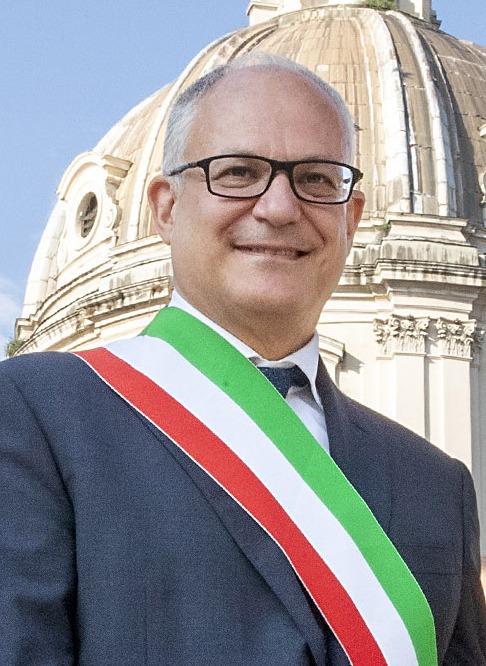
Roberto Gualtieri, a prominent Italian politician and academic, has left an indelible mark on both national and European politics. Born in Rome on July 19, 1966, Gualtieri’s career trajectory is a testament to his deep commitment to public service and his remarkable expertise in economic and financial matters. This article delves into the life, career, and achievements of Roberto Gualtieri, exploring the milestones that have shaped his journey.
Early Life and Education
Roberto Gualtieri’s formative years were steeped in the rich political culture of Italy. Growing up in Rome, he developed an early interest in politics, joining the Italian Communist Youth Federation (FGCI) before he turned 20. This early involvement in political activism would lay the foundation for his later career. He pursued higher education at the prestigious University of Rome La Sapienza, where he graduated in 1992 with a degree in Letters and Philosophy. Gualtieri’s academic prowess did not end there; he went on to become an associate professor of contemporary history at the same university, further cementing his intellectual credentials.
Rise in Italian Politics
Gualtieri’s political career took a significant turn in the early 2000s. Between 2001 and 2006, he honed his political skills within the Democratic Left’s Roman secretariat, eventually being elected to the National Assembly of the Democratic Party (PD) in 2007. This period was crucial in shaping his political ideology and aligning him with the center-left spectrum of Italian politics.
His involvement in the creation of the Democratic Party, Italy’s largest center-left political party, was particularly notable. Gualtieri was a key figure in drafting the party’s manifesto, a role that demonstrated his influence and the respect he commanded among his peers. His growing stature within the party led to his election to the European Parliament in 2009, marking the beginning of his prominent European political career.
European Parliament: First Term
Gualtieri’s first term as a Member of the European Parliament (MEP) from 2009 to 2014 was marked by numerous significant contributions. He quickly became known for his expertise in constitutional and economic matters. As a member of the Committee on Constitutional Affairs (AFCO) and the Subcommittee on Security and Defense (SEDE), Gualtieri played a pivotal role in shaping European policies on security, defense, and constitutional reform.
One of his most notable achievements during this period was his role as a negotiator for the establishment of the European External Action Service (EEAS), the European Union’s diplomatic arm. His work in this area earned him recognition as one of the most effective legislators in the European Parliament, as noted by the influential political news website Politico.eu.
Key Contributions: Fiscal Compact and European Stability
Gualtieri’s influence extended beyond his committee assignments. He was a key negotiator for the Fiscal Compact, a crucial treaty aimed at strengthening fiscal discipline within the Eurozone. His role in the negotiations on the European Stability Mechanism (ESM), designed to provide financial assistance to Eurozone countries in financial distress, further highlighted his expertise in economic governance.
Gualtieri’s work on these issues earned him a reputation as a leading figure in European economic and financial policy. His ability to navigate complex negotiations and his deep understanding of the European Union’s institutional framework made him a valuable asset to his political group, the Progressive Alliance of Socialists and Democrats (S&D).
Re-election and Continued Impact
In 2014, Gualtieri was re-elected to the European Parliament, reaffirming his position as a key player in European politics. During his second term, he continued to focus on economic and financial issues, chairing the influential Economic and Monetary Affairs Committee (ECON). In this role, Gualtieri oversaw critical initiatives such as the Banking Union and the InvestEU program, which aimed to boost investment across the European Union.
One of his most significant roles during this period was his appointment to the Brexit Steering Group, representing the S&D group in negotiations with the United Kingdom on its departure from the European Union. Gualtieri’s work on Brexit was widely praised for its thoroughness and attention to detail, reflecting his deep commitment to protecting the interests of both the EU and its member states.
National Politics: Minister of Economy and Finance
Gualtieri’s success in European politics naturally led to a prominent role in Italian national politics. On September 5, 2019, he was appointed Minister of Economy and Finance in the second government of Prime Minister Giuseppe Conte. His tenure as finance minister coincided with a particularly challenging period for Italy, as the country grappled with the economic fallout of the COVID-19 pandemic.
During his time as minister, Gualtieri was known for his efforts to balance fiscal responsibility with the need for economic stimulus. He was a vocal critic of austerity measures and advocated for greater flexibility in the European Union’s fiscal rules to allow for more robust economic recovery in Italy. His opposition to the flat tax, which he described as a “technically subversive measure,” underscored his commitment to social equity and the preservation of Italy’s welfare state.
Gualtieri’s time as finance minister also saw him involved in key negotiations with the European Union regarding the use of funds from the Next Generation EU recovery plan. His expertise in European affairs and his deep understanding of Italy’s economic challenges made him a crucial figure in these negotiations, which were vital for Italy’s economic recovery.
Candidacy for Mayor of Rome
After leaving his post as finance minister in February 2021, following the resignation of the Conte government, Gualtieri set his sights on local politics. He announced his candidacy for mayor of Rome, entering the primary race for the Democratic Party. His campaign focused on addressing the numerous challenges facing the Italian capital, including infrastructure, public services, and economic development.
Gualtieri’s candidacy was seen as a natural progression in his political career, given his deep roots in the city and his extensive experience in both national and European politics. His campaign emphasized his vision for a more sustainable and equitable Rome, drawing on his extensive background in economic and financial policy.
In October 2021, Gualtieri won the mayoral election, defeating his center-right opponent Enrico Michetti in a runoff. His victory marked a significant moment in his career, as he took on the responsibility of governing one of Europe’s most iconic cities. As mayor, Gualtieri has pledged to address Rome’s pressing issues with the same diligence and expertise that have characterized his political career.
Personal Life and Interests
Beyond his political and academic achievements, Roberto Gualtieri is known for his personal passions and interests. He is married with one child and has a deep love for Brazilian culture, particularly bossa nova music. Fluent in Portuguese, Gualtieri’s connection to Brazil reflects his broader interest in global cultures and his belief in the importance of international cooperation.
Gualtieri’s intellectual pursuits are also reflected in his role as the deputy director of the Gramsci Institute Foundation, a think tank dedicated to the study of political theory and history. His work at the foundation underscores his commitment to academic inquiry and his belief in the power of ideas to shape society.
Legacy and Future Prospects
Roberto Gualtieri’s career is a testament to his dedication to public service and his expertise in economic and financial matters. His work in both the European Parliament and the Italian government has left a lasting impact on European economic governance and Italian fiscal policy. As the mayor of Rome, Gualtieri faces new challenges, but his track record suggests that he will approach these with the same rigor and commitment that have defined his career thus far.
Looking ahead, Gualtieri’s influence in Italian and European politics is likely to continue. His deep understanding of economic policy, combined with his experience in navigating complex political environments, positions him as a key figure in shaping the future of both Italy and the European Union. Whether in his role as mayor or in future political endeavors, Roberto Gualtieri is sure to remain a prominent and influential figure in the years to come.


