
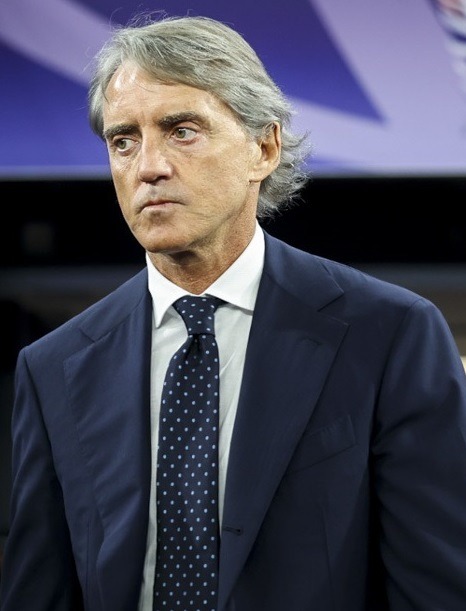
Roberto Mancini, born on November 27, 1964, in Jesi, Italy, is a celebrated figure in the world of football, both as a player and a manager. His journey from a young footballer to a legendary coach is filled with remarkable achievements, controversies, and a unique style that has left an indelible mark on the sport.
Early Life and Career Beginnings
Mancini’s football career began at an incredibly young age. He made his Serie A debut with Bologna on September 12, 1981, at just 16 years old. His talent was evident from the start, scoring nine goals in his debut season. Despite his efforts, Bologna was relegated to Serie B for the first time in their history. This setback, however, did not hinder Mancini’s rising star.
In 1982, Mancini made a pivotal move to Sampdoria, a transfer orchestrated by the club’s visionary president Paolo Mantovani. The fee was significant for that era, reflecting Mancini’s potential and the club’s ambition. It was at Sampdoria that Mancini’s career truly flourished, forming a formidable partnership with Gianluca Vialli, which earned them the nickname “The Goal Twins.”
The Glory Days at Sampdoria
Mancini’s time at Sampdoria is often regarded as the peak of his playing career. The duo of Vialli and Mancini led the club to numerous victories, including a historic Serie A title in 1991, four Coppa Italia titles, a Supercoppa Italiana, and the prestigious European Cup Winners’ Cup in 1990.
The 1991-1992 season saw Mancini and Sampdoria reach the pinnacle of European football by reaching the final of the UEFA Champions League (then known as the European Cup). Although they were narrowly defeated by Barcelona, it solidified Mancini’s reputation as one of the best forwards of his generation.
Transition to Lazio and Further Success
In 1997, Mancini left Sampdoria for Lazio, a move that marked the beginning of another successful chapter in his career. Joining forces with former Sampdoria players and coach Sven-Göran Eriksson, Mancini played a crucial role in Lazio’s golden era. The club won the Serie A title in the 1999-2000 season, two Coppa Italia titles, the last edition of the UEFA Cup Winners’ Cup, and a UEFA Super Cup.
Mancini’s influence at Lazio extended beyond his on-field performance. He became a leader and a symbol of the club’s ambitions, helping to usher in a period of success that saw Lazio compete at the highest levels in both domestic and European competitions.
A Complex Relationship with the National Team
Despite his club success, Mancini’s international career with the Italian national team was less stellar. He earned 36 caps and scored four goals for Italy but never fully established himself as a regular starter. His relationship with the national team coaches and the media was often strained, which limited his opportunities on the international stage.
One of the most notable moments of his international career came during the 1988 UEFA European Championship, where Mancini expressed his frustration towards the press after scoring against Germany, highlighting the tension that often surrounded his time with the Azzurri.
The Move to Coaching: A New Era Begins
Mancini’s transition from player to coach was seamless. He began as an assistant to Sven-Göran Eriksson at Lazio in 2000. His first head coaching role came in 2001 when he took over Fiorentina midway through the season. Despite not having the necessary coaching credentials at the time, Mancini led Fiorentina to a Coppa Italia victory. His tenure was short-lived, however, as he resigned in 2002 amid financial turmoil at the club.
Mancini returned to Lazio as head coach in 2002. Under his leadership, the club won another Coppa Italia in the 2003-2004 season. However, financial difficulties at Lazio once again overshadowed his achievements, and Mancini eventually left the club.
The Inter Milan Dynasty
In 2004, Mancini was appointed as the head coach of Inter Milan, a move that would define his coaching career. His tenure at Inter was marked by domestic dominance. Under his guidance, Inter won three consecutive Serie A titles from 2006 to 2008, a period that also saw the club win two Coppa Italia titles and two Supercoppa Italiana titles.
Mancini’s Inter was known for its tactical discipline, solid defense, and the ability to grind out results. However, his time at the club was not without controversy. The club’s involvement in the Calciopoli scandal, which led to Juventus being stripped of their titles and Inter being awarded the 2005-2006 Scudetto, cast a shadow over their achievements. Mancini himself faced criticism for his team’s performances in the UEFA Champions League, where they consistently fell short of expectations.
In 2008, after a disappointing Champions League campaign and growing tensions within the club, Mancini was dismissed by Inter and replaced by José Mourinho.
A New Challenge: Manchester City
In 2009, Mancini took over as manager of Manchester City, a club that was on the rise following a significant financial investment by its new owners. Mancini was tasked with turning the club into a Premier League contender, a challenge he embraced fully.
Under Mancini, Manchester City ended their 35-year wait for a major trophy by winning the FA Cup in 2011. The following season, Mancini led City to their first Premier League title in 44 years, a triumph secured in dramatic fashion on the final day of the season with a last-minute goal by Sergio Agüero.
Mancini’s impact on English football was profound. He brought a winning mentality to Manchester City and laid the foundations for the club’s future success. However, his tenure ended in 2013 after a disappointing season where City failed to retain their league title and were defeated in the FA Cup final.
The Return to Italy and National Glory
After leaving Manchester City, Mancini returned to Italy and took charge of Inter Milan for a second time in 2014. This stint was less successful than his first, and he left the club in 2016.
In 2018, Mancini was appointed as the head coach of the Italian national team, a role that would bring him redemption on the international stage. Taking over a team that had failed to qualify for the 2018 FIFA World Cup, Mancini embarked on a mission to restore pride to Italian football.
His tenure saw Italy play an attractive, attacking style of football, and in 2021, Mancini led Italy to victory in the UEFA European Championship. The triumph was a moment of vindication for Mancini, who had often been overlooked and criticized during his playing career.
Recent Developments: From Italy to Saudi Arabia
In August 2023, after a disappointing failure to qualify for the 2022 World Cup, Mancini resigned as Italy’s head coach. Shortly afterward, he took on a new challenge as the manager of the Saudi Arabian national team, a move that surprised many but underscored his willingness to embrace new opportunities.
Legacy and Influence
Roberto Mancini’s career is a testament to his resilience, tactical acumen, and passion for the game. From his early days as a prolific forward to his successful coaching career, Mancini has left an indelible mark on football. His ability to adapt to different challenges and environments, whether in Italy, England, or Saudi Arabia, speaks to his versatility and deep understanding of the game.
As a player, Mancini was known for his technical skill, vision, and leadership on the pitch. As a coach, he is celebrated for his tactical knowledge, ability to build winning teams, and his role in developing the next generation of football talent.
Roberto Mancini’s story is one of ambition, success, and continuous reinvention. His journey through the highs and lows of football serves as an inspiration to players, coaches, and fans alike, demonstrating that with determination and a deep love for the game, anything is possible.


