
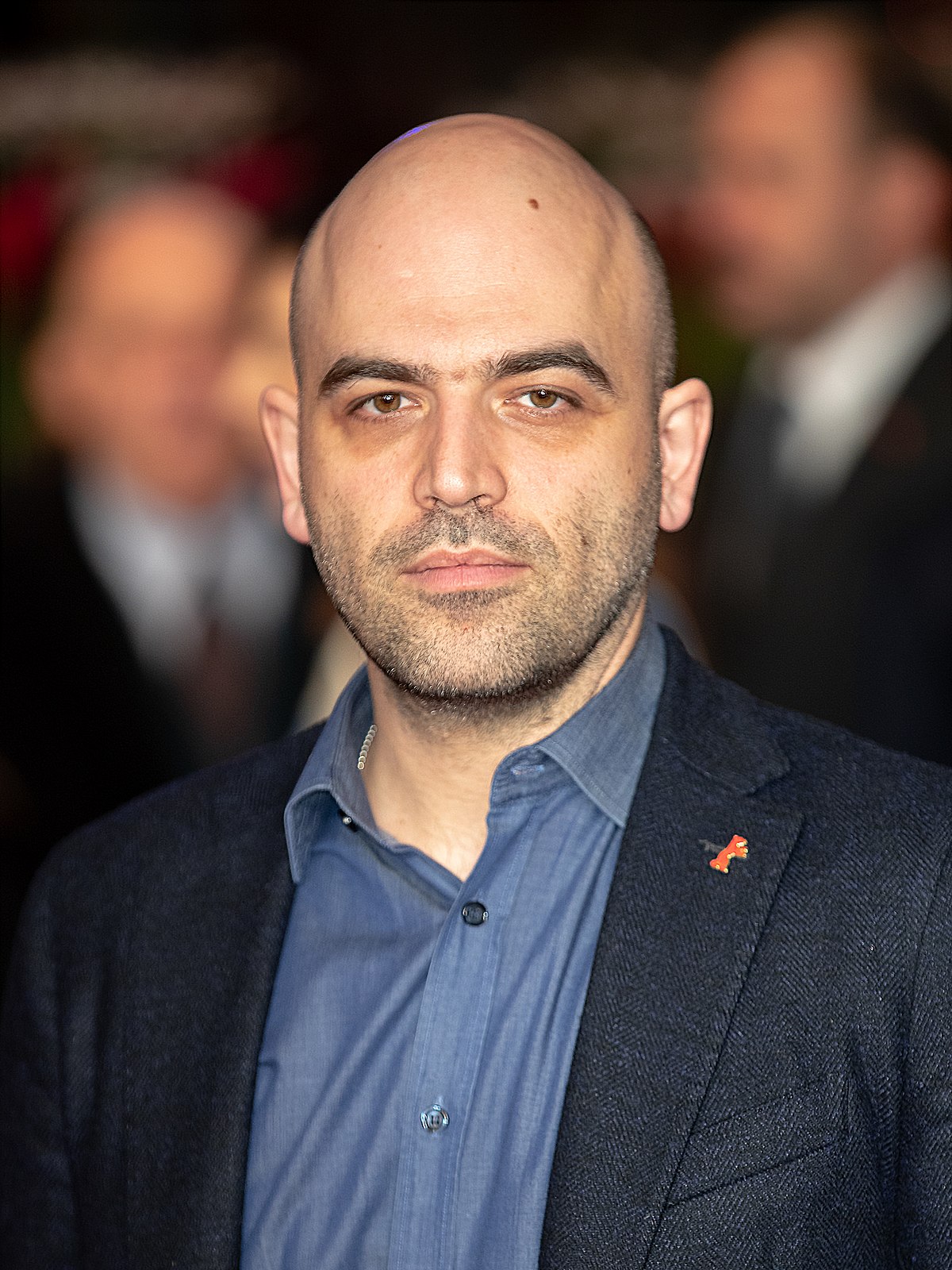
Roberto Saviano, born on September 22, 1979, in Naples, Italy, is a renowned journalist, writer, and public intellectual whose work has brought global attention to the dark underbelly of organized crime in Italy. Best known for his groundbreaking book Gomorrah, Saviano has faced significant personal risk to expose the operations of the Camorra, a powerful mafia-like organization based in Naples. His life and career are marked by his unyielding commitment to truth and justice, a path that has made him a target of criminal organizations but also a symbol of courage and resistance. This article delves into the life of Roberto Saviano, exploring his early years, rise to fame, major achievements, and the personal and professional challenges he has faced along the way.
Early Life and Education
Roberto Saviano was born into a diverse family background in Naples, Italy. His father, Luigi Saviano, was a local physician, while his mother, Miriam Haftar, came from a Jewish family in Liguria. Growing up in the vibrant yet troubled region of Campania, Saviano was exposed early to the harsh realities of life in an area deeply affected by organized crime. His experiences in Naples, coupled with his intellectual curiosity and moral compass, would later shape his approach to journalism and literature.
Saviano attended the Armando Diaz Scientific High School in Caserta, where he developed a strong interest in literature and philosophy. This passion led him to pursue a degree in philosophy at the University of Naples Federico II, one of Italy’s oldest and most prestigious universities. His academic background in philosophy provided him with a critical framework for understanding the complex social, economic, and ethical issues that would become central themes in his later work.
Entry into Journalism and Early Writing Career
After graduating from university, Roberto Saviano began his career in journalism at the age of 23. He wrote for several Italian newspapers and magazines, including Diario, Il Manifesto, Pulp, Corriere del Mezzogiorno, and Nazione Indiana. During this period, he honed his investigative skills, often focusing on the pervasive influence of the Camorra and other organized crime groups in Southern Italy.
Saviano’s early work was characterized by a fearless commitment to uncovering the truth, often placing himself at great personal risk to report on issues that were largely ignored or underreported by mainstream media. His articles delved into the economic and social impact of organized crime, from illegal dumping of toxic waste to the exploitation of migrant workers. These investigative pieces set the stage for his later, more comprehensive exploration of the Camorra in Gomorrah.
The Breakthrough: Gomorrah and Its Impact
In March 2006, Saviano published his first book, Gomorrah: A Personal Journey into the Violent International Empire of Naples’ Organized Crime System. The book was a groundbreaking expose of the Camorra’s operations, detailing their economic activities, from drug trafficking to money laundering, and their brutal methods of enforcing control. Written in a narrative style that combined journalistic rigor with literary flair, Gomorrah provided a stark, unflinching look at the inner workings of the criminal organization.
The book was a massive success, selling nearly three million copies in Italy alone and being translated into more than fifty languages. It topped bestseller lists in numerous countries, including Sweden, the Netherlands, Austria, Lebanon, Lithuania, Israel, Belgium, and Germany. Gomorrah not only catapulted Saviano to international fame but also made him a target for the very criminals he had exposed.
The success of Gomorrah extended beyond the literary world. The book was adapted into a stage play, which won the Olimpici del Teatro award for Best New Author in 2008. Additionally, Italian director Matteo Garrone adapted the book into a film of the same name, which won the Grand Prix at the Cannes Film Festival. The film’s stark realism and powerful storytelling brought the harsh realities of organized crime in Naples to a global audience, further cementing Saviano’s reputation as a courageous and influential voice against corruption and violence.
Life Under Threat: The Reality of Living Under Police Protection
The enormous success of Gomorrah came with severe consequences for Saviano. On October 13, 2006, just months after the book’s publication, he was placed under police protection due to death threats from the Camorra. The threats escalated following a public demonstration in Casal di Principe, where Saviano openly denounced the criminal activities of Francesco Schiavone, the head of the powerful Casalesi clan.
Life under constant police escort profoundly impacted Saviano’s personal and professional life. He was forced to live in hiding, frequently changing residences and moving with a permanent security detail. This new reality was a stark contrast to the freedom he once enjoyed, and it underscored the dangers faced by journalists and writers who dare to challenge powerful criminal organizations.
The threats against Saviano became even more pronounced in 2008 when news emerged of a potential assassination plot against him. The Italian anti-mafia police received intelligence that a plan was being hatched to kill Saviano on the Rome-Naples highway before Christmas. Although the plot was later discredited by the informant who initially reported it, the scare highlighted the constant danger Saviano faced.
International Support and Recognition
Despite the personal risks, Saviano’s courage did not go unnoticed. On October 20, 2008, several Nobel laureates, including Günter Grass, Dario Fo, Rita Levi Montalcini, Desmond Tutu, Orhan Pamuk, and Mikhail Gorbachev, issued a public appeal to the Italian government to ensure Saviano’s safety. The appeal was a powerful statement of solidarity, emphasizing that the fight against organized crime was a global issue affecting all citizens, not just those directly targeted by criminal organizations.
The Nobel laureates’ appeal was supported by numerous international media outlets, including CNN, Al Arabiya, Le Nouvel Observateur, and El País. In Italy, the national radio station Radio 3 organized a marathon reading of Gomorrah to raise awareness of Saviano’s plight, while more than 250,000 ordinary citizens signed a petition in his support, facilitated by the Italian newspaper La Repubblica.
Controversies and Challenges
Despite his acclaim, Saviano’s career has not been without controversy. In 2012, he was accused by Marta Herling, the niece of Italian philosopher Benedetto Croce, of publishing an inaccurate account regarding Croce’s actions during the 1883 Casamicciola earthquake. Herling disputed Saviano’s claim that Croce offered 100,000 lire to anyone who would help him escape the rubble, a story that Saviano had also recounted on television. The dispute led Saviano to sue Corriere del Mezzogiorno for damages, a move that drew criticism given his public stance as a defender of free speech.
Additionally, Saviano has faced allegations of plagiarism. Critics have accused him of borrowing heavily from articles published in local newspapers without proper attribution, particularly in his book Gomorrah. Similar accusations arose during his television program Quello che (non) ho, where he was said to have failed to credit journalist Giampiero Rossi for stories about asbestos, which Rossi had originally uncovered.
Saviano also stirred controversy in 2010 with his public statements in support of Israel, which he praised as a bastion of civilization and freedom. His comments were met with backlash, especially from activists who accused him of ignoring the injustices faced by Palestinians. This incident underscored the complexities of Saviano’s public persona—while he is lauded for his anti-mafia stance, his positions on other political matters have sometimes alienated parts of his audience.
Continued Advocacy and Literary Contributions
Throughout the 2010s, Roberto Saviano continued to be a prominent figure in Italian media and a vocal advocate against organized crime. In November 2010, he co-hosted the television program Vieni via con me with Fabio Fazio on Italy’s Raitre network. The program achieved record ratings, with over 9.6 million viewers tuning in for the third episode, highlighting Saviano’s continued influence in Italian public life.
Saviano’s second book, ZeroZeroZero, was published in 2013, seven years after Gomorrah. The book investigates the global cocaine trade and its economic, social, and political impacts, further establishing Saviano’s reputation as a fearless investigative writer. The book was later adapted into a television series directed by Stefano Sollima, which premiered in 2020.
Saviano’s influence also extended into music and popular culture. The Italian band Subsonica dedicated the song “Piombo” to him, and rapper Lucariello composed “Cappotto di legno,” a song about a hitman tasked with killing Saviano. His story also inspired international artists, such as the British band Massive Attack, who wrote the song “Herculaneum” for the film adaptation of Gomorrah. During a 2010 concert in Rome, U2 dedicated the song “Sunday Bloody Sunday” to him, underscoring his global impact.
Roberto Saviano in the 2020s
Roberto Saviano’s work continued into the 2020s with the publication of Gridalo in 2020, a book that reflects his ongoing commitment to social justice and resistance against oppression. His television presence remained strong as well, with ZeroZeroZero being adapted into a successful TV series. In 2022, Saviano appeared at the prestigious Sanremo Music Festival, where he commemorated the 30th anniversary of the assassinations of anti-mafia judges Giovanni Falcone and Paolo Borsellino, reaffirming his role as a leading voice against organized crime in Italy.
Legacy and Ongoing Influence
Roberto Saviano’s career is a testament to the power of the written word and the impact of investigative journalism in exposing corruption and crime. Despite facing continuous threats to his life and freedom, he has remained steadfast in his commitment to uncovering the truth and advocating for justice. His work has inspired a generation of writers, journalists, and activists to take a stand against organized crime and corruption, demonstrating the profound influence one person can have in challenging the status quo.
Saviano’s life under constant threat and his relentless pursuit of truth have made him a symbol of resistance against not only the Camorra but also the broader forces of corruption and violence that plague societies worldwide. As he continues to write, speak, and advocate for change, Roberto Saviano remains a pivotal figure in the ongoing fight for justice and accountability.


