
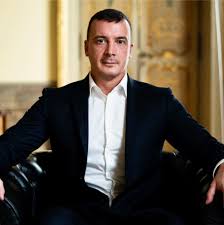
Rocco Casalino is a figure who has traversed the realms of reality television, journalism, and politics, carving out a unique and multifaceted career in Italian public life. Born on July 1, 1972, in Franenthal, a city in Germany’s Rhineland-Palatinate region, Casalino’s journey from a tumultuous childhood to becoming one of Italy’s most prominent political communication strategists is a story of resilience, reinvention, and adaptability. This article delves into the life of Rocco Casalino, exploring his age, rise to fame, and the significant milestones that have defined his career.
Early Life and Education
Rocco Casalino’s early life was marked by a series of challenges that would shape his character and drive. Born to Italian parents who had emigrated to Germany in search of better opportunities, Casalino spent his childhood in a working-class environment. His family faced financial hardships, and his upbringing in a foreign country as part of the Italian diaspora exposed him to the complexities of identity and belonging from a young age.
At the age of 16, Casalino moved with his mother back to Italy, settling in Ceglie Messapica, a small town in the province of Brindisi, Puglia. This return to his family’s roots was a significant turning point in his life. Despite the difficulties of adapting to a new environment, Casalino completed his education at a technical-commercial high school in Ceglie Messapica. His academic journey continued at the University of Bologna, where he earned a degree in electronic engineering. This academic achievement laid the foundation for his future endeavors, though it would soon become clear that Casalino’s ambitions extended far beyond the technical field.
The Leap to Fame: Grande Fratello and Early Media Career
Rocco Casalino’s first brush with fame came in the year 2000 when he participated in the inaugural season of Grande Fratello, the Italian version of the international reality TV phenomenon Big Brother. This show, which placed contestants in a house under constant surveillance, was a cultural sensation in Italy, drawing massive viewership and turning its participants into overnight celebrities. Casalino’s time on the show was marked by his strong personality and ability to navigate the social dynamics within the house, which helped him secure a respectable fourth-place finish. Although he narrowly missed out on a spot on the podium, losing to the late Pietro Taricone, Casalino’s participation in Grande Fratello catapulted him into the national spotlight.
Following his exit from the show, Casalino capitalized on his newfound fame by signing with Lele Mora, a well-known talent agent in Italy. This decision opened doors for him in the entertainment industry, leading to numerous appearances on various Mediaset programs where he served as a guest commentator and opinionist. His early media career was characterized by his ability to generate headlines, whether through his strong opinions or through on-air confrontations with other television personalities.
Transition to Journalism
While many reality TV stars fade into obscurity after their initial burst of fame, Rocco Casalino took a different path. In 2004, he began a new chapter in his career by transitioning into journalism. He joined TeleLombardia, a regional television station, where he worked as a journalist on the morning show Buongiorno Lombardia. His work in journalism allowed him to develop a new skill set and to establish himself as more than just a reality TV personality.
In 2008, Casalino became a professional journalist, officially registered with the Order of Journalists in Lombardy. His journalistic career included a role as a special correspondent for Versus, a program hosted by Lamberto Sposini on the Pugliese network TeleNorba. He later moved on to work for Betting Channel, a niche network on Sky dedicated to gambling, where he co-hosted Betting Blog alongside journalists Giovanni Gentili and Dario Martucci.
Throughout his time in journalism, Casalino continued to court controversy. His heated on-air exchanges with personalities such as Solange, Platinette, and Tina Cipollari became the stuff of legend. These confrontations often centered around Casalino’s sexual orientation, with his critics accusing him of not being open about his bisexuality—a subject he would later address publicly.
Political Engagement: The Rise within the Five Star Movement
The third and perhaps most significant phase of Rocco Casalino’s career began in 2011 when he entered the political arena by joining the Five Star Movement (Movimento 5 Stelle, M5S), a political party founded by comedian Beppe Grillo and web strategist Gianroberto Casaleggio. The Five Star Movement, known for its populist, anti-establishment stance, quickly rose to prominence in Italian politics, and Casalino was well-positioned to take advantage of this surge.
Casalino’s background in media and communication made him a valuable asset to the Five Star Movement, and he rapidly climbed the party’s ranks. In 2013, he ran as a candidate in the Lombardy regional elections but withdrew before the vote. That same year, he became the deputy head of communications for the M5S group in the Senate, working closely with Claudio Messora, the head of communications.
By 2014, Casalino had taken on the role of communications director for the Five Star Movement in the Senate, a position that allowed him to shape the party’s message and strategy. His influence within the party grew, and he became known as a key player in its communication efforts, responsible for coordinating national, regional, and municipal communications.
In 2017, Casalino was appointed as the head of communications for the M5S delegation in the European Parliament, further solidifying his position as a central figure in the party’s media operations. His work in this role earned him the trust of the party’s leadership, particularly Luigi Di Maio, who was seen as the political heir to Beppe Grillo.
Becoming the Voice of the Italian Government
The pinnacle of Rocco Casalino’s political career came in 2018 when he was appointed as the spokesperson and head of the press office for Giuseppe Conte, the Prime Minister of Italy. This role placed Casalino at the heart of Italian government operations, making him one of the most influential figures in the country’s political landscape.
As Conte’s spokesperson, Casalino was responsible for managing the government’s communications, a role that required him to navigate the complexities of Italian politics while ensuring that the government’s message was effectively communicated to the public. His work during this period was crucial in shaping public perception of Conte’s government, particularly during key moments such as the handling of the COVID-19 pandemic.
Casalino’s tenure as the government’s chief spokesperson was not without controversy. His blunt communication style and his willingness to engage in confrontational tactics drew criticism from political opponents and media commentators alike. However, his effectiveness in controlling the narrative and his ability to manage crises ensured that he remained a trusted advisor to Conte throughout his time in office.
The Aftermath of the Conte Government and Autobiography
With the end of Giuseppe Conte’s second government in February 2021, Rocco Casalino found himself at a crossroads. However, he quickly adapted to his new circumstances, leveraging his experience and insights to remain a relevant figure in Italian public life.
In February 2021, Casalino released his autobiography titled Il portavoce (The Spokesperson), which offers a detailed account of his life, career, and the inner workings of Italian politics. The book provides an insider’s perspective on the challenges and triumphs of serving as the spokesperson for the Prime Minister, and it sheds light on Casalino’s personal journey from his humble beginnings to his role as one of Italy’s most influential communication strategists.
Legacy and Impact
Rocco Casalino’s career is a testament to the power of adaptability and the importance of communication in the modern world. From his early days as a reality TV star to his role as the voice of the Italian government, Casalino has demonstrated an ability to reinvent himself and to navigate the shifting tides of public life with skill and determination.
His impact on Italian politics, particularly through his work with the Five Star Movement and as Giuseppe Conte’s spokesperson, cannot be overstated. Casalino’s approach to communication, characterized by its directness and its focus on controlling the narrative, has left a lasting mark on how political messaging is conducted in Italy.
While his career has been marked by controversy, Casalino’s influence and effectiveness as a communicator are undeniable. His story serves as an example of how a person can leverage their skills and experiences to achieve success in multiple arenas, from entertainment to journalism to politics.
As Rocco Casalino continues to navigate his post-government career, his legacy as a key figure in Italian public life remains secure. Whether through his writing, his media appearances, or his continued involvement in politics, Casalino’s voice will undoubtedly continue to be heard in the years to come.


