
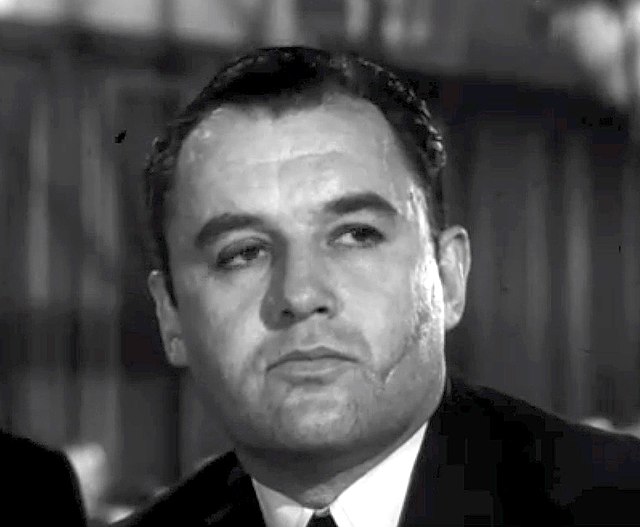
Rod Steiger was a force of nature in the world of acting, a man whose powerful performances and compelling screen presence left an indelible mark on both American and international cinema. Born Rodney Stephen Steiger on April 14, 1925, in Westhampton, New York, Steiger’s life was as dramatic and multifaceted as the characters he portrayed on screen. This article delves into the life, fame, and key highlights of Rod Steiger’s career, providing detailed insights into the man behind some of the most memorable performances in cinematic history.
Early Life and the Struggles of Youth
Rod Steiger’s early life was far from idyllic. Born to a pair of actors, his parents’ marriage ended shortly after his birth, leading to a tumultuous childhood. His father left the family, and Steiger was raised by his mother and stepfather in Newark, New Jersey. Unfortunately, his home life was marred by instability and substance abuse. Both his mother and stepfather struggled with alcoholism, creating a chaotic environment that was far from conducive to a healthy upbringing.
By the age of fifteen, the young Steiger had had enough. He made the difficult decision to leave home, seeking to escape the dysfunction that surrounded him. This was a bold move for someone so young, and it set the stage for a life marked by both tremendous struggle and remarkable resilience.
In order to survive, Steiger lied about his age and enlisted in the United States Navy. The military provided him with the structure and discipline that had been lacking in his early life. He served during some of the most harrowing years of World War II, with his experiences in the South Pacific leaving a lasting impression on him. After the war, Steiger decided to leave the military behind, but the sense of purpose and community he found there would stay with him for the rest of his life.
Discovering a Passion for Acting
Following his discharge from the Navy, Steiger returned to civilian life, taking on a series of menial jobs to make ends meet. It was during this time that he discovered a passion for acting. The theater became an escape for Steiger, a place where he could channel the emotional turmoil of his early life into something creative and meaningful.
Steiger enrolled in the drama program at the New School in New York City, where he immersed himself in the study of theater. He was particularly drawn to the works of William Shakespeare and the great operatic dramas, finding in them a depth of emotion and complexity that resonated with his own experiences. His time at the New School ignited a lifelong love of the arts, and Steiger quickly realized that acting was not just a hobby but a calling.
Determined to hone his craft, Steiger continued his studies at the prestigious Actors Studio, where he trained under the legendary Lee Strasberg. The Actors Studio was a breeding ground for some of the greatest talents of the era, and Steiger found himself in the company of future legends such as Marlon Brando, Eva Marie Saint, and Karl Malden. This was a formative period in Steiger’s life, as he absorbed the principles of method acting that would later define his performances.
Rise to Fame and Breakthrough Roles
Steiger’s talent did not go unnoticed, and it wasn’t long before he began to make a name for himself on stage and screen. His big break came in 1954 when he was cast in the film “On the Waterfront,” directed by Elia Kazan and starring Marlon Brando. Steiger’s portrayal of Charley Malloy, the conflicted brother of Brando’s character, was nothing short of electrifying. The role earned him his first Academy Award nomination for Best Supporting Actor and established him as a rising star in Hollywood.
Throughout the 1950s and 1960s, Steiger built a reputation as a powerful character actor, known for his intense, often volatile performances. He brought a raw emotionality to his roles that set him apart from his peers. Whether playing troubled antiheroes or complex villains, Steiger had a unique ability to convey the inner turmoil of his characters, making them both relatable and unforgettable.
One of Steiger’s most iconic roles came in 1964 with the film “The Pawnbroker,” directed by Sidney Lumet. In the film, Steiger played Sol Nazerman, a Holocaust survivor living in Harlem who becomes emotionally numb and withdrawn after the horrors he endured. Steiger’s performance was hailed as one of the most powerful depictions of trauma and survivor’s guilt ever put on screen. His portrayal earned him the Silver Bear for Best Actor at the Berlin International Film Festival and solidified his status as one of the leading actors of his generation.
The Pinnacle of Success: “In the Heat of the Night”
The 1960s were a period of great success for Steiger, culminating in his Oscar-winning performance in the 1967 film “In the Heat of the Night.” Directed by Norman Jewison, the film was a groundbreaking exploration of race relations in the United States, set against the backdrop of a murder investigation in a small Southern town. Steiger played the role of Bill Gillespie, the town’s police chief, who is forced to confront his own prejudices when he is paired with Virgil Tibbs, an African American detective played by Sidney Poitier.
Steiger’s portrayal of Gillespie was a masterclass in character development. He skillfully depicted the transformation of a bigoted lawman into a more enlightened, if still flawed, individual. The role earned Steiger the Academy Award for Best Actor, a crowning achievement in a career that had already seen its fair share of accolades.
A Complex Personal Life
Despite his professional success, Steiger’s personal life was marked by significant challenges. He struggled with depression throughout his life, a condition exacerbated by the pressures of fame and the intense nature of his work. Steiger was also known for his battles with alcohol and drug addiction, which at times threatened to derail his career.
Steiger was married five times, each marriage reflecting the tumultuous nature of his personal life. His first marriage was to actress Sally Gracie, followed by marriages to Claire Bloom, Sherry Nelson, and Paula Ellis. His final marriage, to Joan Benedict, lasted until his death. Steiger had two children, a daughter, Anna, with Claire Bloom, and a son, Michael, with Paula Ellis.
In the late 1970s, Steiger suffered a severe stroke that left him partially paralyzed and unable to work for several years. The stroke was a devastating blow, but true to his resilient nature, Steiger eventually made a full recovery and returned to acting. He later spoke openly about his experiences, hoping to raise awareness about the impact of stroke and the importance of early intervention.
A Legacy in Film and Beyond
Rod Steiger’s contribution to cinema is vast and varied. Over the course of his career, he appeared in more than 80 films, ranging from hard-hitting dramas to historical epics. In addition to his Oscar-winning role in “In the Heat of the Night,” Steiger delivered memorable performances in films such as “Doctor Zhivago” (1965), where he played the opportunistic Komarovsky, and “Waterloo” (1970), where he took on the formidable role of Napoleon Bonaparte.
Steiger was also known for his work in Italian cinema, collaborating with directors like Francesco Rosi and Sergio Leone. His performances in films like “Hands Over the City” (1963) and “Duck, You Sucker!” (1971) showcased his versatility as an actor and his ability to transcend cultural boundaries.
In the later years of his career, Steiger continued to work steadily, although he never again reached the heights of his earlier success. His final film, “Poolhall Junkies” (2002), was released the year he died. Despite his declining health, Steiger’s passion for acting remained undiminished, and he continued to bring depth and intensity to every role he played.
Final Years and Death
Rod Steiger passed away on July 9, 2002, in Los Angeles, California, from complications of pneumonia. He was 77 years old. His death marked the end of an era, as Hollywood lost one of its most distinctive and accomplished actors.
Steiger’s legacy lives on through his films, many of which are considered classics of American and international cinema. His ability to portray complex, often deeply flawed characters with empathy and nuance has earned him a lasting place in the annals of film history. Steiger’s performances continue to inspire actors and filmmakers alike, reminding us of the power of cinema to explore the depths of the human condition.
In conclusion, Rod Steiger’s life and career were marked by extraordinary talent, intense passion, and personal struggle. He overcame significant challenges to become one of the most respected actors of his generation, leaving behind a body of work that will be remembered for its emotional power and dramatic depth. As we reflect on his contributions to the art of acting, it is clear that Rod Steiger was not just a great actor but a true artist, one whose work will continue to resonate with audiences for generations to come.


