
Introduction:
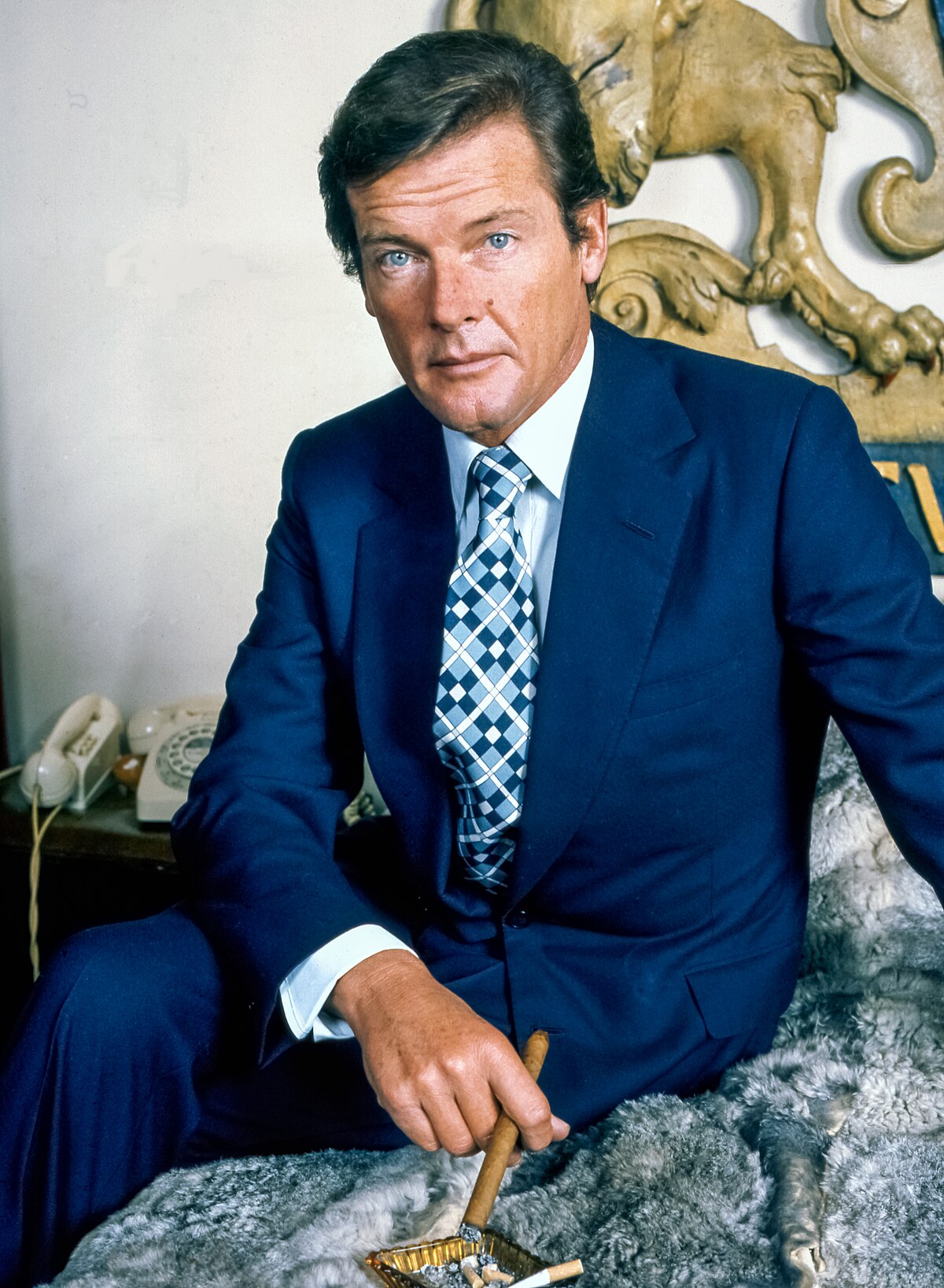
Roger Moore, born on October 14, 1927, in London, England, is a name that evokes images of suave sophistication, effortless charm, and unparalleled grace on screen. Best known for his portrayal of James Bond, Moore’s career spanned more than seven decades, during which he became one of the most beloved and iconic figures in cinema. This article delves into the life, fame, and key highlights of Roger Moore, exploring his journey from a young aspiring actor to an international superstar.
Early Life and Education:
Roger Moore was born in Stockwell, London, to George Alfred Moore, a police officer, and Lillian “Lily” Pope, a housewife. Growing up in the midst of the Great Depression, Moore’s early life was marked by the financial struggles that many British families faced during that time. Despite the hardships, he was raised in a loving and supportive household that encouraged his interests and talents.
Moore attended Battersea Grammar School and later enrolled in the Royal Academy of Dramatic Art (RADA), one of the most prestigious acting schools in the world. His natural good looks and charisma quickly set him apart from his peers, and it wasn’t long before he began to secure minor roles in film and theater. However, Moore’s burgeoning career was interrupted by the outbreak of World War II.
Military Service and Post-War Career:
During the war, Roger Moore was conscripted into the British Army, where he served as a second lieutenant. Although his military service was brief and mostly involved administrative duties, it instilled in him a sense of discipline and resilience that would later serve him well in his acting career.
After the war, Moore returned to his studies at RADA and continued to pursue acting. He appeared in a number of theater productions and gradually began to make a name for himself in British television. His early work included appearances in series such as The Alaskans and Maverick, which showcased his versatility as an actor and his ability to handle both drama and comedy with equal finesse.
Breakthrough with “The Saint”:
Roger Moore’s first major breakthrough came in the early 1960s with the television series The Saint, in which he played the role of Simon Templar, a suave and sophisticated gentleman thief with a penchant for solving crimes. The series, based on the popular books by Leslie Charteris, became an international hit and catapulted Moore to stardom.
The Saint ran for six seasons from 1962 to 1969, and during that time, Moore’s portrayal of the charming, morally ambiguous hero won him legions of fans around the world. The role of Simon Templar not only established Moore as a leading man in the entertainment industry but also set the stage for his eventual casting as James Bond.
The James Bond Era:
Roger Moore’s most iconic role came in 1973 when he was cast as James Bond, succeeding Sean Connery in the role of the British secret agent with a license to kill. Moore’s portrayal of Bond was markedly different from that of his predecessor; where Connery’s Bond was gritty and rugged, Moore brought a sense of wit, humor, and debonair elegance to the character.
Moore’s first outing as Bond was in Live and Let Die (1973), a film that set the tone for his tenure as the famous spy. Over the next twelve years, Moore starred in seven Bond films, including The Man with the Golden Gun (1974), The Spy Who Loved Me (1977), and Moonraker (1979). Each of these films was a commercial success, cementing Moore’s place as one of the most beloved actors to ever don the tuxedo.
One of Moore’s most notable Bond films, The Spy Who Loved Me, is often regarded as one of the best in the series, featuring the famous scene where Bond drives a Lotus Esprit that transforms into a submarine. Moore’s Bond was characterized by his use of charm and cleverness to outwit his enemies, a portrayal that resonated with audiences and endeared him to fans for generations.
Post-Bond Career and Humanitarian Work:
After retiring from the role of James Bond in 1985, following his final appearance in A View to a Kill, Roger Moore continued to work in film and television. He appeared in a variety of roles, often choosing projects that allowed him to explore different facets of his acting abilities. Some of his notable post-Bond films include The Wild Geese (1978), North Sea Hijack (1980), and The Sea Wolves (1980).
Beyond his acting career, Moore became deeply involved in humanitarian work, particularly with UNICEF, the United Nations agency responsible for providing aid to children in developing countries. In 1991, Moore was appointed a UNICEF Goodwill Ambassador, a role he took on with great dedication. He traveled extensively, advocating for children’s rights and raising awareness about the challenges faced by vulnerable populations around the world.
Moore’s humanitarian efforts earned him widespread recognition and respect. In 2003, he was knighted by Queen Elizabeth II for his services to charity, a fitting tribute to a man who had used his fame and influence to make a positive impact on the world.
Personal Life and Relationships:
Roger Moore’s personal life was as colorful as his on-screen roles. He was married four times, with each of his marriages making headlines. His first marriage was to ice skater Doorn Van Steyn in 1946, but the couple divorced in 1953. He then married Welsh singer Dorothy Squires, a union that lasted until 1968 when Moore met and fell in love with Italian actress Luisa Mattioli.
Moore and Mattioli were married in 1969 and had three children together: Deborah, Geoffrey, and Christian. The marriage lasted for over two decades, but in 1993, the couple divorced. Moore’s final marriage was to Kristina Tholstrup, a wealthy Danish-Swedish socialite, in 2002. The couple remained together until Moore’s death in 2017.
Throughout his life, Moore was known for his wit, charm, and self-deprecating humor. He was often described as a gentleman both on and off the screen, and his friendships with fellow actors, such as Tony Curtis and Sean Connery, were well-documented.
Health Struggles and Final Years:
In his later years, Roger Moore faced several health challenges. In 1993, he was diagnosed with prostate cancer, a battle he fought with characteristic resilience. He also suffered from heart problems and had a pacemaker fitted in 2003 after collapsing on stage during a Broadway performance of the play The Play What I Wrote.
Despite these challenges, Moore remained active in his humanitarian work and continued to make public appearances. He published several books, including an autobiography titled My Word is My Bond in 2008, in which he reflected on his life and career with the same wit and grace that defined his public persona.
Roger Moore passed away on May 23, 2017, in Switzerland, at the age of 89, after a brief battle with cancer. His death marked the end of an era, and tributes poured in from around the world, with fans, friends, and colleagues celebrating his life and legacy.
Legacy and Influence:
Roger Moore’s legacy is one of enduring charm, elegance, and kindness. He left an indelible mark on the world of cinema, not only through his portrayal of James Bond but also through his contributions to television and his humanitarian efforts. Moore’s version of Bond remains one of the most beloved, and his influence on the character continues to be felt in the franchise today.
In addition to his work as an actor, Moore’s commitment to humanitarian causes has inspired many. His efforts with UNICEF helped to raise awareness and funds for children in need, and his advocacy for global child welfare continues to resonate.
Moore’s impact on popular culture is evident in the countless actors, filmmakers, and fans who cite him as an inspiration. His ability to blend humor, sophistication, and a genuine love for life made him a unique and irreplaceable figure in the entertainment industry.
Conclusion:
Roger Moore’s life was a testament to the power of charm, talent, and compassion. From his early days in London to his rise as an international superstar, Moore’s journey was one of resilience, creativity, and dedication. His portrayal of James Bond, as well as his work in television and film, has left a lasting legacy that continues to captivate audiences around the world.
Beyond his contributions to the arts, Moore’s humanitarian work with UNICEF demonstrated his commitment to making the world a better place. His legacy as both an actor and a philanthropist is a reminder of the impact that one person can have, both on screen and in the world at large.
As we remember Roger Moore, we celebrate not just the roles he played but the man he was—an icon of elegance, a champion for children, and a true gentleman in every sense of the word.


