
Introduction
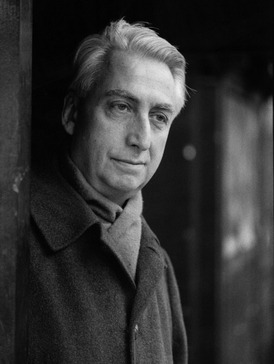
Roland Barthes, born on November 12, 1915, in Cherbourg, France, was a luminary in the realms of literary criticism, linguistics, and semiotics. As one of the foremost figures of the structuralist movement, Barthes’ work revolutionized the way we understand language, literature, and cultural symbols. His intellectual journey, marked by both prolific writing and profound insights, continues to influence contemporary thought across multiple disciplines.
Early Life and Education
Roland Barthes was born into a family with a maritime background. His father, Louis Barthes, a naval officer, died in 1916 during a naval battle in the North Sea, when Roland was just an infant. Following this tragedy, his mother, Henriette Binger Barthes, moved the family to Bayonne, where Barthes spent his early childhood.
In 1924, Barthes and his mother relocated to Paris, where he attended the École Montaigne. Barthes spent his school vacations in Bayonne with his grandparents, a period that would later influence his reflective and introspective nature. After completing his secondary education at the Lycée Louis-le-Grand, where he focused on philosophy, Barthes enrolled at the Sorbonne in 1935, majoring in Classical Letters. Despite battling tuberculosis, which interrupted his studies multiple times, Barthes graduated with honors and began his teaching career.
Early Career and Health Challenges
Barthes’ early career was punctuated by recurring health issues. In 1937, he was exempted from military service due to his health, and in 1941, he suffered a significant relapse of tuberculosis. This forced him into prolonged periods of convalescence at sanatoriums in France and Switzerland. During these periods, Barthes immersed himself in literature and philosophy, further shaping his intellectual pursuits.
Despite these challenges, Barthes continued to teach and engage with academic circles. He took on various teaching positions in Paris and Biarritz, and in 1948, he accepted a role as a lecturer in French at the University of Bucharest. His international academic journey continued with a position at the University of Alexandria in Egypt from 1949 to 1950.
Contributions to Literary Criticism and Semiotics
In the 1950s, Barthes began to gain recognition for his groundbreaking work in literary criticism and semiotics. His first major work, “Writing Degree Zero” (1953), explored the concept of writing as a neutral act, devoid of literary style. This book laid the foundation for his subsequent explorations into the nature of language and symbols.
Barthes’ fascination with the intersection of language and culture led to the publication of “Mythologies” (1957), a collection of essays examining contemporary myths in popular culture. In this work, Barthes dissected everyday phenomena, such as advertisements, movies, and fashion, to reveal the underlying ideological messages they conveyed. “Mythologies” remains one of his most influential works, illustrating his ability to demystify cultural artifacts and expose their deeper meanings.
Structuralism and Semiotics
By the 1960s, Barthes had become a central figure in the structuralist movement. Structuralism, which sought to understand the underlying structures of human culture and cognition, provided a framework for Barthes’ investigations into language and meaning. His seminal work, “Elements of Semiology” (1964), outlined the principles of semiotics, the study of signs and symbols as elements of communicative behavior.
In “Critique and Truth” (1966), Barthes argued for a more scientific approach to literary criticism, challenging traditional notions of authorship and interpretation. He continued to develop his ideas in “The Fashion System” (1967), where he analyzed the language of fashion and its role in society. This work exemplified his belief that all cultural phenomena could be understood as systems of signs.
The Death of the Author
One of Barthes’ most influential essays, “The Death of the Author” (1967), challenged the traditional role of the author in the interpretation of texts. Barthes argued that the meaning of a text is not determined by the author’s intentions but by the reader’s interpretation. This radical shift in perspective had a profound impact on literary theory, paving the way for post-structuralist thought.
In “S/Z” (1970), Barthes applied his semiotic theory to the analysis of Honoré de Balzac’s novella “Sarrasine.” This detailed study demonstrated Barthes’ method of breaking down texts into units of meaning, or lexias, to uncover the multiple layers of interpretation embedded within.
Later Works and Academic Recognition
Throughout the 1970s, Barthes continued to expand his influence, both through his writings and his academic appointments. In 1976, he was appointed to the prestigious chair of Literary Semiotics at the Collège de France, where he delivered lectures on a wide range of topics, from narrative theory to photography.
Barthes’ later works, such as “The Pleasure of the Text” (1973) and “Roland Barthes” (1975), reflected his evolving thoughts on the relationship between language, culture, and personal identity. In “A Lover’s Discourse: Fragments” (1977), Barthes explored the language of love and its expression through a series of fragmentary meditations.
Tragic End and Legacy
On February 25, 1980, Barthes was struck by a laundry van while walking home from a meeting with French President François Mitterrand. He succumbed to his injuries on March 26, 1980. His untimely death was a significant loss to the intellectual world, but his legacy endures through his extensive body of work.
Barthes’ contributions to literary theory, semiotics, and cultural criticism continue to influence scholars and thinkers. His ability to decode the symbolic structures underlying everyday life has left an indelible mark on various fields, including literary criticism, cultural studies, and media theory.
Conclusion
Roland Barthes’ life and work embody a profound journey of intellectual exploration and innovation. From his early struggles with health and his extensive academic pursuits to his groundbreaking theories on language and culture, Barthes remains a towering figure in 20th-century thought. His insights into the nature of signs, symbols, and cultural myths continue to resonate, offering valuable tools for understanding the complexities of modern life.
Barthes’ legacy is a testament to the enduring power of critical thinking and the transformative potential of intellectual inquiry. His work challenges us to look beyond the surface of everyday phenomena and uncover the deeper meanings that shape our perceptions and beliefs.


