
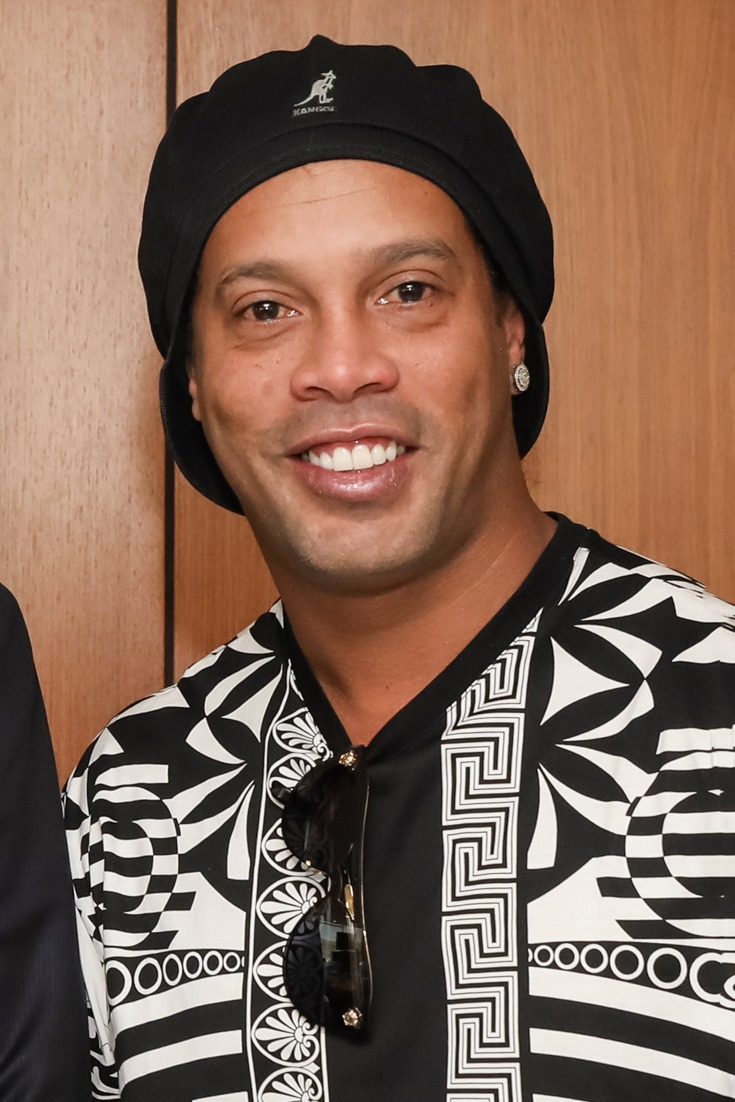
Ronaldinho, whose birth name is Ronaldo de Assis Moreira, is a Brazilian football legend renowned for his extraordinary skill, joyful playing style, and signature smile. Born on March 21, 1980, in Porto Alegre, Brazil, Ronaldinho quickly rose to global fame as one of the most talented footballers of his generation. Known in South America as Ronaldinho Gaúcho to distinguish him from another Brazilian footballer named Ronaldo, he simply became “Ronaldinho” in Europe, which translates to “Little Ronaldo.” His career has been marked by an impressive array of achievements, numerous accolades, and a legacy that continues to inspire football fans worldwide.
Early Life and Career Beginnings
Ronaldinho’s journey into football began at a very young age on the beaches of Brazil. His talent was evident from early on, and by the age of 13, he had already made a name for himself by scoring 23 goals in a single local match. This feat caught the attention of the media, and soon after, he became a sensation in Brazilian youth football circles. His technical skills, agility, and creativity on the field led Brazil to win the U-17 World Championship held in Egypt in 1997, setting the stage for what would become an illustrious career.
Rise to Prominence
Ronaldinho started his professional career with the Brazilian club Grêmio, where he played under Luiz Felipe Scolari, who would later become the coach of the Brazilian national team. His performance in the Copa Libertadores in 1998 and his subsequent debut for the Brazilian national team in 1999, where he scored the winning goal against Venezuela, solidified his reputation as a rising star. Ronaldinho’s skillful play helped Brazil secure the Copa America title that year.
By 2001, Ronaldinho’s talent had caught the eye of several European clubs. Despite interest from many teams, including those in the English Premier League, he signed a five-year contract with Paris Saint-Germain (PSG) in France. His move to PSG marked the beginning of his European career, where he continued to showcase his talent on a bigger stage.
The 2002 World Cup and International Stardom
The 2002 FIFA World Cup in Korea and Japan was a turning point in Ronaldinho’s career. As a key player for Brazil, he played an instrumental role in their journey to winning the World Cup, particularly memorable for his stunning goal from over 35 meters out against England in the quarterfinals. This achievement not only boosted his international profile but also increased his value in the global football market.
The Barcelona Era: A Golden Period
In 2003, Ronaldinho made a high-profile move to FC Barcelona, a decision that would define the next chapter of his career. At Barcelona, Ronaldinho’s impact was immediate and profound. In his first season, he helped the team finish second in La Liga, and by his second season, Barcelona clinched the La Liga title with a squad that included other football greats such as Samuel Eto’o, Deco, Lionel Messi, Giuly, and Henrik Larsson.
One of the most iconic moments of Ronaldinho’s career came on November 19, 2005, during a match against Real Madrid at the Santiago Bernabeu Stadium. Ronaldinho scored two incredible goals that led to a 3-0 victory for Barcelona. His performance was so spectacular that even the Real Madrid fans gave him a standing ovation, a rare honor that had only been bestowed once before to Diego Maradona when he played for Barcelona.
Honors and Accolades
During his time at Barcelona, Ronaldinho was recognized as the best player in the world. He won the FIFA World Player of the Year award in 2004 and 2005, succeeding Zinedine Zidane and establishing himself as a football icon. In 2005, he also won the Ballon d’Or, awarded to the best footballer in Europe, further cementing his status among the elite of the sport. His influence on the pitch was matched by his humility off it, often downplaying his achievements by stating he didn’t even consider himself the best player at Barcelona.
Playing Style and Influence
Ronaldinho was not just known for his achievements but also for his unique style of play. His approach to football was characterized by a combination of technical skills, creativity, and an infectious joy that was palpable every time he took the field. He had an uncanny ability to dribble past defenders with ease, make impossible passes, and score from unlikely positions. His flair, agility, and vision made him a fan favorite and a nightmare for opposing teams. His signature moves, like the “Elastico” and his no-look passes, became iconic and inspired a new generation of footballers.
A Legacy Beyond the Field
Beyond his technical skills and on-field achievements, Ronaldinho’s legacy is also defined by his personality. Known for his ever-present smile and a genuine love for the game, he was seen as a true ambassador of football. His demeanor exemplified sportsmanship and the pure joy of playing, which endeared him to fans worldwide. Even after receiving a lucrative offer from Chelsea, Ronaldinho expressed his happiness at Barcelona, stating, “I am very happy at Barca. I can’t imagine myself being happier at any other club. There is not enough money to buy my happiness.”
Later Career and Post-Retirement
After his peak years at Barcelona, Ronaldinho moved to AC Milan in 2008, following three years of interest from the Italian club. Although his time at Milan was less illustrious than his Barcelona tenure, he still displayed moments of brilliance that reminded fans of his peak years. Ronaldinho continued to play professional football in various leagues, including a stint in Brazil and a brief period in Mexico before announcing his retirement from professional football in 2018.
Post-retirement, Ronaldinho remained active in the football community, taking on various ambassadorial roles and continuing to share his love for the sport. He also ventured into other areas, including entertainment, where he collaborated with famous Brazilian cartoonist Mauricio de Sousa to create a character based on his image.
The Cultural Impact of Ronaldinho
Ronaldinho’s influence extends beyond the football field into global popular culture. His unique style of play and his personality made him a subject of admiration and inspiration across different cultures. His joyful approach to the game and his interactions with fans have left a lasting impression, making him not just a sports icon but also a cultural figure.
In Brazil, Ronaldinho is considered more than a footballer; he is a symbol of the country’s footballing heritage and cultural identity. His ability to embody the essence of Brazilian football — characterized by creativity, skill, and a love for the game — has made him a beloved figure in his home country and worldwide.
Ronaldinho’s Philosophy: Football as Joy
One of the most defining aspects of Ronaldinho’s career has been his philosophy of football as a source of joy and happiness. Unlike many athletes who view their careers through a highly competitive lens, Ronaldinho always emphasized the fun and enjoyment of the game. This philosophy not only endeared him to fans but also influenced how young players approached the sport. He demonstrated that football, at its best, is not just about winning or losing but about expressing oneself and enjoying the beauty of the game.
Conclusion
Ronaldinho’s career is a testament to the impact a player can have when they combine exceptional talent with a passion for their craft. His achievements on the field, from winning the World Cup to lifting the Champions League trophy, are matched by his influence off it, where he has inspired countless fans and players to embrace the joy of football. Even years after his retirement, Ronaldinho remains a beloved figure in the football community, a true legend whose legacy will continue to inspire future generations.
Ronaldinho’s life and career are more than just a collection of goals and victories; they are a celebration of the beautiful game, a reminder of why football is called “the beautiful game,” and a tribute to a player who played not just with his feet but with his heart.


