
Introduction
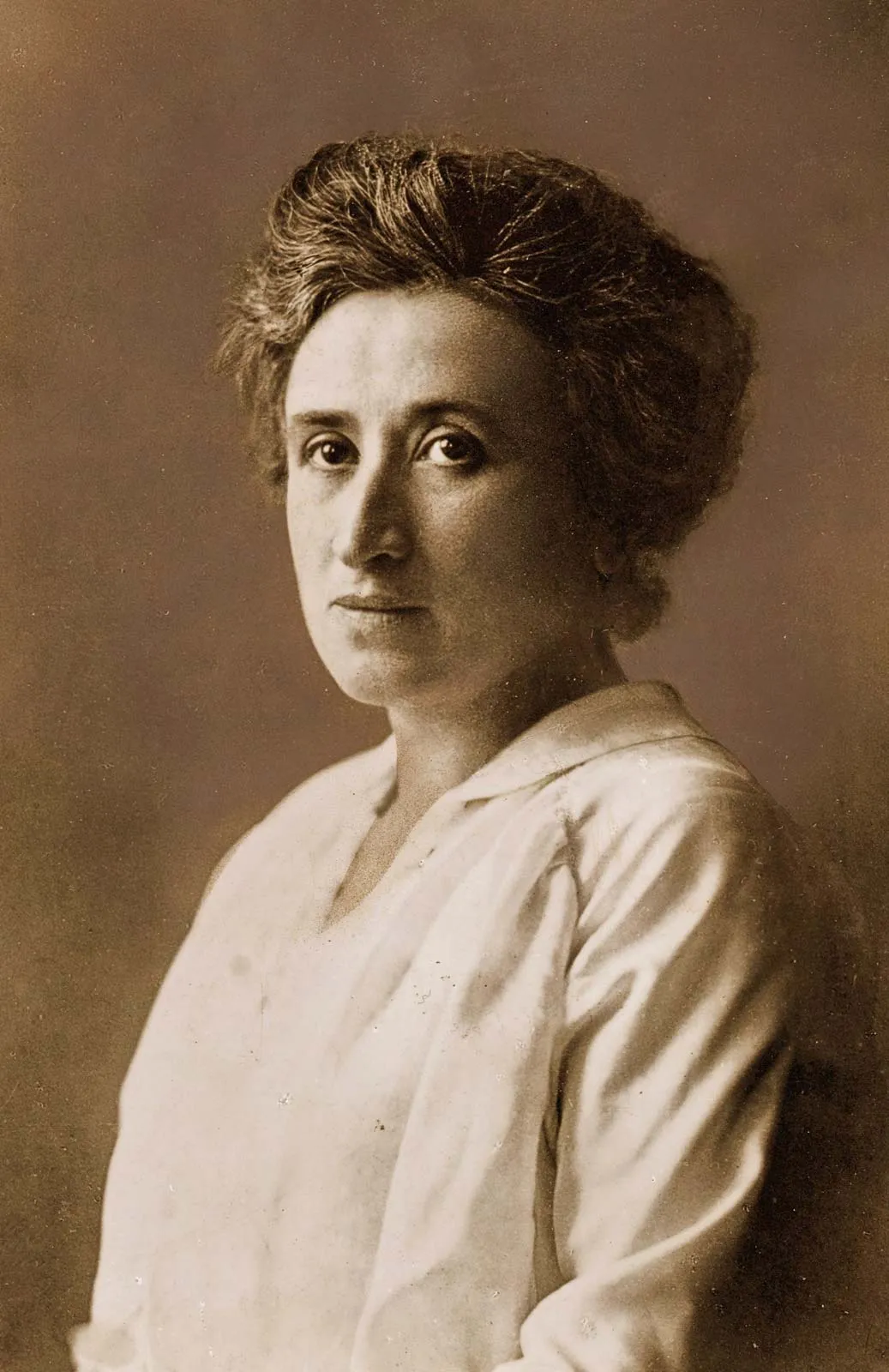
Rosa Luxemburg remains one of the most influential and iconic figures in the history of socialism and revolutionary thought. Born on March 5, 1870, in Zamość, Poland, Luxemburg was a German revolutionary socialist of Polish-Jewish descent who became one of the most important theorists of Marxism. Her life was marked by a relentless pursuit of justice, equality, and peace, and her contributions to political thought continue to resonate with scholars, activists, and thinkers worldwide.
This comprehensive exploration of Luxemburg’s life delves into her early years, rise to prominence, intellectual contributions, and her tragic demise, while also examining the historical context that shaped her revolutionary ideals. By understanding her story, we gain insights into the broader currents of early 20th-century European politics and the ongoing relevance of her ideas today.
Early Life and Education
Rosa Luxemburg was born into a Jewish family in the small town of Zamość in the Russian-controlled part of Poland. From a young age, she demonstrated an extraordinary intellect and a deep sense of justice. Her parents, Eliasz Luxemburg and Line Löwenstein, were relatively well-off, and they ensured that Rosa received a solid education, despite the anti-Semitic and repressive environment of the Russian Empire.
By the age of 16, Luxemburg had already become involved in socialist politics, joining the underground leftist group “Proletariat” in Warsaw. Her involvement in revolutionary activities led to her being targeted by the authorities, and by 1889, at the age of 19, she fled to Switzerland to avoid arrest. It was in Zurich that Luxemburg continued her education, studying law and political economy at the University of Zurich, one of the few European universities that admitted women at the time.
Early Activism and Political Involvement
During her time in Zurich, Luxemburg became deeply involved in socialist politics, forming connections with key figures in the European socialist movement. She completed her doctoral thesis in 1897 on the industrial development of Poland, demonstrating her deep understanding of economic theory and her commitment to Marxist analysis.
In 1898, Luxemburg moved to Germany, where she would spend much of her life. To gain German citizenship, she entered into a marriage of convenience with Gustav Lübeck, a German socialist. Luxemburg quickly became a leading figure in the Social Democratic Party of Germany (SPD), the largest socialist party in the world at that time. Her sharp intellect and fiery speeches made her a prominent and respected figure within the party, where she was known for her opposition to the revisionist ideas of Eduard Bernstein, a leading SPD member who advocated for a more moderate approach to achieving socialism.
Luxemburg’s most significant contribution during this period was her fierce defense of revolutionary Marxism. She argued that socialism could only be achieved through revolutionary means, rather than gradual reforms within the capitalist system. Her pamphlet “Reform or Revolution” published in 1900, remains a seminal work in socialist literature, emphasizing that genuine social change could not be accomplished through the slow and piecemeal approach advocated by revisionists.
Intellectual Contributions and Theoretical Work
Rosa Luxemburg’s contributions to Marxist theory were profound and far-reaching. She was a prolific writer and her works covered a wide range of topics, including economics, imperialism, and the role of democracy in a socialist society.
One of her most influential works, “The Accumulation of Capital,” published in 1913, offered a critical analysis of capitalist expansion. In this book, Luxemburg argued that capitalism’s need for constant expansion into non-capitalist regions would eventually lead to its downfall. Her critique was particularly focused on the imperialist practices of European powers, which she believed were driven by the need to find new markets and resources to sustain their economies.
Luxemburg’s work was not without controversy. She often found herself at odds with other Marxist leaders, including Vladimir Lenin. While she admired Lenin’s commitment to revolution, she disagreed with his ideas on party organization and the role of democracy within a socialist society. Luxemburg believed that democracy was essential to socialism and warned against the dangers of a dictatorial approach, which she feared would lead to authoritarianism.
The First World War and the Birth of the German Communist Movement
The outbreak of World War I in 1914 was a turning point in Luxemburg’s life and in the broader socialist movement. She was a staunch opponent of the war, viewing it as an imperialist conflict that pitted workers of different nations against each other for the benefit of the ruling classes. When the SPD supported the war effort, Luxemburg, along with other anti-war socialists, broke away from the party.
In 1916, she co-founded the Spartacus League (Spartakusbund) with Karl Liebknecht, which later became the Communist Party of Germany (KPD). The Spartacus League was dedicated to ending the war and overthrowing the capitalist system. Luxemburg’s anti-war stance led to her arrest, and she spent much of the war years in prison. Despite her imprisonment, she continued to write prolifically, producing some of her most important works during this time, including “The Junius Pamphlet,” a scathing critique of the war and the SPD’s betrayal of socialist principles.
The German Revolution of 1918-1919
The end of World War I brought about revolutionary upheaval across Germany. The abdication of Kaiser Wilhelm II in November 1918 led to the establishment of the Weimar Republic, but the country was in turmoil, with widespread strikes, protests, and calls for radical change.
Luxemburg and Liebknecht believed that the time was ripe for a proletarian revolution similar to the one that had occurred in Russia in 1917. In January 1919, the Spartacists launched an uprising in Berlin, known as the Spartacist Uprising, with the aim of overthrowing the provisional government and establishing a socialist republic.
The uprising was brutally suppressed by the government, which enlisted the help of the Freikorps, a paramilitary group made up of ex-soldiers. Luxemburg and Liebknecht were arrested on January 15, 1919. They were both murdered by members of the Freikorps, and Luxemburg’s body was dumped in a canal in Berlin. Her death marked the end of the revolutionary wave in Germany, but her legacy lived on.
Legacy and Impact
Rosa Luxemburg’s life and work have had a lasting impact on the socialist and communist movements worldwide. Her commitment to revolutionary socialism, her defense of democracy, and her critiques of imperialism and capitalism continue to inspire generations of activists and thinkers.
Luxemburg’s ideas on democracy and socialism have been particularly influential in the development of democratic socialism and have provided a counterpoint to the more authoritarian models of socialism that emerged in the 20th century. Her belief that socialism must be built on the foundations of democracy and popular participation remains relevant today, as movements around the world seek to build more just and equitable societies.
In the decades following her death, Luxemburg became a symbol of resistance against oppression and a martyr for the cause of socialism. Her writings have been studied extensively, and her legacy is commemorated each year by socialists and communists, particularly in Germany, where thousands gather to honor her memory.
Conclusion
Rosa Luxemburg was a revolutionary thinker, a committed activist, and a passionate advocate for social justice. Her life was a testament to the power of ideas and the importance of standing up for one’s beliefs, even in the face of overwhelming odds. As we look back on her life and legacy, we are reminded of the enduring relevance of her ideas and the ongoing struggle for a more just and equitable world.
Luxemburg’s contributions to Marxist theory, her unwavering commitment to democracy, and her fearless opposition to war and imperialism make her one of the most significant figures in the history of socialism. Her life may have been cut short, but her ideas continue to inspire and challenge us to this day.


