
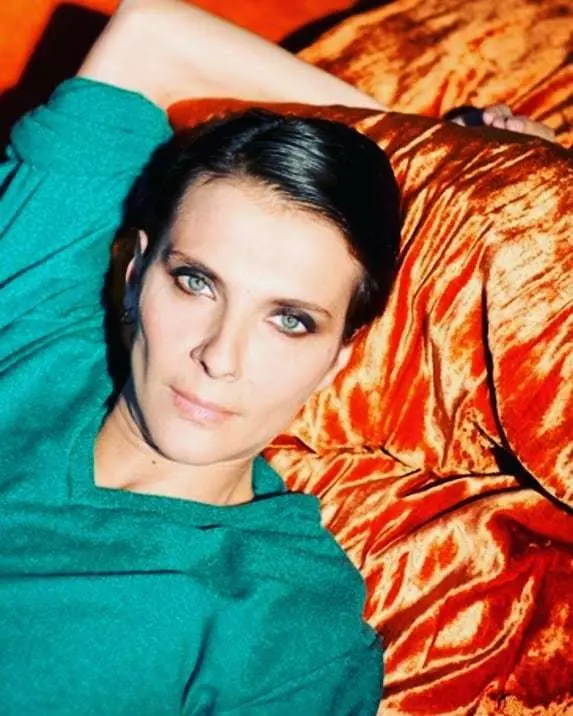
Rosalinda Celentano is a name that resonates strongly within the realms of Italian entertainment and culture. As the youngest daughter of two iconic figures—Adriano Celentano and Claudia Mori—Rosalinda has carved out her own unique identity in the world of cinema, music, and art. Her journey is marked by a deep passion for the arts, a fierce independence, and a willingness to confront personal and societal challenges head-on. This article explores the life, career, and impact of Rosalinda Celentano, delving into the nuances of her career and the personal struggles that have shaped her.
Early Life and Background
Born on July 15, 1968, in Rome, Rosalinda Celentano grew up in a household where creativity and fame were the norms. As the third and youngest child of Adriano Celentano, one of Italy’s most famous singers and actors, and Claudia Mori, an accomplished actress and singer, Rosalinda was surrounded by the arts from an early age. Her upbringing in such a vibrant environment inevitably influenced her career choices.
Despite her illustrious parentage, Rosalinda chose to forge her own path rather than ride on the coattails of her family’s fame. This independent spirit became a defining characteristic of her career and personal life.
Music: A Brief But Memorable Foray
In the early 1990s, Rosalinda made her debut in the music industry, a choice that seemed almost inevitable given her family’s musical legacy. She participated in the Sanremo Music Festival, Italy’s most prestigious music competition, presenting the song “L’età dell’oro” under the stage name Rosalinda. Her performance was well-received, and she reached the finals in the “Giovani” (Youth) category, an impressive feat for a debutante.
Following her Sanremo success, Rosalinda released her only album, self-titled “Rosalinda,” which included the single “Quanti treni”. The song earned her the Disco Verde award at the Festivalbar in 1991, further cementing her reputation as a talented singer. However, despite this early success, Rosalinda’s musical career was short-lived. She soon shifted her focus to what would become her true passion—acting and the visual arts.
Transition to Acting: Finding Her True Calling
Rosalinda Celentano’s transition to acting marked the beginning of a more fulfilling phase in her career. Her film debut came in 1988 with the movie “Treno di panna,” directed by Andrea De Carlo, who adapted the film from his own novel. This initial foray into cinema was just the beginning of what would become a significant career in the Italian film industry.
In 1993, Rosalinda appeared in “Le donne non vogliono più,” directed by Pino Quartullo. Around the same time, she also ventured into television, co-hosting the show “Video One” on the Supersix channel alongside DJ Roberto Onofri. Despite her television stint, it was clear that Rosalinda’s heart lay in cinema.
Her breakthrough as an actress came in 2002 with the film “Paz!” directed by Renato De Maria. Her performance earned her the Globo d’oro for Best New Actress, a prestigious award that recognized her burgeoning talent. This accolade was a turning point, solidifying her place in the Italian film industry.
International Recognition: “The Passion of the Christ”
Rosalinda’s career took an international turn in 2004 when she was cast in Mel Gibson’s controversial and highly successful film “The Passion of the Christ.” In the film, Rosalinda portrayed Satan, a role that required her to channel a deep and unsettling intensity. Her performance was both haunting and memorable, earning her widespread acclaim and a nomination for Best Supporting Actress at the Nastri d’Argento awards, one of Italy’s most prestigious film honors.
This role not only brought Rosalinda international recognition but also showcased her ability to take on complex and challenging characters. Her portrayal of Satan was far from conventional; it was nuanced, eerie, and deeply impactful, leaving a lasting impression on audiences worldwide.
Artistic Pursuits: A Multidimensional Career
Beyond music and acting, Rosalinda Celentano is also an accomplished visual artist. Her artistic endeavors are as varied and eclectic as her career, reflecting her deep love for the arts. Whether through painting, sculpture, or other forms of visual expression, Rosalinda has consistently explored new creative avenues, often drawing on her personal experiences and emotions.
Her work in the visual arts is a testament to her versatility as an artist. It also speaks to her desire to communicate her inner world through different mediums, each piece serving as a window into her complex and often tumultuous life.
Personal Struggles and Advocacy
Rosalinda Celentano’s life has not been without its challenges. Throughout her career, she has been open about her struggles with depression and her battles with alcoholism. These personal struggles have influenced her work and her outlook on life, making her a more introspective and empathetic artist.
Rosalinda is also a vocal advocate for LGBTQ+ rights. As an openly gay woman, she has used her platform to raise awareness and support for LGBTQ+ issues in Italy, a country where such topics have often been met with resistance. Her advocacy work is deeply personal, and she has become an important figure in the fight for equality and acceptance.
One of the most publicized aspects of her personal life was her relationship with actress Simona Borioni. The couple was together for four years, and their relationship was widely covered by the media. However, the relationship ended on less than amicable terms, with Rosalinda’s ongoing struggles with alcohol playing a significant role.
Later Career: A Return to the Spotlight
In recent years, Rosalinda Celentano has returned to the public eye, most notably as a contestant on the 2020 edition of the popular Italian dance competition show “Ballando con le Stelle” (the Italian version of “Dancing with the Stars”). Her participation in the show was well-received, and it offered her a platform to reconnect with the public and share her story.
Throughout her time on the show, Rosalinda displayed her characteristic vulnerability and authenticity, traits that have endeared her to fans over the years. Her performances were not just about dance; they were about expression, emotion, and the journey of life.
The Impact and Legacy of Rosalinda Celentano
Rosalinda Celentano’s career is a testament to the power of perseverance and the importance of staying true to oneself. Despite the challenges she has faced, both personally and professionally, she has continued to push boundaries and explore new creative territories.
Her work in film, music, and visual art has left a lasting impact on the Italian cultural landscape. Rosalinda’s willingness to tackle difficult roles, her openness about her personal struggles, and her advocacy for LGBTQ+ rights have all contributed to her legacy as a multifaceted and courageous artist.
Conclusion
Rosalinda Celentano is much more than just the daughter of famous parents; she is an artist in her own right, with a career that spans multiple disciplines and continues to evolve. Her life and work are characterized by a deep passion for the arts, a commitment to authenticity, and a determination to overcome personal challenges. As she continues to create and inspire, Rosalinda Celentano remains a powerful and enduring figure in the world of Italian entertainment and beyond.


