
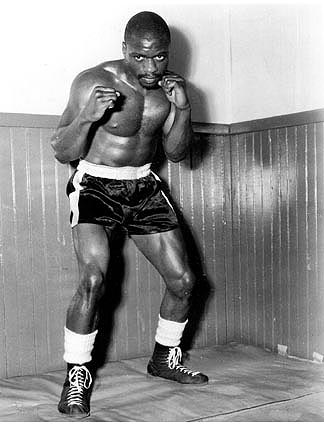
Rubin “Hurricane” Carter, born on May 6, 1937, in Clifton, New Jersey, is a figure whose life embodies the complexities of fame, injustice, and redemption. Known both as a formidable professional boxer and a man who was wrongfully imprisoned for nearly 20 years, Carter’s story has resonated across the world, inspiring books, songs, and films. This article explores the life of Rubin Carter, delving into his early years, his boxing career, the controversial murder conviction that overshadowed his life, and his eventual exoneration.
Early Life and Troubles with the Law
Rubin Carter’s early life was marked by hardship and struggle. Growing up in Paterson, New Jersey, in a family of seven children, Carter encountered difficulties that would shape his future. At the age of 14, he found himself on the wrong side of the law, being imprisoned in a juvenile reformatory for assault and robbery. This early brush with the criminal justice system was a sign of the challenges that would follow him throughout his life.
In 1954, at the age of 17, Carter escaped from the reformatory and enlisted in the U.S. Army. His military service, which took him to Germany, was where he first began to focus on boxing, a sport that would soon become his calling. However, his time in the Army was troubled; he faced multiple disciplinary actions, including four court-martials for insubordination, which ultimately led to his discharge after 21 months of service.
Returning to New Jersey, Carter found himself once again embroiled in legal troubles. He was arrested and imprisoned for the escape from the reformatory and later for other crimes, including assault and robbery. These early years set a pattern that would later be tragically echoed in his life.
The Boxing Career: Rise to Fame
Despite his troubled past, Rubin Carter found his true talent in boxing. Upon his release from prison in 1961, Carter wasted no time in pursuing a professional career in the sport. Though standing at only 5 feet 8 inches (1.70 meters), which was shorter than most in the middleweight division, Carter’s power, aggression, and relentless style earned him the nickname “Hurricane.”
Carter’s muscular build, bald head, and fierce demeanor made him an intimidating figure in the ring. His aggressive fighting style, characterized by explosive punches and a relentless pursuit of his opponents, quickly caught the attention of the boxing world. Carter’s rise was swift; he defeated top contenders like Holley Mims, Gomeo Brennan, and Florentino Fernández, establishing himself as a force to be reckoned with.
In July 1963, Ring Magazine ranked Carter among the top 10 middleweight boxers in the world. His victory over Emile Griffith, a former welterweight and middleweight champion, on December 20, 1963, further solidified his reputation. In that bout, Carter knocked Griffith down twice in the first round, winning by technical knockout. This victory positioned Carter as a leading contender for the middleweight title.
The opportunity to fight for the world middleweight title came on December 14, 1964, against the reigning champion Joey Giardello. The match, held in Philadelphia, was a hard-fought 15-round contest. Although many observers believed Carter had done enough to win, the judges unanimously awarded the victory to Giardello. The decision was controversial, with 14 out of 18 journalists at ringside scoring the fight in Carter’s favor. However, Carter did not file an official protest.
After this setback, Carter’s career began to decline. He fought nine times in 1965 but lost four of those bouts, including fights against top opponents like Luis Manuel Rodríguez, Harry Scott, and Dick Tiger. Despite these losses, Carter remained a well-known figure in the boxing world.
The Lafayette Bar and Grill Murders: A Tragic Turn
Rubin Carter’s life took a devastating turn on June 17, 1966, when he was arrested and later convicted for a triple murder at the Lafayette Bar and Grill in Paterson, New Jersey. In the early hours of that morning, two men entered the bar and opened fire, killing bartender Jim Oliver, patron Fred Nauyoks, and Hazel Tanis, who succumbed to her injuries a month later. Another patron, Willie Marins, survived but lost sight in one eye.
Witnesses at the scene, including Alfred Bello, a known criminal, and Patricia Graham, who lived above the bar, provided descriptions that led the police to suspect Carter and his friend John Artis. The two men were pulled over by police in a car that matched the description provided by witnesses. In the car, police found a .32 caliber pistol and ammunition that matched the type used in the murders.
Despite the lack of physical evidence linking Carter and Artis to the crime and their failure to be identified by the surviving victim, they were charged and brought to trial. The prosecution’s case rested heavily on the testimony of Bello and another witness, Arthur Dexter Bradley, both of whom later admitted to lying in their initial statements. Nevertheless, Carter and Artis were convicted and sentenced to life in prison.
Fight for Justice: The Struggle for Freedom
Rubin Carter and John Artis maintained their innocence throughout the legal proceedings and their subsequent imprisonment. Carter’s story gained widespread attention, and many believed he had been wrongfully convicted due to racial bias and flawed testimony.
In 1974, while still in prison, Carter wrote his autobiography, The Sixteenth Round: From Number 1 Contender to Number 45472, in which he detailed his life story and his claim of innocence. The book attracted the attention of celebrities and activists, including Bob Dylan, who wrote the iconic song “Hurricane” in 1975, bringing Carter’s plight to an even wider audience.
The growing public outcry and new evidence prompted a retrial in 1976. However, despite the retraction of key witness testimonies, Carter and Artis were again convicted and sentenced to life in prison. The case seemed hopeless until the 1980s when new legal efforts were undertaken.
In 1985, after years of appeals, U.S. District Court Judge H. Lee Sarokin overturned Carter’s conviction, ruling that his original trial had been “based on racism rather than reason, and concealment rather than disclosure.” The judge found that the prosecution had violated Carter’s constitutional rights by presenting a case tainted by racial prejudice and suppressing evidence favorable to the defense.
Finally, in 1988, the state of New Jersey dropped all charges against Carter, officially ending the legal saga that had spanned more than two decades. Rubin Carter was a free man, but his experience had left an indelible mark on his life and on the American legal system.
Life After Exoneration: Advocacy and Legacy
After his release from prison, Rubin Carter dedicated his life to advocating for the wrongfully convicted. He moved to Toronto, Canada, where he became the executive director of the Association in Defence of the Wrongly Convicted (AIDWYC). In this role, Carter worked tirelessly to help others who, like him, had been unjustly imprisoned.
Carter’s work and his personal story continued to inspire others. His life was the subject of the 1999 film The Hurricane, directed by Norman Jewison and starring Denzel Washington as Carter. The film, while dramatized, brought renewed attention to Carter’s story and the broader issue of wrongful convictions.
Carter’s legacy as a fighter—both in the ring and in the courtroom—endures. His journey from a promising boxing career to a life derailed by injustice, and finally to a role as an advocate for others, speaks to the resilience of the human spirit and the ongoing struggle for justice.
Conclusion
Rubin “Hurricane” Carter’s life is a powerful reminder of the potential for both tragedy and triumph in the human experience. From his early days as a troubled youth to his rise as a formidable boxer, and then to his wrongful conviction and eventual exoneration, Carter’s story is one of enduring struggle and ultimate redemption.
Carter’s fight for justice, both for himself and for others, has left an indelible impact on the legal system and on the broader public consciousness. His life serves as a testament to the importance of perseverance, the pursuit of truth, and the fight against injustice.
As we reflect on Rubin Carter’s life and legacy, we are reminded of the critical need for fairness and integrity in the justice system, and the ongoing work required to ensure that no one else suffers the same fate as the Hurricane.


