
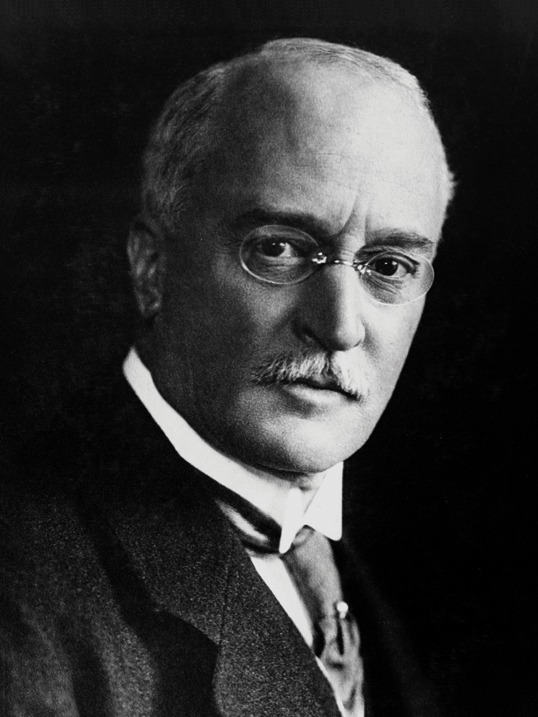
Rudolf Diesel is a name synonymous with innovation, engineering brilliance, and a legacy that continues to impact the modern world. Born on March 18, 1858, in Paris, France, to German parents, Diesel’s life was a remarkable journey marked by groundbreaking achievements, personal struggles, and a mysterious end that still intrigues historians today. This article explores the life of Rudolf Diesel, delving into his early years, the invention of the diesel engine, and the enduring influence of his work on contemporary technology.
Early Life and Education
Rudolf Christian Karl Diesel was born into a family of modest means. His mother was a governess and German tutor, while his father was a skilled leather craftsman. Despite their limited financial resources, Diesel’s parents placed a high value on education, a principle that would shape the course of his life.
Diesel excelled in his early education, attending the Ecole Primaire Superieure, one of the top primary schools in Paris. However, the outbreak of the Franco-Prussian War in 1870 forced the Diesel family to flee to London, seeking refuge in neutral Britain. The war profoundly impacted Diesel, instilling in him a sense of displacement that would influence his later work.
At the age of 12, Diesel moved to Augsburg, Germany, the hometown of his family. There, he attended the Royal County Trade School, where his academic excellence continued to shine. It was during this period that Diesel wrote a letter to his parents, expressing his desire to become an engineer—a decision that would set the course for his future.
In 1873, Diesel completed his compulsory education and enrolled in the newly established Industrial School in Augsburg. His academic prowess earned him a scholarship to the prestigious Technische Hochschule in Munich, Bavaria, in 1875. Despite his parents’ wishes for him to start working, Diesel chose to pursue higher education, where he became a protégé of the renowned engineer Carl von Linde.
The Quest for Innovation
Rudolf Diesel graduated in 1880, and it was at this point that he began his quest to develop a more efficient engine. At the time, steam engines dominated the industrial landscape, but Diesel was determined to find an alternative that would offer greater efficiency and practicality.
Diesel’s early career saw him working in Winterthur, Switzerland, as a technician and designer for two years. He then returned to Paris to work for the refrigeration company Linde, where he was employed as an engineer. It was here that Diesel’s innovative mind began to flourish, as he immersed himself in the study of thermodynamics and engine design.
In 1883, Diesel married, and two years later, he established his first workshop, which also served as a laboratory. With a strong foundation in physics and mathematics, Diesel embarked on the ambitious project of designing an engine that would surpass the efficiency of both the steam engine and the internal combustion engine recently invented by Nikolaus August Otto.
Diesel’s vision was to create an engine that would rely solely on the high temperature generated by air compression in the combustion chamber to ignite the fuel. This concept was revolutionary, but it would take years of experimentation, failure, and persistence before the world would witness the realization of his idea.
The Diesel Engine: A Revolutionary Invention
In 1892, Diesel was granted a patent for his engine in Germany, marking a significant milestone in his career. However, it would be another five years before a working prototype was successfully built. During this period, Diesel faced numerous challenges, including securing funding and overcoming technical obstacles that threatened to derail his project.
Despite these setbacks, Diesel’s determination never wavered. In 1893, he published a seminal paper titled “Theory and Construction of a Rational Heat Engine to Replace the Steam Engine and Combustion Engines Known Today.” In this paper, Diesel outlined the principles behind his invention and the potential it held for revolutionizing the field of engineering.
In February 1894, Diesel completed a prototype engine with a single piston, which was demonstrated publicly. Although the engine only ran for a minute and was powered by pulverized fuel introduced by compressed air, it represented a significant step forward. Diesel continued to refine his design, and in 1897, he finally achieved success.
Working at the Maschinenfabrik Augsburg, Diesel constructed a fully operational prototype of his engine. This engine, which bore striking similarities to a design proposed by Herbert Akroyd Stuart two years earlier, would go on to become one of the most important inventions of the 20th century. Despite ongoing disputes over the patent’s origins, Diesel’s invention was undeniably a game-changer.
The Rise to Fame
Rudolf Diesel’s engine was officially unveiled at the 1900 Paris Exposition, where it was demonstrated using peanut oil as fuel. The engine’s efficiency, reliability, and versatility quickly garnered attention, leading to widespread adoption across various industries. Diesel engines became the preferred choice for powering ships, trains, and industrial machinery, and their impact on the world was profound.
Diesel’s invention earned him considerable wealth, as he secured patents in multiple countries and licensed his technology to manufacturers worldwide. By 1904, Diesel was a millionaire, and his name became synonymous with innovation and engineering excellence.
In the early 20th century, Diesel embarked on a series of lectures and tours in the United States, where he shared his insights and vision for the future of engine technology. His work laid the foundation for the modern diesel engine, which continues to power countless vehicles and machines around the globe.
The Mysterious Death of Rudolf Diesel
Despite his success, Rudolf Diesel’s life was not without its struggles. On September 29, 1913, Diesel boarded a ship bound for England from France. The purpose of his journey remains a subject of speculation, with some suggesting that Diesel was on his way to discuss the use of his engines with the British Royal Navy.
Tragically, Diesel never reached his destination. On the night of September 29, he disappeared from the ship, and his body was later found floating in the English Channel. The circumstances surrounding his death remain shrouded in mystery, with theories ranging from suicide to assassination.
One theory suggests that Diesel took his own life due to financial difficulties. At the time of his death, Diesel was deeply in debt, and some believe that the weight of these financial burdens drove him to despair. A cross drawn in his diary on the date of his disappearance has been interpreted as a sign of his intent to end his life.
Another theory posits that Diesel was murdered by the German Navy, which feared that he would offer his engine technology to the British. Given the strategic importance of diesel engines for naval vessels, it’s plausible that Diesel’s knowledge made him a target.
Despite the many theories, the true cause of Rudolf Diesel’s death remains unknown. His body, once recovered by fishermen, was buried at sea, leaving behind a legacy that would outlive the man himself.
Legacy and Impact on Modern Technology
Rudolf Diesel’s contributions to engineering and technology cannot be overstated. His invention of the diesel engine revolutionized transportation and industry, providing a more efficient and reliable power source than steam or gasoline engines. Today, diesel engines are ubiquitous, powering everything from trucks and buses to ships and generators.
Diesel’s work also paved the way for further advancements in engine technology. His focus on efficiency and sustainability continues to influence modern engineering practices, as the world seeks to develop cleaner and more efficient forms of energy. The diesel engine’s ability to run on a variety of fuels, including biofuels, aligns with contemporary efforts to reduce carbon emissions and combat climate change.
In recognition of his contributions, Diesel’s name is immortalized in the term “diesel,” which is now a part of everyday language. His life and work have been the subject of numerous books, documentaries, and studies, cementing his place in history as one of the greatest inventors of all time.
Conclusion
Rudolf Diesel’s life was a testament to the power of perseverance, innovation, and vision. From his humble beginnings in Paris to his rise as a millionaire inventor, Diesel’s journey was marked by both triumph and tragedy. His invention of the diesel engine not only transformed the world of engineering but also left an indelible mark on global industry and transportation.
Though his life ended under mysterious circumstances, Diesel’s legacy endures. The diesel engine remains a critical component of modern technology, and his ideas continue to inspire engineers and inventors around the world. As we look to the future, the principles that guided Diesel’s work—efficiency, sustainability, and innovation—remain as relevant as ever.


