
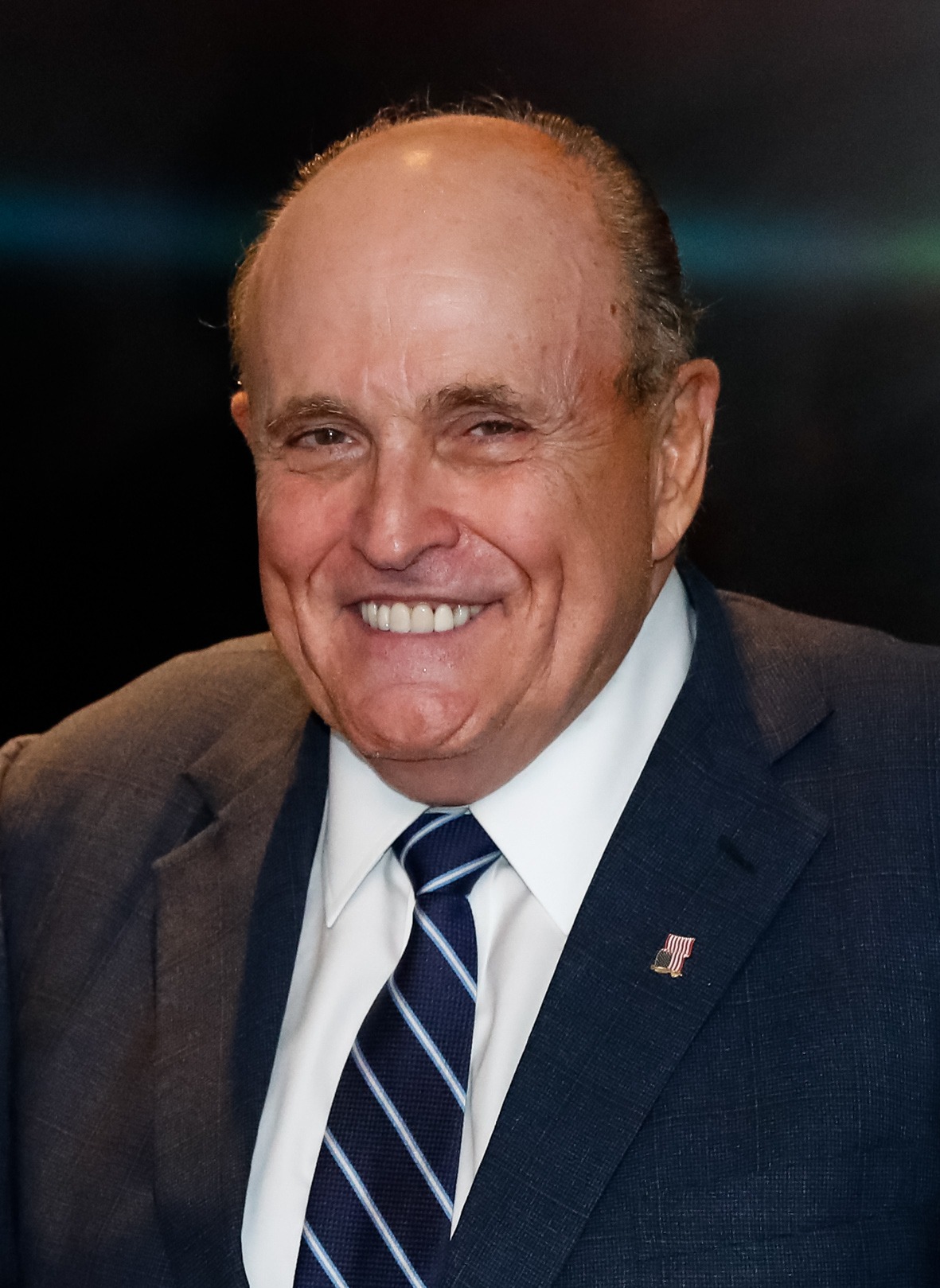
Rudolph Giuliani, often referred to as “America’s Mayor,” is a name synonymous with leadership during crisis, tough-on-crime policies, and a complex political career that has spanned several decades. Born on May 28, 1944, in Brooklyn, New York, Giuliani’s life has been marked by both significant achievements and controversies. From his rise as a formidable prosecutor to his tenure as the mayor of New York City, and later his role in national politics, Giuliani’s journey is a fascinating one, steeped in ambition, resilience, and a drive to make a lasting impact on American society.
Early Life and Education: The Making of a Leader
Rudolph William Louis Giuliani was born into a modest family with deep Italian roots. His grandparents hailed from Montecatini, Italy, and like many Italian immigrants, they settled in New York in search of a better life. Giuliani’s father, an immigrant who worked as a plumber, instilled in him a strong work ethic and a desire to rise above the family’s working-class status.
Giuliani’s academic journey began at the Bishop Loughlin Memorial High School in Brooklyn, where he excelled academically. His intellectual prowess earned him a place at Manhattan College, where he pursued a degree in political science. After graduating, Giuliani attended the prestigious New York University School of Law, where he earned his law degree in 1968. His education was the foundation upon which he built a career that would take him to the highest echelons of power in New York and beyond.
Early Career: The Rise of a Legal Eagle
Rudolph Giuliani’s legal career began in earnest after he graduated from law school. He quickly secured a position as a clerk for Judge Lloyd MacMahon in the United States District Court for the Southern District of New York. This experience was invaluable, providing him with a deep understanding of the legal system and the complexities of federal law.
At the age of 27, Giuliani’s career took a significant turn when he was appointed as the Assistant U.S. Attorney for the Southern District of New York. His role in this position was to prosecute a range of federal cases, but he quickly made a name for himself as a tough and relentless prosecutor, particularly in cases involving organized crime and narcotics. His tenacity and effectiveness earned him the nickname “the Iron Prosecutor,” a moniker that would follow him throughout his career.
In 1975, Giuliani moved to Washington, D.C., where he served as the Associate Deputy Attorney General. This position further solidified his reputation as a tough-on-crime lawyer, and it was during this time that he developed the prosecutorial strategies that would later define his tenure as U.S. Attorney for the Southern District of New York.
U.S. Attorney for the Southern District of New York: Taking on the Mob
In 1983, under President Ronald Reagan, Giuliani was appointed U.S. Attorney for the Southern District of New York, one of the most powerful prosecutorial positions in the country. It was in this role that Giuliani truly made his mark, launching high-profile cases against the Mafia, corrupt politicians, and Wall Street insiders.
Giuliani’s most notable successes during this time included the prosecution of the “Five Families” of the New York Mafia, a feat that had eluded law enforcement for decades. His use of the Racketeer Influenced and Corrupt Organizations Act (RICO) allowed him to indict and convict key members of the Gambino, Genovese, Lucchese, Colombo, and Bonanno families, severely weakening organized crime in New York City.
In addition to his work against the Mafia, Giuliani also targeted white-collar crime, pursuing cases against high-profile Wall Street figures. His aggressive approach to prosecuting financial crime earned him both praise and criticism, but there was no denying that Giuliani had become a force to be reckoned with in the legal world.
The Mayoralty: Transforming New York City
Rudolph Giuliani’s success as a prosecutor paved the way for his entry into politics. In 1989, he ran for mayor of New York City as a Republican, challenging the incumbent Democratic mayor, David Dinkins. Although he lost that race, Giuliani’s message of law and order resonated with many New Yorkers who were concerned about the city’s rising crime rates and economic challenges.
Undeterred by his loss, Giuliani ran for mayor again in 1993. This time, he narrowly defeated Dinkins, becoming the first Republican mayor of New York City in over two decades. Giuliani’s tenure as mayor would be marked by his aggressive approach to crime, his focus on revitalizing the city’s economy, and his often controversial leadership style.
One of Giuliani’s most significant contributions as mayor was his implementation of the “Broken Windows” theory of policing. This theory, which posits that addressing small crimes such as vandalism and fare evasion can help prevent more serious crimes, became the cornerstone of Giuliani’s crime-fighting strategy. Under his leadership, New York City’s crime rate dropped dramatically, with homicides falling by nearly 50% and overall crime decreasing by 30%. While critics argued that his policies led to over-policing and infringed on civil liberties, Giuliani’s supporters credited him with making New York City safer and more livable.
In addition to his focus on crime, Giuliani also worked to improve the city’s economy. He cut taxes, streamlined city government, and worked to attract businesses to New York. His efforts contributed to a period of economic growth in the city, and by the time he left office in 2001, New York was experiencing one of the most prosperous periods in its history.
September 11, 2001: Leadership in Crisis
Rudolph Giuliani’s legacy as mayor of New York City was forever shaped by the events of September 11, 2001. On that fateful day, New York City was attacked by terrorists who hijacked two planes and crashed them into the World Trade Center, killing nearly 3,000 people and devastating the city.
In the aftermath of the attacks, Giuliani emerged as a symbol of resilience and leadership. His calm demeanor, decisive actions, and compassionate response to the tragedy earned him widespread praise and solidified his reputation as “America’s Mayor.” Giuliani was on the ground at Ground Zero in the hours and days following the attacks, providing leadership and support to the city’s first responders and comforting the families of the victims.
Giuliani’s leadership during the 9/11 crisis was widely recognized, and he was named Time magazine’s Person of the Year in 2001. His handling of the crisis also led to speculation that he might run for higher office, and many saw him as a potential candidate for president.
Post-Mayoral Career: National Politics and Controversy
After leaving office in 2002, Rudolph Giuliani remained a prominent figure in American politics and business. He founded Giuliani Partners, a consulting firm that provided security and crisis management services to clients around the world. He also became a sought-after public speaker and author, sharing his experiences and insights on leadership and crisis management.
In 2008, Giuliani ran for the Republican nomination for president. Initially considered a front-runner due to his national profile and leadership during 9/11, his campaign ultimately faltered, and he withdrew from the race after a disappointing performance in the early primaries. Despite this setback, Giuliani remained an influential figure within the Republican Party.
In the years following his presidential run, Giuliani continued to be involved in politics, often serving as a commentator and advisor. However, his career took a controversial turn in 2018 when he joined President Donald Trump’s legal team. Giuliani became a vocal defender of Trump during the investigation into Russian interference in the 2016 election and later played a central role in efforts to challenge the results of the 2020 presidential election.
Giuliani’s involvement in these efforts led to widespread criticism and legal challenges. In 2021, he was suspended from practicing law in New York, with the court citing “demonstrably false and misleading statements” made in his role as Trump’s attorney. The suspension marked a dramatic fall from grace for the man who had once been celebrated as a national hero.
Personal Life: Triumphs and Tribulations
Rudolph Giuliani’s personal life has been as complex and eventful as his public career. He has been married three times, and his relationships have often been the subject of media scrutiny. His first marriage, to his second cousin Regina Peruggi, was annulled after 14 years. He then married television personality Donna Hanover, with whom he had two children. This marriage ended in a highly publicized divorce in 2002, after Giuliani admitted to having an affair with Judith Nathan, who would become his third wife.
Giuliani’s health has also been a concern over the years. In 2000, he was diagnosed with prostate cancer, a diagnosis that led him to withdraw from the U.S. Senate race against Hillary Clinton. He underwent successful treatment and has since been an advocate for cancer awareness.
Despite the challenges he has faced, both personally and professionally, Giuliani remains a resilient figure. His life story is one of ambition, achievement, and controversy, reflecting the complexities of a man who has played a significant role in shaping modern American history.
Conclusion: Rudolph Giuliani – A Legacy of Leadership and Controversy
Rudolph Giuliani’s life and career are a study in contrasts. He is a man who rose from modest beginnings to become one of the most powerful and influential figures in American politics. His tenure as mayor of New York City is remembered for its transformative impact on the city, particularly in the areas of crime reduction and economic revitalization. His leadership during the September 11 attacks earned him a place in the national consciousness as a symbol of resilience and strength.
However, Giuliani’s later years have been marked by controversy and legal challenges, particularly related to his work with Donald Trump. These developments have complicated his legacy, leading to debates about his place in American history.
In the end, Rudolph Giuliani remains a complex and polarizing figure, a man whose contributions to public life cannot be easily categorized. Whether remembered as a hero or a controversial figure, his impact on New York City and the United States is undeniable.


