
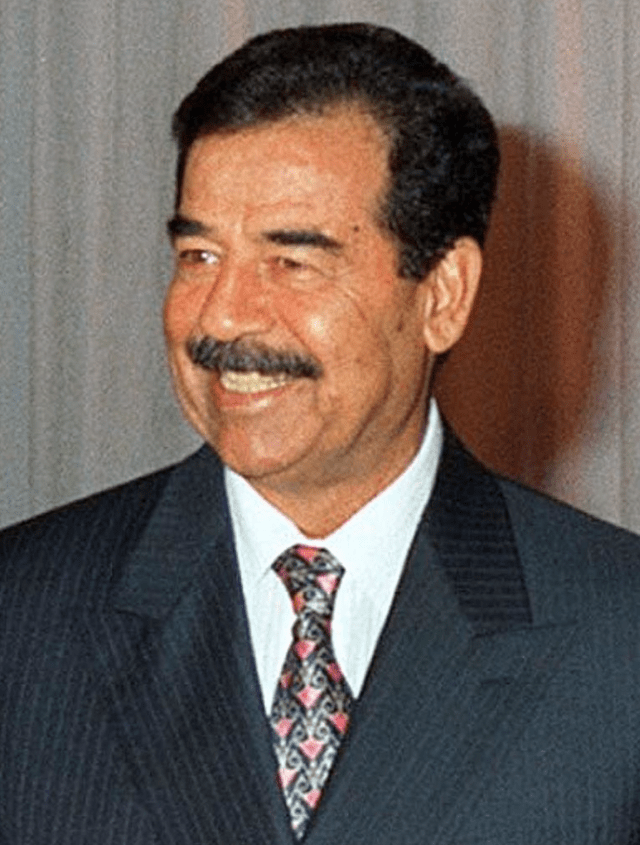
Saddam Hussein, born on April 28, 1937, in Auja, a small village near Tikrit, Iraq, is one of the most controversial and polarizing figures of the 20th and early 21st centuries. His name is synonymous with ruthless dictatorship, wars, and international controversy. This article provides a comprehensive look into the life, rise to power, and eventual downfall of Saddam Hussein, exploring the nuances of his leadership and the historical context that shaped his reign.
Early Life and Political Beginnings
Saddam Hussein was born into a modest family in a rural part of Iraq. His early life was marked by hardship, and he was raised by his maternal uncle after his father’s early death. Growing up in a politically turbulent environment, Saddam was exposed to the ideologies of Arab nationalism and socialism, which greatly influenced his future political beliefs.
In the late 1950s, Saddam joined the Arab Socialist Ba’ath Party, which advocated for the unification of Arab countries and the establishment of a single Arab nation. His early involvement in politics was marked by violence and upheaval. In 1959, Saddam participated in an assassination attempt against Iraq’s then-leader, General Abd al-Karim Qasim. The attempt failed, and Saddam fled to Syria and then Egypt, where he spent several years in exile.
Rise to Power: The 1968 Revolution
Saddam Hussein’s return to Iraq in 1963 marked the beginning of his climb to power. By 1968, Saddam had become a key figure in the Ba’ath Party, which successfully orchestrated a coup to overthrow the existing government. The revolution of 1968, known as the July 17 Revolution, established the Ba’ath Party as the ruling power in Iraq, and Saddam as one of its most influential leaders.
Initially serving as the deputy to President Ahmed Hassan al-Bakr, Saddam quickly consolidated power. His role as the head of internal security and intelligence allowed him to eliminate political rivals and strengthen his control over the government. By 1979, Saddam forced al-Bakr to resign, becoming both the President and the Prime Minister of Iraq. This marked the beginning of his brutal and authoritarian rule.
The Iran-Iraq War: A Decade of Bloodshed
One of the most significant events during Saddam Hussein’s rule was the Iran-Iraq War, which began on September 22, 1980. The conflict was sparked by territorial disputes and fears of the spread of the Iranian Revolution, which threatened to inspire Iraq’s Shiite majority to revolt against Saddam’s Sunni-dominated government.
The war lasted for eight years, causing immense devastation in both Iraq and Iran. Hundreds of thousands of soldiers and civilians were killed, and both countries suffered severe economic damage. Despite the heavy toll, neither side emerged victorious. The conflict ended in a stalemate, but it solidified Saddam’s reputation as a ruthless leader willing to sacrifice his people for the sake of power.
The Invasion of Kuwait and the Gulf War
In August 1990, Saddam Hussein made a bold and fateful decision to invade Kuwait, a small but oil-rich neighboring country. The invasion was driven by Iraq’s economic woes following the Iran-Iraq War and Saddam’s desire to assert Iraq’s dominance in the region. The occupation of Kuwait was met with international outrage, leading to the formation of a U.S.-led coalition to drive Iraqi forces out of the country.
The Gulf War, also known as Operation Desert Storm, began in January 1991. It was a short but intense conflict that resulted in a decisive defeat for Iraq. The coalition forces, composed of more than 30 nations, swiftly liberated Kuwait and inflicted heavy damage on Iraq’s military infrastructure. Despite the defeat, Saddam managed to retain power, but Iraq was left weakened and isolated on the global stage.
Internal Repression and the Kurdish Genocide
Saddam Hussein’s regime was notorious for its brutal repression of internal dissent. Throughout his rule, Saddam maintained control through a combination of fear, propaganda, and violence. One of the most egregious examples of his brutality was the campaign against Iraq’s Kurdish population.
In the late 1980s, Saddam launched the Anfal campaign, a genocidal military operation against the Kurds in northern Iraq. The campaign included the use of chemical weapons, mass executions, and the destruction of villages. Tens of thousands of Kurds were killed, and many more were displaced. The international community condemned these actions, but Saddam faced little immediate consequence for his crimes.
The 1990s: Sanctions and Continued Defiance
The 1990s were a decade of severe hardship for Iraq. Following the Gulf War, the United Nations imposed comprehensive economic sanctions on Iraq, aimed at pressuring Saddam Hussein to dismantle his weapons of mass destruction (WMD) programs. These sanctions had a devastating impact on Iraq’s economy and its civilian population, leading to widespread poverty, malnutrition, and a collapse of public services.
Despite the suffering of his people, Saddam Hussein remained defiant. He continued to obstruct UN weapons inspections and engaged in provocative actions, such as firing missiles at neighboring countries and threatening to use chemical weapons. Saddam’s defiance only deepened Iraq’s isolation and worsened the humanitarian crisis.
The Fall of Saddam Hussein: The Iraq War
Saddam Hussein’s reign came to a dramatic end in 2003, following the U.S.-led invasion of Iraq. The invasion was justified by the U.S. and its allies on the grounds that Iraq possessed weapons of mass destruction and posed a threat to global security. Although no WMDs were found, the invasion led to the rapid collapse of Saddam’s regime.
On April 9, 2003, U.S. forces entered Baghdad, and the iconic images of Saddam’s statue being toppled symbolized the end of his rule. However, Saddam himself managed to evade capture for several months. He was eventually found hiding in a small underground bunker near Tikrit, his hometown, on December 13, 2003. Disheveled and defeated, Saddam was taken into custody without resistance.
Trial and Execution
Saddam Hussein was put on trial by the newly established Iraqi government for crimes against humanity, including the massacre of 148 Shiite men in the town of Dujail in 1982. The trial was highly publicized and was seen as a symbolic moment for Iraq’s new government and its efforts to move beyond Saddam’s tyrannical rule.
On November 5, 2006, Saddam was found guilty and sentenced to death by hanging. The sentence was carried out on December 30, 2006. Saddam’s execution marked the final chapter in the life of a man who had dominated Iraq for nearly three decades. His death was met with mixed reactions; some celebrated the end of his brutal regime, while others viewed the trial and execution as politically motivated.
Legacy and Impact
Saddam Hussein’s legacy is one of violence, repression, and war. His rule left an indelible mark on Iraq and the broader Middle East. The wars he initiated and the internal repression he orchestrated caused immense suffering for the Iraqi people and destabilized the region.
However, Saddam’s legacy is also complex. To some, he was a nationalist leader who sought to strengthen Iraq’s position in the Arab world. His regime invested in infrastructure, education, and healthcare, and he presented himself as a defender of the Arab cause against Western imperialism. But these achievements are overshadowed by the immense human cost of his policies and the devastation he brought upon his own country.
Historical Context and Nuances
To fully understand Saddam Hussein’s life and impact, it is essential to consider the historical and geopolitical context of his rule. Saddam came to power during a period of intense Cold War rivalry, where the Middle East was a battleground for influence between the United States and the Soviet Union. Iraq’s strategic location and its vast oil reserves made it a key player in this struggle.
Saddam’s policies were shaped by the broader Arab nationalist movement, which sought to assert Arab independence and resist Western influence. However, his methods were often brutal and self-serving, leading to widespread suffering and instability.
The Iran-Iraq War, the invasion of Kuwait, and the subsequent Gulf War were all products of Saddam’s ambition to dominate the region. These conflicts not only devastated Iraq but also had lasting repercussions for the Middle East, contributing to the instability that continues to this day.
Conclusion
Saddam Hussein was a man of contradictions—both a nationalist leader and a ruthless dictator. His life was marked by a relentless pursuit of power, often at the expense of his own people. While he sought to position Iraq as a leading power in the Arab world, his methods led to wars, repression, and international isolation.
The fall of Saddam Hussein in 2003 was a turning point for Iraq, ending decades of authoritarian rule. However, the legacy of his reign continues to be felt in Iraq’s ongoing struggles with political instability, sectarian violence, and the challenges of rebuilding a nation after years of conflict and dictatorship.
As history continues to assess Saddam Hussein’s impact, his life serves as a cautionary tale of the dangers of unchecked power and the profound consequences it can have on a nation and its people.


