
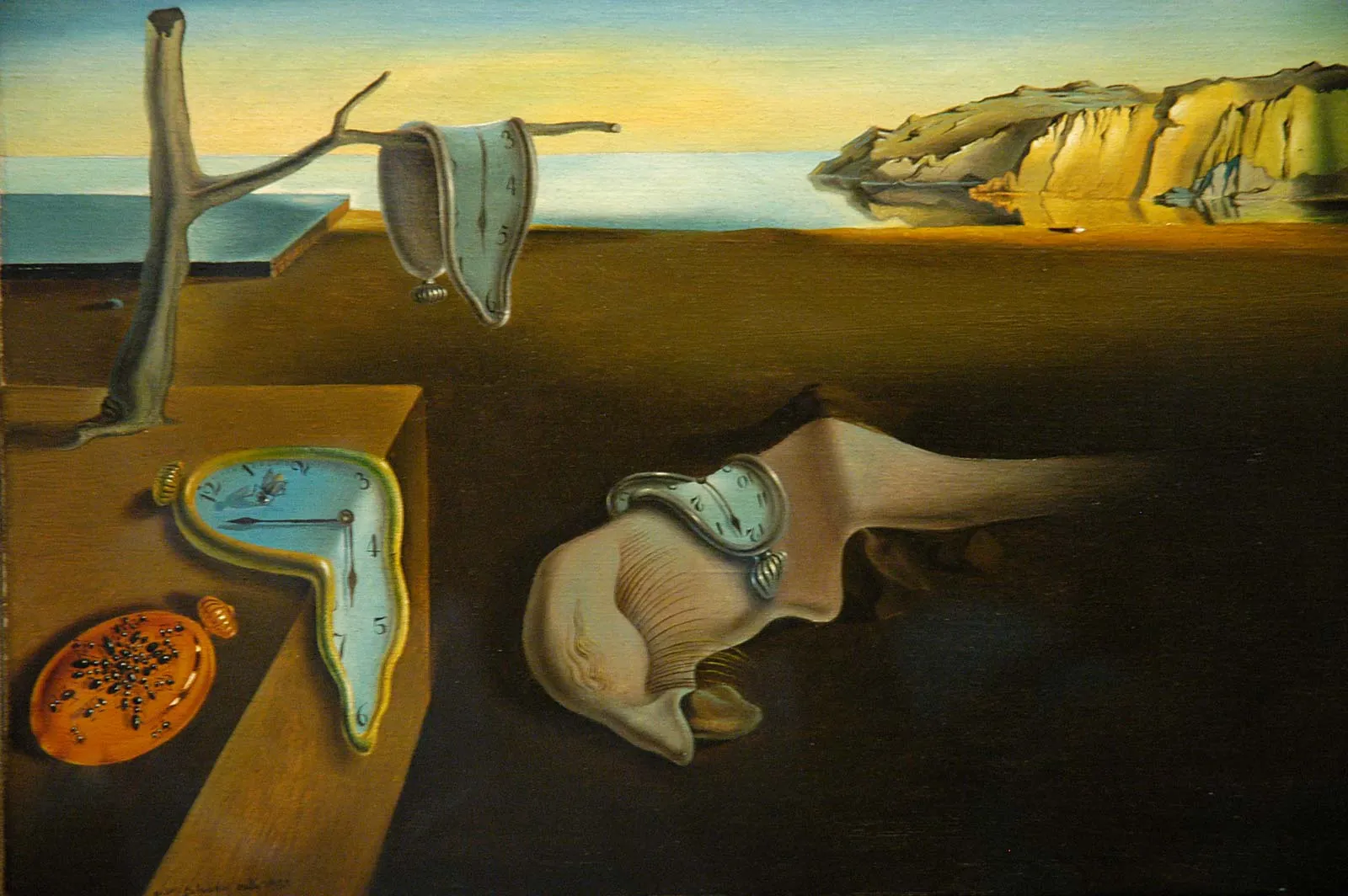
Salvador Dalí, born Salvador Domingo Felipe Jacinto Dalí i Domènech, was one of the most influential and enigmatic artists of the 20th century. His life and work are characterized by an extraordinary blend of creativity, eccentricity, and a deep fascination with the surreal. Dalí’s contributions to the art world extend far beyond his paintings, as his influence permeated various aspects of culture, from film and fashion to literature and psychology. This article delves into the life, fame, and enduring legacy of Salvador Dalí, exploring the nuances and historical context that shaped his extraordinary journey.
Early Life and Background
Salvador Dalí was born on May 11, 1904, in the town of Figueres, located in Catalonia, Spain. His early life was marked by a unique and somewhat tragic circumstance. Dalí was named after his older brother, who had died three years before his birth. This unusual decision by his parents deeply affected Dalí, contributing to his complex psychological makeup. From a young age, Dalí exhibited an exceptional talent for art, and his early works garnered critical acclaim when he was just a teenager.
In 1921, Dalí enrolled at the prestigious Academy of Fine Arts of San Fernando in Madrid, where he quickly made a name for himself as a promising young artist. During this time, he forged friendships with prominent figures such as filmmaker Luis Buñuel and poet Federico García Lorca, both of whom would play significant roles in his life and artistic development.
The Birth of a Surrealist Icon
Dalí’s early artistic influences included movements such as Futurism and Cubism, but it was his encounter with Surrealism that would define his career. Surrealism, a movement founded by André Breton, sought to explore the unconscious mind through dreamlike imagery and irrational juxtapositions. Dalí’s work within this movement was heavily influenced by the writings of Sigmund Freud, whose theories on psychoanalysis and the unconscious provided a fertile ground for Dalí’s imagination.
In 1929, Dalí officially joined the Surrealist movement, and his work quickly became synonymous with the style. His paintings from this period, such as “The Persistence of Memory” (1931), with its melting clocks, exemplify the surrealist approach of blending reality with dreamlike elements. Dalí’s meticulous technique, characterized by precise and detailed brushwork, further enhanced the otherworldly quality of his work.
The Role of Gala: Muse, Wife, and Lifelong Companion
One of the most significant relationships in Dalí’s life was with Gala Éluard, whom he met in 1929. Gala, born Elena Ivanovna Diakonova, was a Russian immigrant and the wife of poet Paul Éluard. Despite the initial controversy surrounding their relationship, Gala and Dalí married in 1934 and remained inseparable until her death in 1982. Gala was not only Dalí’s wife but also his muse, business manager, and a source of constant inspiration.
Dalí’s obsession with Gala is evident in many of his works, where she often appears as a central figure or symbol. Their relationship was complex, marked by deep love, dependence, and occasional conflict. Gala played a crucial role in managing Dalí’s career, helping him navigate the art world and secure lucrative commissions.
The American Years and Global Fame
The outbreak of World War II forced Dalí and Gala to flee Europe, and they settled in the United States from 1940 to 1948. This period was marked by a significant shift in Dalí’s work, as he began to explore new themes and mediums. He collaborated with Hollywood filmmakers, most notably contributing to the dream sequence in Alfred Hitchcock’s film “Spellbound” (1945). Dalí also ventured into fashion and design, working with renowned designers like Elsa Schiaparelli.
Dalí’s time in America further cemented his status as a global icon. His flamboyant personality, eccentric public appearances, and unique style made him a media sensation. He appeared on the cover of magazines, starred in television commercials, and even designed a logo for the popular candy brand Chupa Chups. Dalí’s fame extended beyond the art world, making him a household name and a symbol of the avant-garde.
Return to Spain and Later Years
After the war, Dalí and Gala returned to Spain, where they settled in a castle in Púbol. In the later years of his career, Dalí’s work took on a more classical and religious tone, reflecting his renewed interest in Catholicism. He explored themes such as mysticism, science, and the human condition, producing works that were both technically brilliant and deeply symbolic.
One of Dalí’s most significant later works is “The Sacrament of the Last Supper” (1955), a painting that combines religious imagery with elements of modern science. Dalí’s ability to merge traditional and contemporary themes showcased his enduring creativity and willingness to push artistic boundaries.
The Legacy of Salvador Dalí
Salvador Dalí’s legacy is vast and multifaceted. He was not only a master of painting but also a pioneer in various other artistic disciplines. His contributions to film, fashion, and literature have left an indelible mark on 20th-century culture. Dalí’s influence can be seen in the work of countless artists, designers, and filmmakers who have drawn inspiration from his surrealist vision.
Dalí’s work continues to captivate audiences worldwide, with major exhibitions and retrospectives held regularly in museums and galleries. The Dalí Theatre-Museum in Figueres, which he designed and where he is buried, remains a popular destination for art lovers and tourists alike. The museum houses a vast collection of his works, offering visitors a glimpse into the mind of one of the most brilliant and unconventional artists of all time.
Historical Context and Artistic Evolution
Understanding Salvador Dalí’s work requires an appreciation of the historical context in which he lived and created. The early 20th century was a time of great upheaval, with rapid technological advancements, political turmoil, and significant shifts in cultural norms. These changes profoundly influenced Dalí’s artistic evolution, as he sought to capture the complexities and contradictions of the modern world.
Dalí’s engagement with psychoanalysis, particularly the theories of Freud, played a crucial role in shaping his approach to art. Freud’s exploration of the unconscious mind and the interpretation of dreams resonated deeply with Dalí, who saw the surrealist movement as a way to access and express these hidden aspects of human experience. His paintings often depict distorted figures, bizarre landscapes, and dreamlike scenarios that challenge conventional notions of reality.
Moreover, Dalí’s work reflects the broader cultural and intellectual currents of his time. His fascination with science and technology is evident in his later works, where he incorporates elements of atomic theory, quantum mechanics, and religious mysticism. This synthesis of art, science, and spirituality underscores Dalí’s belief in the interconnectedness of all things and his desire to explore the mysteries of existence.
The Complexity of Dalí’s Persona
Salvador Dalí was as much a performer as he was an artist. His public persona was carefully crafted, combining elements of eccentricity, wit, and self-promotion. Dalí’s flamboyant behavior, often characterized by outrageous statements and bizarre antics, was a deliberate strategy to attract attention and maintain his status as a cultural icon. However, beneath this exterior lay a deeply introspective and thoughtful individual, whose work grappled with profound philosophical and existential questions.
Dalí’s complex personality is reflected in the duality of his work. On the one hand, his paintings are meticulously detailed, demonstrating a high level of technical skill and precision. On the other hand, they are imbued with a sense of absurdity and irrationality, challenging viewers to question their perceptions and assumptions. This tension between order and chaos, reason and madness, is a hallmark of Dalí’s art and one of the reasons for its enduring appeal.
Conclusion
Salvador Dalí remains one of the most celebrated and influential artists of the 20th century. His ability to blend reality with fantasy, his technical mastery, and his relentless pursuit of the unconventional have left an indelible mark on the world of art. Dalí’s life and work continue to inspire and challenge us, inviting us to explore the boundaries of imagination and the depths of the human psyche.
As we reflect on Dalí’s legacy, it is clear that his contributions to art and culture extend far beyond his paintings. He was a visionary who embraced the complexities of the modern world and sought to express them through his unique and surreal lens. Salvador Dalí’s life was a testament to the power of creativity, and his work remains a timeless reminder of the endless possibilities of artistic expression.


