
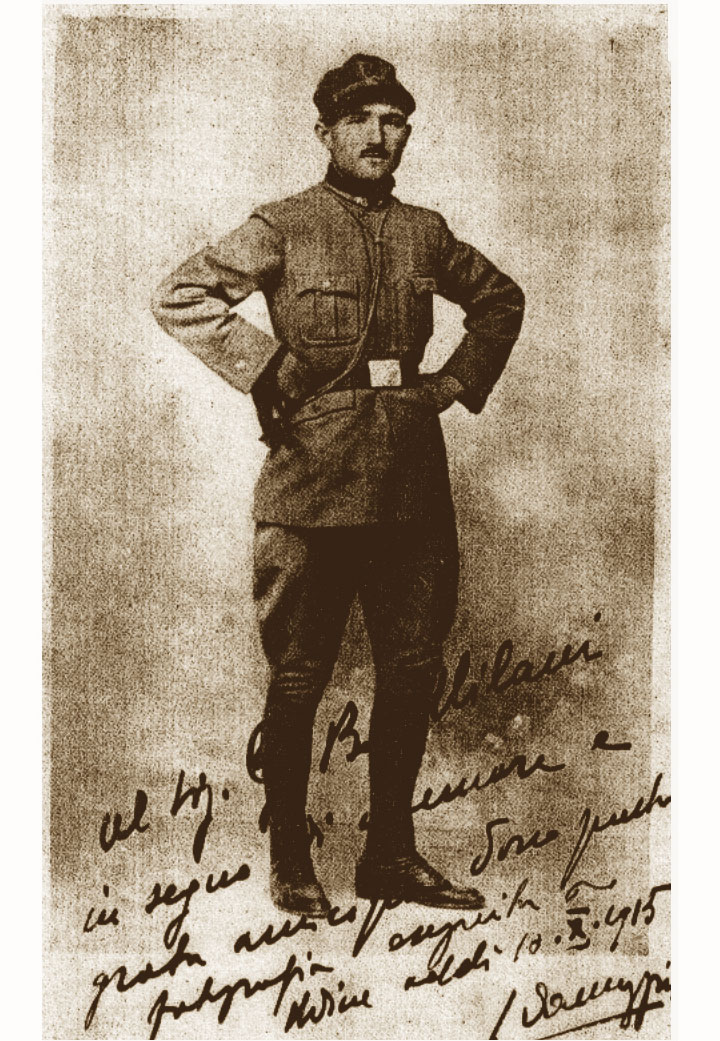
Salvatore Damaggio, born on March 20, 1892, in Terranova di Sicilia (now known as Gela), is a figure whose legacy is deeply rooted in the annals of Italian history, particularly due to his heroics during World War I. Damaggio’s life is a tapestry woven with valor, dedication to his country, and a relentless pursuit of excellence in both military and medical fields. This article explores the life of Salvatore Damaggio, delving into his early years, rise to fame, and the significant moments that define his legacy.
Early Life and Influences
Salvatore Damaggio grew up in the coastal town of Terranova di Sicilia, a place known for its rich history and cultural heritage. From a young age, Damaggio was influenced by the adventurous tales of Emilio Salgari and the patriotic writings of Giuseppe Mazzini. These early influences played a crucial role in shaping his worldview and instilling in him a strong sense of duty and adventure.
Despite his aspirations, Damaggio faced an early setback when he was rejected from the non-commissioned officer school of the Bersaglieri, an elite Italian military unit known for their speed and marksmanship. This rejection, however, did not deter him. Instead, it fueled his determination to serve his country in another capacity, leading him to enroll in medical school. His studies, however, were abruptly interrupted by the outbreak of World War I in 1915, a conflict that would forever alter the course of his life.
The Legend of Monte Pasubio
The early years of World War I were marked by fierce battles along the Italian front, and Salvatore Damaggio quickly distinguished himself as a soldier of remarkable courage and tenacity. His first significant victory came in October 1915 on Monte San Michele, a strategic location in the Isonzo front. For his actions during this battle, he was awarded a silver medal, the first of several honors that would come his way.
However, it was on July 2, 1916, during the Battle of Monte Pasubio, that Damaggio’s name would become legendary. As the commander of the 4th Machine Gun Section of the IV Battalion, 86th Infantry Regiment, Brigade Verona, Damaggio and his men found themselves facing a formidable Austro-Hungarian force. The enemy, confident in their impending victory, sought to seize a crucial mountain pass, a move that would have opened the way to the Italian plains.
Despite being heavily outnumbered and equipped with only two machine guns, Damaggio and his seven remaining comrades mounted a fierce defense. Their determination and strategic use of their limited resources repelled the enemy, forcing them into a hasty retreat. The significance of this victory cannot be overstated; had the Austro-Hungarian forces succeeded, they would have overrun the Italian defenses and potentially changed the course of the war.
The official citation for Damaggio’s actions at Monte Pasubio highlighted his “remarkable steadiness” and his ability to “quickly restore the effectiveness of the weapons,” despite the intense bombardment that had ravaged their positions. His leadership and bravery ensured that the Italian lines held, and the enemy was forced to retreat, marking a pivotal moment in the defense of Italy.
Post-War Life and the Pursuit of Medicine
After the war, like many soldiers, Salvatore Damaggio found the transition back to civilian life challenging. The horrors of war had left an indelible mark on him, but his determination to serve did not wane. He returned to his medical studies, focusing on pulmonary diseases, a field that was of particular importance in the post-war period due to the prevalence of respiratory illnesses among veterans.
Damaggio’s medical career was marked by the same dedication and passion that he had shown on the battlefield. He became a specialist in his field and eventually took on the role of director at a prominent sanatorium in Ascoli Piceno. His work as a physician and researcher earned him respect and recognition, but it was his wartime heroics that continued to capture the public’s imagination.
The Search for Recognition
Despite his significant contributions during World War I, Salvatore Damaggio did not immediately receive the recognition that many felt he deserved. In the years following the war, several of his friends and admirers, driven by a sense of justice and respect for his service, began to campaign for him to be honored appropriately. These efforts included publishing appeals in national newspapers and engaging in extensive correspondence with political and military figures.
Their argument was compelling: Damaggio’s actions at Monte Pasubio were not merely a typical episode of wartime bravery but a decisive moment that had profound implications for the outcome of the war. The reinforcement of Italian positions on July 3, 1916, directly resulted from his leadership, and the enemy’s failure to advance was a testament to his strategic acumen.
The town of Schio, which had been directly threatened by the Austro-Hungarian advance, became a vocal supporter of Damaggio. The residents of Schio believed that without his intervention, their town would have been the first to fall. In recognition of his service, the town of Schio honored Damaggio as their hero, and in 1933, he was awarded the Gold Medal for Military Valor, Italy’s highest military honor.
The Return to Monte Pasubio
On September 9, 1933, Salvatore Damaggio returned to Monte Pasubio, the site of his legendary defense, to receive his Gold Medal and the honorary citizenship of Schio. The event was marked by a solemn ceremony, during which Damaggio was presented as the “savior” of the town and the region. In a symbolic gesture, the pass he had defended was renamed “Selletta Damaggio,” a permanent reminder of his heroism.
During the ceremony, a monument was erected at the pass with an inscription commemorating Damaggio’s actions. This act of remembrance was not just for Damaggio but also for the countless soldiers who fought and died in the brutal mountain battles of World War I. The renaming of the pass ensured that future generations would remember the significance of this location and the man who had played a pivotal role in its defense.
Later Life and Legacy
After receiving his well-deserved recognition, Salvatore Damaggio continued to serve as the director of the sanatorium in Ascoli Piceno. He remained dedicated to his medical practice, focusing on research and treatment of pulmonary diseases. His work was particularly important during a time when respiratory illnesses were widespread, and his expertise was invaluable in improving public health.
Despite his professional success, Damaggio’s health began to decline in the early 1940s. He passed away in 1944, leaving behind a legacy of courage, dedication, and service to his country. His life story, particularly his actions during World War I, became the subject of numerous books and articles, ensuring that his contributions would not be forgotten.
In 2014, his heroic deeds were further immortalized in a graphic novel titled Ritorno al Pasubio, which was based on the book Piume baciatemi la guancia ardente by Vera Ambra. The graphic novel, illustrated by Gaetano Testa, also known as GAT, brought Damaggio’s story to a new generation, blending historical accuracy with engaging storytelling.
Conclusion
Salvatore Damaggio’s life is a powerful example of how one individual’s actions can have a profound impact on the course of history. From his early days in Terranova di Sicilia to his heroic defense of Monte Pasubio and his later contributions to medicine, Damaggio’s legacy is one of bravery, resilience, and unwavering commitment to his country.
His story serves as a reminder of the sacrifices made by countless soldiers during World War I and the importance of remembering their contributions. Salvatore Damaggio’s name may not be as widely known as some of his contemporaries, but his actions on that fateful day in July 1916 ensured that he would be remembered as one of Italy’s greatest war heroes.
In an era where the true meaning of heroism is often debated, the life of Salvatore Damaggio stands as a testament to the enduring value of courage, honor, and duty. His legacy continues to inspire, and his story is one that deserves to be told and retold for generations to come.


