
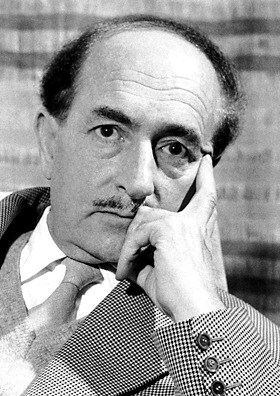
Salvatore Quasimodo, born on August 20, 1901, in Modica, Sicily, is one of Italy’s most celebrated poets and a key figure in the literary movement known as Hermeticism. Quasimodo’s journey from a small Sicilian town to the global stage, where he was recognized with the Nobel Prize in Literature in 1959, is a testament to his enduring impact on the world of poetry. This article provides an in-depth exploration of Salvatore Quasimodo’s life, fame, and literary contributions, offering insights into the nuances of his work and the historical context that shaped his poetic voice.
Early Life and Education
Salvatore Quasimodo was born into a modest family in the southeastern part of Sicily, an island rich in history, culture, and natural beauty. His father, Gaetano Quasimodo, was a stationmaster for the Italian State Railways, which meant that the family frequently moved around Sicily during Salvatore’s childhood. These frequent relocations exposed young Quasimodo to the diverse landscapes and cultures of Sicily, experiences that would later permeate his poetry.
In 1908, after the devastating earthquake in Messina, the Quasimodo family relocated to the city, where they initially lived in railway carriages, like many other survivors. This traumatic event left a lasting impression on Quasimodo, shaping his early worldview and infusing his poetry with a deep sense of tragedy and loss.
Quasimodo completed his secondary education in Messina at the “A. M. Jaci” Technical Institute, where he graduated in 1919. During these formative years, he formed lifelong friendships with Salvatore Pugliatti, a future legal scholar, and Giorgio La Pira, who would become a prominent politician and mayor of Florence. These friendships were instrumental in shaping Quasimodo’s intellectual and artistic development.
The Move to Rome and Early Literary Pursuits
In 1919, at the age of 18, Quasimodo left Sicily, a land he would always feel a deep, almost Oedipal connection to, and moved to Rome. There, he continued his studies, focusing on Latin and Greek under the tutelage of Monsignor Rampolla del Tindaro in Vatican City. This classical education enriched Quasimodo’s understanding of ancient languages and literature, influences that would later be evident in his translations and poetry.
During his time in Rome, Quasimodo also worked for the Ministry of Public Works and was assigned to the Civil Engineering Corps in Reggio Calabria in 1926. Although this work was far removed from his literary aspirations, it provided him with a stable income during these early years. Despite the demands of his job, Quasimodo never abandoned his passion for poetry. He continued to write and refine his verses, maintaining connections with his friends from Messina, particularly Salvatore Pugliatti, who encouraged him to pursue his literary ambitions.
It was during this period that Quasimodo began to crystallize his poetic voice. He revisited and revised the poems he had written during his time in Rome, adding new ones that reflected his evolving sensibilities. This collection would eventually form the core of his first published work, Acque e terre (Waters and Lands), which marked the beginning of his literary career.
The Florentine Literary Scene and Hermeticism
In 1929, Quasimodo moved to Florence, a city with a rich cultural and literary heritage. His brother-in-law, the novelist Elio Vittorini, introduced him to the Florentine literary circle associated with the magazine Solaria. Through Vittorini, Quasimodo met several key figures of the Italian literary scene, including Eugenio Montale, Alessandro Bonsanti, and Gianna Manzini. These connections proved pivotal for Quasimodo, as they recognized his talent and helped him gain recognition in literary circles.
In 1930, Solaria published Quasimodo’s Acque e terre, which was well-received by critics and marked his official entry into the Italian literary world. The collection’s themes of isolation, introspection, and a deep connection to the natural world resonated with the emerging Hermetic movement, which sought to express complex emotions and ideas through concise, symbolic language.
Quasimodo’s next collection, Oboe sommerso (Submerged Oboe), published in 1932, further solidified his reputation as a leading voice in Hermeticism. His work was characterized by its refined, elusive language and its exploration of existential themes, reflecting the broader European literary trends of the time.
Transition to Milan and the Evolution of His Poetry
In 1934, Quasimodo moved to Milan, a city that would become his home for the rest of his life and significantly influence his literary output. Milan was not only the economic and industrial heart of Italy but also a vibrant cultural center, home to artists, writers, and intellectuals. Quasimodo quickly became part of the city’s literary elite, joining the Corrente group, which included poets, musicians, painters, and sculptors.
Milan marked a turning point in Quasimodo’s career, both professionally and personally. He began working as an editor for Tempo, a Milan-based weekly magazine, and formed close ties with other writers and intellectuals. In 1938, Quasimodo left his engineering job to focus entirely on his literary pursuits, a decision that allowed him to fully immerse himself in the cultural life of Milan.
During this period, Quasimodo published Erato e Apòllion (Erato and Apollion) in 1936, which signaled the end of his Hermetic phase. His poetry began to reflect a broader range of themes, including social and ethical issues, as well as a more direct engagement with the world around him. This shift was partly influenced by the political and social climate of the time, as Italy moved towards fascism and eventually entered World War II.
World War II and Post-War Contributions
The outbreak of World War II had a profound impact on Quasimodo’s work. The horrors of war and the suffering of the Italian people deepened his social and political consciousness, leading to a significant transformation in his poetry. His post-war work, beginning with the collection Giorno dopo giorno (Day After Day) in 1947, marked a departure from the abstract, introspective style of his earlier work towards a more direct, engaged form of expression.
One of the most famous poems from this period is Alle fronde dei salici (At the Willows’ Branches), which opens the Giorno dopo giorno collection. The poem, written in response to the atrocities of war, reflects Quasimodo’s deep sense of despair and moral outrage. This period of his career saw him addressing themes of human suffering, social injustice, and the need for ethical and political responsibility.
Quasimodo’s engagement with contemporary issues was also reflected in his translations of classical texts, which he continued to work on throughout his life. His translations of Greek and Latin poets, as well as works by modern authors such as Shakespeare and Molière, showcased his deep appreciation for the literary tradition and his ability to bring ancient texts to life in modern Italian.
Nobel Prize and Later Years
In 1959, Quasimodo’s contributions to literature were recognized on the international stage when he was awarded the Nobel Prize in Literature. The Nobel Committee praised Quasimodo for his “lyrical poetry, which with classical fire expresses the tragic experience of life in our own time.” This recognition cemented his status as one of the most important poets of the 20th century and brought his work to a global audience.
Following the Nobel Prize, Quasimodo continued to write and publish, although his later work reflected a sense of disillusionment with the modern world. His 1966 collection, Dare e avere (To Give and To Have), is often seen as a summation of his life’s work, a poetic testament that reflects on the themes of existence, memory, and the passage of time.
Quasimodo’s later years were marked by declining health. In 1968, while presiding over a poetry prize in Amalfi, he suffered a stroke and died shortly thereafter in Naples. His death marked the end of a significant chapter in Italian literature, but his legacy lives on through his poetry, which continues to be studied and admired worldwide.
Legacy and Influence
Salvatore Quasimodo’s legacy is one of profound literary achievement and deep humanistic concern. His work, which spans the personal and the universal, offers a poignant reflection on the human condition, marked by themes of suffering, loss, and the search for meaning in a turbulent world. His ability to express complex emotions with clarity and precision has made his poetry timeless, resonating with readers across generations.
Quasimodo’s influence extends beyond his poetry. As a translator, he brought the works of ancient and modern writers to Italian audiences, enriching the literary culture of his country. His role as a public intellectual, particularly in the post-war period, also highlighted the importance of poetry as a tool for social and political engagement.
Today, Quasimodo’s works are translated into forty languages and continue to be a subject of study in literary courses around the world. His poetry, with its blend of classical elegance and modern urgency, remains a powerful testament to the enduring power of the written word.
Conclusion: The Eternal Poet
Salvatore Quasimodo’s journey from the small towns of Sicily to the heights of global literary recognition is a story of artistic dedication, intellectual rigor, and deep empathy for the human experience. His poetry, characterized by its lyrical beauty and profound ethical concerns, offers a window into the soul of a poet who was deeply attuned to the world around him.
As we reflect on Quasimodo’s life and work, it is clear that he was not only a poet of his time but also a voice that continues to speak to the concerns and aspirations of humanity. His legacy, enshrined in the timeless verses of his poetry, ensures that Salvatore Quasimodo will be remembered as one of the great poets of the 20th century—a true master of words and a passionate advocate for the power of literature to illuminate the human condition.


