
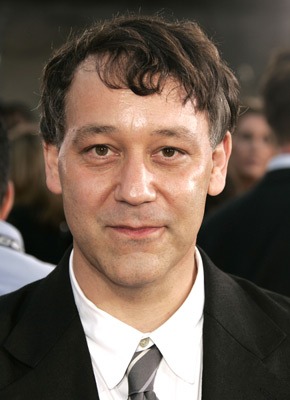
Sam Raimi, born Samuel Marshall Raimi on October 23, 1959, in Royal Oak, Michigan, is a renowned American filmmaker, director, producer, and screenwriter. Over the course of his career, Raimi has established himself as a master of horror and action, with a unique style that combines elements of slapstick humor with intense, often terrifying visual effects. Best known for creating the “Evil Dead” series and directing the blockbuster “Spider-Man” trilogy, Raimi’s influence on both the horror and superhero genres is profound. This article delves into the life, career, and achievements of Sam Raimi, exploring how he rose to fame and the impact he has had on Hollywood.
Early Life and Introduction to Filmmaking
Sam Raimi was the fourth of five children born to Leonard Ronald Raimi and Celia Barbara Abrams, Jewish merchants who raised their family in Birmingham, Michigan. Growing up in a creative household, Raimi’s fascination with cinema began at an early age. His father, recognizing his son’s interest in storytelling, bought a Super 8 camera, which Raimi quickly put to use, making short films with his childhood friends, including future actor and long-time collaborator Bruce Campbell.
Raimi attended Groves High School and later enrolled at Michigan State University, where he studied English literature. However, his passion for filmmaking soon overtook his academic pursuits, leading him to drop out after only three semesters. During his time at Michigan State, Raimi created a short film titled “Within the Woods,” a 32-minute horror piece that would later serve as the basis for his breakthrough feature, “The Evil Dead.”
The Birth of “The Evil Dead” and Early Success
Raimi’s first major success came with the production of “The Evil Dead” in 1981, a low-budget horror film that would become a cult classic. Working alongside Bruce Campbell and producer Robert Tapert, Raimi formed Renaissance Pictures, a production company that allowed them to raise funds for the film. Despite its modest budget, “The Evil Dead” showcased Raimi’s innovative use of camera techniques and practical effects, setting it apart from other horror films of the time.
The film’s success was largely due to its visceral horror, dark humor, and Raimi’s creative direction. It was praised by critics and audiences alike, and even garnered the attention of Stephen King, who called it “the most ferociously original horror film of the year.” This endorsement helped the film secure wider distribution, and it eventually grossed $2.4 million in the United States alone, a significant return on its $375,000 budget.
The success of “The Evil Dead” established Raimi as a rising star in the film industry. He followed up with “Evil Dead II” in 1987, which blended horror with slapstick comedy, a genre-bending approach that would become a hallmark of Raimi’s style. The film was both a critical and commercial success, solidifying Raimi’s reputation as a filmmaker capable of pushing the boundaries of conventional horror.
Expanding His Horizons: The 1990s and Beyond
Raimi’s career continued to flourish throughout the 1990s as he explored new genres and filmmaking techniques. In 1990, he directed “Darkman,” a superhero film that combined elements of horror and action. Although “Darkman” was not based on an existing comic book, it showcased Raimi’s love for the superhero genre and his ability to create compelling, original characters. The film’s success allowed Raimi to gain further recognition in Hollywood, paving the way for future projects.
The early 1990s also saw Raimi return to the “Evil Dead” franchise with “Army of Darkness” (1992), the third installment in the series. Unlike its predecessors, “Army of Darkness” leaned more heavily into fantasy and adventure, with less emphasis on horror. The film became a cult favorite and further demonstrated Raimi’s versatility as a director.
During this period, Raimi also produced and directed a variety of other projects, including the crime thriller “A Simple Plan” (1998), which was praised for its strong performances and tight narrative, earning two Academy Award nominations. This film marked a departure from Raimi’s earlier, more fantastical work, showcasing his ability to craft a tense, character-driven story.
The Spider-Man Trilogy: A Blockbuster Achievement
In the late 1990s, Raimi’s career took a major turn when he was selected by Sony Pictures to direct a film adaptation of “Spider-Man,” one of the most beloved characters in comic book history. Raimi was chosen over several high-profile directors, including David Fincher, Tim Burton, and Chris Columbus, due to his passion for the source material and his proven track record of working with visual effects.
Released in 2002, “Spider-Man” was a massive commercial success, grossing over $800 million worldwide and setting a new standard for superhero films. Raimi’s direction, combined with Tobey Maguire’s portrayal of Peter Parker, was praised for capturing the essence of the comic book while delivering a compelling and emotionally resonant story. The film’s success not only revitalized the superhero genre but also cemented Raimi’s status as a top-tier Hollywood director.
Raimi went on to direct two sequels, “Spider-Man 2” (2004) and “Spider-Man 3” (2007). “Spider-Man 2” was particularly well-received, often cited as one of the best superhero films ever made, with critics praising its balance of action, character development, and thematic depth. The film earned over $783 million globally and won an Academy Award for Best Visual Effects.
“Spider-Man 3,” while financially successful, was more divisive among fans and critics. The film’s darker tone and the inclusion of multiple villains led to mixed reviews, with some feeling that it lacked the focus and coherence of its predecessors. Despite this, “Spider-Man 3” grossed nearly $900 million worldwide, making it one of the highest-grossing films of its time.
Later Career: Return to Horror and Television
After completing the Spider-Man trilogy, Raimi returned to his roots in the horror genre with “Drag Me to Hell” (2009). The film was seen as a return to form for Raimi, blending the horror and dark humor that had characterized his earlier work. “Drag Me to Hell” was both a critical and commercial success, grossing over $90 million worldwide and reaffirming Raimi’s status as a master of horror.
In 2010, Raimi took on the ambitious project of directing “Oz the Great and Powerful,” a prequel to the classic film “The Wizard of Oz.” Released in 2013, the film was a visual spectacle that combined Raimi’s flair for fantasy with the beloved world of Oz. While the film received mixed reviews, it was a box office success, grossing over $490 million globally.
Raimi also ventured into television during this period, directing episodes of various series and producing the popular TV show “Ash vs Evil Dead,” which premiered in 2015. The series, a continuation of the “Evil Dead” franchise, was well-received by fans and critics alike, further solidifying Raimi’s legacy in the horror genre.
Recent Projects and Legacy
In recent years, Raimi has continued to work on a variety of projects across film and television. He returned to the superhero genre with “Doctor Strange in the Multiverse of Madness” (2022), a highly anticipated entry in the Marvel Cinematic Universe. Raimi’s direction was praised for its unique blend of horror and action, bringing his distinct style to the MCU and introducing elements of horror to the superhero genre in a way that had not been seen before.
Throughout his career, Sam Raimi has been known for his innovative use of camera techniques, practical effects, and his ability to blend genres. His influence can be seen in the work of many contemporary filmmakers, and his contributions to both the horror and superhero genres have left an indelible mark on Hollywood.
Conclusion: Sam Raimi’s Enduring Impact on Cinema
Sam Raimi’s journey from making Super 8 films in his childhood to becoming one of Hollywood’s most respected and successful directors is a testament to his creativity, perseverance, and passion for filmmaking. His ability to navigate different genres, from horror to superhero blockbusters, while maintaining a distinct directorial voice, has made him a beloved figure in the industry.
Raimi’s work has not only entertained millions of people around the world but has also inspired a new generation of filmmakers to push the boundaries of what is possible in cinema. Whether through the visceral terror of “The Evil Dead” or the heartfelt heroism of “Spider-Man,” Sam Raimi’s films continue to resonate with audiences, ensuring that his legacy will endure for years to come.


