
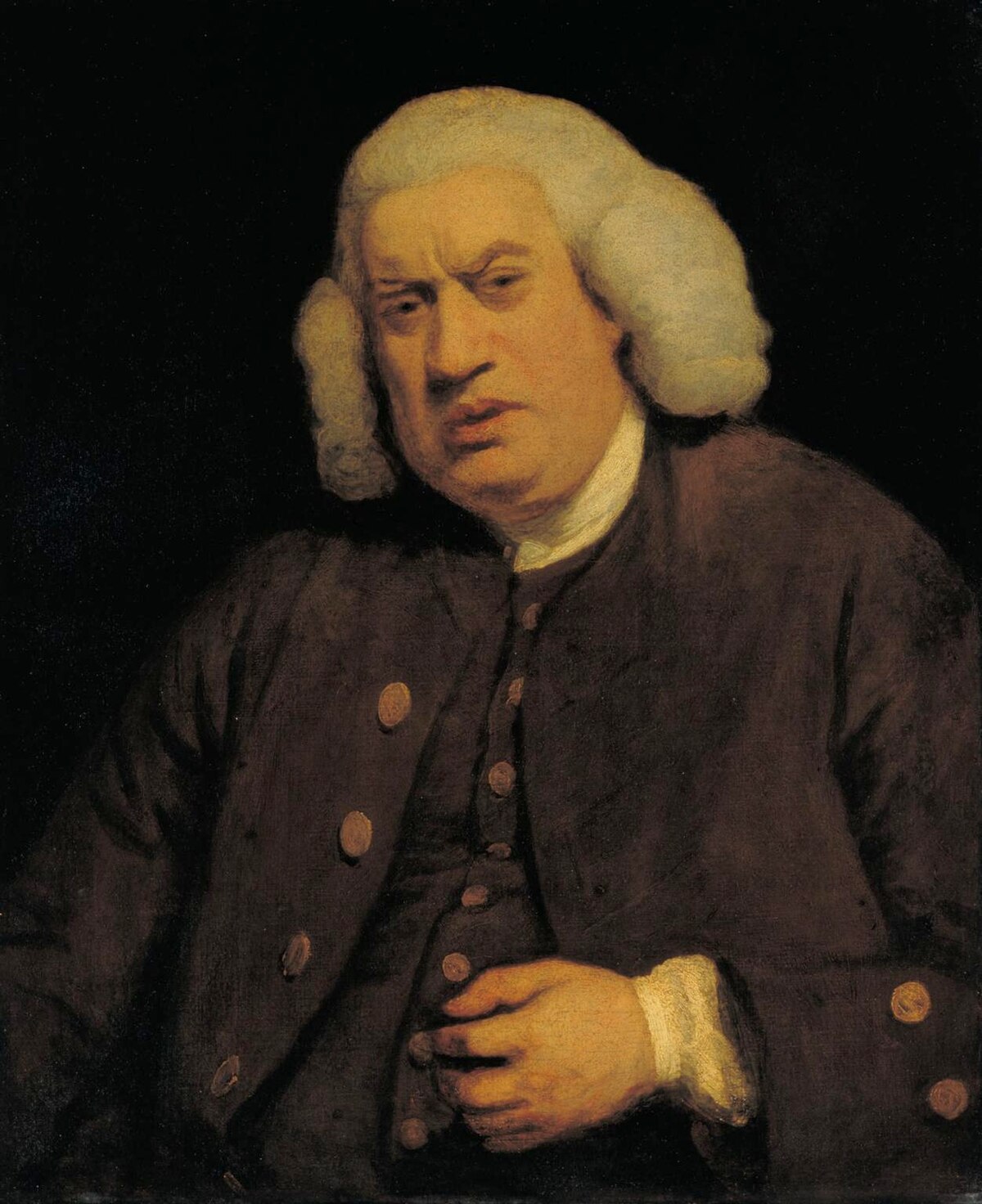
Samuel Johnson, born on September 18, 1709, in Lichfield, Staffordshire, England, is one of the most towering figures in English literature. A poet, essayist, lexicographer, and critic, Johnson’s work has left an indelible mark on the literary world. His life, marked by personal struggles, intellectual achievements, and profound insights into the human condition, continues to be a source of inspiration and study.
Early Life and Education
Samuel Johnson was born into a modest family; his father was a bookseller, and his mother managed the household. Despite the family’s financial struggles, Johnson was exposed to a wide range of books from an early age, fostering his love for reading and learning. However, his early life was also marked by significant challenges. Johnson suffered from various physical ailments, including scrofula, which left him with disfiguring scars, and he struggled with what would likely be diagnosed today as clinical depression.
Despite these difficulties, Johnson’s intellectual abilities were apparent from a young age. He attended Lichfield Grammar School, where he excelled in Latin and other classical studies. His passion for literature and learning led him to Oxford University in 1728. However, due to his family’s financial difficulties, Johnson was forced to leave Oxford without completing his degree. This early setback did not deter him from pursuing his intellectual interests.
Struggles and Early Career
After leaving Oxford, Johnson attempted to make a living as a teacher, but his efforts were largely unsuccessful. His struggles during this period were compounded by his ongoing battles with depression and his constant fear of poverty. In 1735, he married Elizabeth “Tetty” Porter, a widow 20 years his senior. Despite their significant age difference, the marriage provided Johnson with some stability, although his financial troubles persisted.
Johnson’s early literary efforts included translations, poems, and essays. However, it wasn’t until the publication of his poem London in 1738, a satire based on Juvenal’s Third Satire, that he began to gain recognition. The poem was well-received and marked the beginning of Johnson’s emergence as a significant literary figure.
The Creation of the Dictionary
Samuel Johnson’s most famous and enduring work is undoubtedly his Dictionary of the English Language, published in 1755. The creation of the dictionary was a monumental task, one that Johnson undertook almost single-handedly. At the time, there was no comprehensive English dictionary, and Johnson’s work was the first to systematically document the language, including definitions, pronunciations, and examples of usage.
The dictionary was a groundbreaking achievement, not only for its scope but also for its influence on the standardization of the English language. Johnson’s approach to lexicography was deeply informed by his vast knowledge of literature. He famously included illustrative quotations from the works of Shakespeare, Milton, and other great English writers, making the dictionary not just a reference book but also a treasure trove of literary history.
The creation of the dictionary took eight years, during which Johnson struggled with poverty, illness, and depression. Despite these challenges, the dictionary was a resounding success upon its publication. It solidified Johnson’s reputation as one of the leading intellectuals of his time and earned him widespread acclaim. The dictionary remained the preeminent English reference work for over a century until the publication of the Oxford English Dictionary in the late 19th century.
Literary Club and Circle of Friends
In 1764, Samuel Johnson founded “The Club,” later known as the “Literary Club,” a gathering of some of the most prominent intellectuals, writers, and artists of the time. The original members included the playwright Oliver Goldsmith and the philosopher Edmund Burke. Over time, the club expanded to include other notable figures such as the actor David Garrick and the biographer James Boswell.
The Literary Club became a central part of Johnson’s life, providing him with intellectual companionship and a forum for debate and discussion. Johnson’s influence on the club was immense, and his opinions on literature, politics, and society were highly respected by his peers. His friendships with these figures, particularly with James Boswell, who would later become his biographer, were some of the most important relationships of his life.
Major Works and Contributions
Beyond the dictionary, Samuel Johnson’s literary output was vast and varied. He wrote essays, poems, and biographical works that have become classics of English literature. Some of his most notable works include:
-
The Vanity of Human Wishes (1749): This poem, another adaptation of Juvenal, reflects Johnson’s deep understanding of the human condition. It explores the futility of human ambition and the inevitability of suffering, themes that resonated deeply with Johnson’s own experiences.
-
The Rambler and The Idler (1750-1752, 1758-1760): These were series of essays that Johnson wrote for publication in periodicals. The essays covered a wide range of topics, from moral philosophy to literary criticism. Johnson’s essays are characterized by their clarity, moral seriousness, and eloquent style, and they have been admired for their insight into the human condition.
-
Rasselas (1759): A philosophical novel, The History of Rasselas, Prince of Abissinia, tells the story of a young prince who leaves his idyllic home in search of the meaning of life. The novel reflects Johnson’s preoccupation with the limitations of human happiness and the difficulty of finding true contentment. Rasselas remains one of Johnson’s most popular works and is often studied for its exploration of existential themes.
-
The Plays of William Shakespeare (1765): Johnson’s edition of Shakespeare’s plays was an important scholarly work. It included a critical preface in which Johnson defended Shakespeare’s reputation as a great dramatist while also offering critiques of his work. Johnson’s edition of Shakespeare helped to cement the playwright’s status as the greatest English writer, and his critical observations continue to influence Shakespearean scholarship.
-
Lives of the Poets (1779-1781): This monumental work comprises biographies of 52 English poets, from John Donne to Alexander Pope. Johnson’s Lives of the Poets combines literary criticism with biographical detail, offering a comprehensive view of the poets’ lives and works. The work is notable for its insight into the relationship between a writer’s life and their literary output, and it remains a seminal text in the study of English literature.
Personal Challenges and Health Struggles
Throughout his life, Samuel Johnson faced significant personal challenges, particularly regarding his health. He suffered from various physical ailments, including gout, scrofula, and possibly Tourette syndrome, which manifested in involuntary movements and vocal tics. In addition to his physical health issues, Johnson battled severe bouts of depression, which he referred to as his “melancholy.”
Despite these struggles, Johnson remained remarkably productive. His resilience in the face of adversity has inspired many, and his ability to channel his personal pain into his writing has been admired by readers and scholars alike.
Later Years and Legacy
In his later years, Johnson continued to write and engage with the literary and intellectual communities. His influence extended beyond his own works; he was a mentor to younger writers and a central figure in London’s literary scene. Johnson’s later writings included political pamphlets, sermons, and additional essays, which reflected his deep concern with moral and social issues.
Samuel Johnson passed away on December 13, 1784, in London. He was buried in Westminster Abbey, a fitting resting place for one of England’s greatest literary figures. Johnson’s death was widely mourned, and his legacy was quickly cemented by the publication of James Boswell’s The Life of Samuel Johnson in 1791. Boswell’s biography is considered one of the greatest in the English language, offering a detailed and intimate portrait of Johnson’s life and character.
Historical Context and Influence
Samuel Johnson’s life and work must be understood within the broader context of 18th-century England, a period of significant cultural, intellectual, and political change. The Enlightenment, with its emphasis on reason, science, and individualism, shaped much of the intellectual discourse of the time. Johnson, however, was a complex figure who both embraced and critiqued Enlightenment ideals. He valued reason and scholarship, but he was also deeply religious and skeptical of unchecked rationalism.
Johnson’s work reflects the tensions of his age. His moral essays often grapple with the limitations of human knowledge and the difficulties of moral living in a rapidly changing world. His critiques of contemporary politics and society, particularly in his opposition to American independence and his concerns about social inequality, reveal a man deeply engaged with the issues of his time.
Legacy and Continuing Relevance
Samuel Johnson’s legacy is vast. His Dictionary of the English Language remains a monumental achievement in lexicography, and his essays, poems, and critical works continue to be studied and admired. Johnson’s influence extends beyond his specific contributions to English literature; he is often regarded as a symbol of intellectual rigor, moral seriousness, and literary excellence.
In addition to his literary accomplishments, Johnson’s life story—marked by personal struggle, resilience, and intellectual achievement—continues to inspire. His ability to overcome adversity, his dedication to his work, and his commitment to truth and knowledge resonate with readers and scholars across generations.
Today, Samuel Johnson is remembered not just as a great writer and thinker but as a figure who embodied the best of the Enlightenment spirit while also recognizing its limitations. His works continue to be read, his ideas continue to be discussed, and his life continues to be a source of fascination and admiration.
Conclusion
Samuel Johnson was a literary giant whose works have shaped the English language and literature for centuries. His contributions as a lexicographer, critic, poet, and essayist are unparalleled, and his influence on the literary world remains profound. Johnson’s life, marked by personal challenges and intellectual triumphs, serves as a testament to the power of perseverance, the importance of intellectual rigor, and the enduring value of literature.
As we reflect on Samuel Johnson’s life and legacy, we are reminded of the importance of curiosity, the pursuit of knowledge, and the power of the written word to illuminate the human experience. Johnson’s works continue to inspire, educate, and challenge us, ensuring that his place in the pantheon of great writers and thinkers remains secure.


