
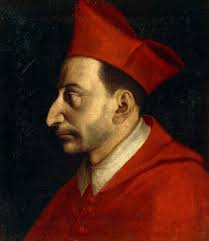
San Carlo Borromeo, born on October 2, 1538, in Arona, Italy, is one of the most significant figures in the history of the Catholic Church. Known for his role in the Counter-Reformation and his efforts to reform the clergy and laity, Borromeo’s life was marked by his dedication to religious and social reform. This article delves into the life, career, and significant achievements of San Carlo Borromeo, providing detailed insights and historical context to understand his enduring legacy.
Early Life and Education
Birth and Family Background
Carlo Borromeo was born into a noble and wealthy family. His father, Gilberto II Borromeo, belonged to the influential Borromeo family, and his mother, Margherita Medici di Marignano, was a member of the prominent Medici family. Growing up in a family with strong connections to both secular and ecclesiastical power, Borromeo was positioned from a young age for a significant role in society.
Education
Borromeo received an extensive education, reflecting his family’s status. He studied civil and canon law at the University of Pavia, where he demonstrated exceptional aptitude. In 1559, he graduated with a doctorate in both civil and canon law (utroque iure). His academic background equipped him with the knowledge and skills necessary for his future roles in the Church.
Early Career and Ecclesiastical Rise
Entrance to Clergy and Early Responsibilities
In 1558, upon the death of his father, Borromeo took over the management of his family’s affairs, despite having an older brother, Federico. His career took a significant turn in 1559 when his uncle, Giovan Angelo Medici di Marignano, was elected Pope Pius IV. Borromeo moved to Rome and was appointed a cardinal at the age of 22. Despite his youth, he quickly proved himself capable, managing various administrative and diplomatic tasks.
Priestly Ordination and Episcopal Role
Borromeo chose to pursue a clerical path, contrary to some advisors who suggested marriage to continue the family line. He was ordained a priest and then a bishop, focusing on his religious duties with remarkable zeal. His dedication led to the reopening of the Council of Trent, a key event in the Counter-Reformation aimed at addressing corruption and other issues within the Church.
Archbishop of Milan
Appointment and Early Reforms
In 1566, following the death of his uncle, Borromeo moved to Milan to assume his role as Archbishop. The diocese of Milan had been neglected for decades, with many of its clergy more concerned with wealth than with their spiritual responsibilities. Borromeo embarked on an ambitious reform program to restore discipline and piety within the diocese.
Establishment of Seminaries and Clerical Reform
One of Borromeo’s most enduring legacies was his focus on the education and moral formation of the clergy. He established seminaries, including the Helvetic College and the major seminary in Milan, to ensure that priests were well-educated and devoted to their pastoral duties. He also implemented strict reforms to enforce clerical discipline, emphasizing the importance of moral integrity and dedication to the priestly vocation.
Construction and Renovation of Churches
Borromeo was also involved in the physical and spiritual renewal of his diocese. He oversaw the construction and renovation of numerous churches, including the Church of San Fedele in Milan and the Sanctuary of the Sacro Monte di Varese. These efforts were part of his broader strategy to foster a strong sense of Christian identity and devotion among the faithful.
Social and Charitable Efforts
Response to Famine and Plague
During his tenure as Archbishop, Borromeo faced several significant crises, including famine and plague. In 1569 and 1570, he led efforts to provide food and assistance to those affected by famine. His most notable act of charity occurred during the plague of 1576-1577, when he personally ministered to the sick and organized relief efforts. His decision to walk barefoot in a penitential procession to seek divine intervention made a profound impact on the people of Milan.
Opposing Protestantism and Promoting Catholic Doctrine
Borromeo was a staunch defender of Catholic doctrine and worked tirelessly to counter the spread of Protestantism. In Switzerland, he took strong measures against those who had converted to Protestantism, following the directives of the Council of Trent. His efforts included arresting and trying individuals accused of witchcraft and heresy, although these actions were controversial and often harsh.
Challenges and Controversies
Opposition and Attacks
Borromeo’s rigorous reforms and uncompromising stance on religious matters earned him both admiration and enmity. He faced significant opposition from local nobility and Spanish governors, who resisted his efforts to implement the decrees of the Council of Trent. His strict measures also led to tensions with the clergy and laity, who were unaccustomed to such rigorous discipline.
Attempted Assassination
Borromeo’s commitment to reform and his confrontational approach sometimes put him in danger. In 1569, he survived an assassination attempt by members of the Humiliati, a religious order that he had reformed due to their deviation from Catholic teachings. The attackers were later executed, highlighting the risks Borromeo faced in his mission to purify the Church.
Legacy and Canonization
Death and Beatification
San Carlo Borromeo died on November 3, 1584, in Milan. His death was a significant loss to the Church and the city of Milan, which had benefited greatly from his reforms and charitable works. Borromeo left his entire estate to the poor, underscoring his lifelong commitment to charity and service.
Canonization
Borromeo was canonized as a saint by Pope Paul V in 1610, just 26 years after his death. His canonization was a recognition of his extraordinary contributions to the Church and his unwavering dedication to reforming the clergy and laity. He is celebrated as a model of episcopal virtue and pastoral care, and his feast day is observed on November 4.
Influence on the Catholic Church
San Carlo Borromeo’s influence extends beyond his lifetime. His reforms laid the groundwork for the modern Catholic Church’s emphasis on the education and moral integrity of the clergy. His work in implementing the decrees of the Council of Trent helped to solidify the changes that shaped the Counter-Reformation. Borromeo’s life and actions continue to inspire bishops, priests, and laypeople committed to fostering a vibrant and faithful Church.
Conclusion
San Carlo Borromeo’s life and career are a testament to his extraordinary dedication to the Catholic Church and its mission. From his early years as a cardinal to his impactful tenure as the Archbishop of Milan, Borromeo consistently demonstrated a commitment to reform, education, and charity. His efforts during the Counter-Reformation were pivotal in restoring discipline and piety within the Church, and his legacy continues to influence the Catholic faith today.
Borromeo’s unwavering dedication to his faith, his courage in the face of opposition, and his compassion for the suffering make him a timeless figure of inspiration. His canonization as a saint is a testament to his profound impact on the Church and his enduring legacy as a champion of ecclesiastical reform and pastoral care.


