
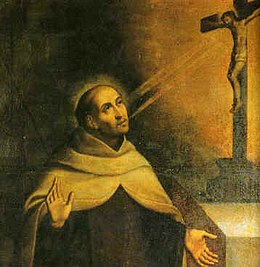
San Giovanni della Croce, known in English as Saint John of the Cross, is one of the most significant figures in Christian mysticism and Catholic spirituality. His life, marked by profound spiritual experiences, intense suffering, and remarkable contributions to theology and literature, has left an enduring legacy in the history of the Church. This article provides an in-depth exploration of his life, achievements, and the historical context that shaped his journey from humble beginnings to becoming a Doctor of the Church.
Early Life and Background
Born Juan de Yepes Álvarez on June 24, 1542, in Fontiveros, Spain, Giovanni della Croce came from a family of modest means. His father, Gonzalo de Yepes, was a nobleman from Toledo who was disinherited after marrying Catalina Álvarez, a poor silk weaver. Despite the social challenges his family faced, Giovanni displayed a strong inclination toward charity and a deep devotion to prayer from an early age.
The young Giovanni received his early education at the Colegio de los Doctrinos in Medina del Campo, where he was taught various trades, including carpentry, tailoring, and painting. These skills not only provided him with a means of livelihood but also nurtured his contemplative spirit. During this time, he also worked as an acolyte in the Church of the Magdalena and as an assistant nurse at the Hospital of the Conception, where he cared for the sick and poor.
Entry into the Carmelite Order
In 1563, Giovanni entered the Carmelite Order, a significant decision that marked the beginning of his spiritual journey. After taking his vows, he pursued his studies at the University of Salamanca, a renowned center of learning where he deepened his knowledge of theology and philosophy. These formative years were crucial in shaping Giovanni’s theological insights, which would later influence his writings and teachings.
Giovanni was ordained as a priest in 1567. Shortly after his ordination, he met Teresa of Ávila, a meeting that would profoundly impact both their lives. Teresa, a Carmelite nun and mystic, was in the midst of reforming the Carmelite Order, advocating for a return to its original austere practices. Giovanni was captivated by her vision and became one of her most trusted collaborators in the reform movement.
The Carmelite Reform and Founding of the Discalced Carmelites
Teresa of Ávila recognized Giovanni’s spiritual depth and referred to him affectionately as her “little Seneca,” a nod to his slender build and wise demeanor. Together, they embarked on the reform of the Carmelite Order, which led to the establishment of the Discalced Carmelites—a branch of the order that embraced a more rigorous and contemplative lifestyle.
In 1568, Giovanni traveled to Duruelo, a small village in the province of Segovia, where he helped establish the first convent of the Discalced Carmelites. The foundation of this convent marked the official beginning of the reform movement, which sought to renew the order by returning to its original spirit of poverty, prayer, and strict observance of the rule.
The reform, however, was not without its challenges. The movement faced significant opposition from within the Carmelite Order, particularly from the Calced Carmelites who resisted the changes. Giovanni’s unwavering commitment to the reform led to intense conflicts, including his arrest and imprisonment by the Calced Carmelites in Toledo in 1577.
Imprisonment and Mystical Writings
Giovanni della Croce’s imprisonment in the convent of Toledo is one of the most dramatic episodes of his life. For over eight months, he was subjected to harsh conditions, including physical abuse, isolation, and deprivation. Despite the suffering he endured, Giovanni found solace in his deep union with God. It was during this period of intense suffering that he composed some of his most profound mystical poetry.
Among his notable works are The Spiritual Canticle, The Dark Night of the Soul, and The Ascent of Mount Carmel. These writings, which blend poetry and theology, explore the soul’s journey toward God, emphasizing the need for detachment, purification, and the transformative power of divine love. Giovanni’s mystical theology has had a lasting influence on Christian spirituality, and his works are considered masterpieces of Spanish literature.
The Dark Night of the Soul, in particular, has become a seminal text in Christian mysticism. It describes the soul’s journey through periods of spiritual desolation and darkness, which ultimately lead to a deeper union with God. Giovanni’s insights into the spiritual life have provided comfort and guidance to countless believers who have experienced similar struggles in their own faith journeys.
Escape and Continued Ministry
In August 1578, Giovanni made a daring escape from his prison cell, an event that is often seen as a symbolic victory over the spiritual and physical darkness he had endured. After his escape, he took refuge in a Discalced Carmelite convent in Andalusia, where he continued to write and teach. His experience of suffering and his intimate relationship with God deepened his spiritual wisdom, which he shared with others through his writings and his role as a spiritual director.
In Granada, Giovanni completed the first draft of The Spiritual Canticle, a poetic dialogue between the soul and Christ, the bridegroom. The poem reflects his mystical theology, which centers on the soul’s longing for union with God. Giovanni’s poetry is characterized by its rich imagery and profound symbolism, capturing the ineffable nature of the divine encounter.
Despite his growing fame as a mystic and theologian, Giovanni faced further trials within the Discalced Carmelite Order. Internal conflicts and misunderstandings led to his being ostracized by some members of the order, and he spent the final years of his life in relative obscurity. In 1591, Giovanni fell ill and was sent to the convent in Úbeda, where he spent his last days.
Death and Canonization
San Giovanni della Croce died on December 14, 1591, at the age of 49. His death was marked by a deep sense of peace and resignation to God’s will, qualities that had defined his life and ministry. Giovanni’s writings were first published in 1618, nearly three decades after his death, and quickly gained recognition for their spiritual depth and literary beauty.
In 1675, Giovanni della Croce was beatified by Pope Clement X, and in 1726, he was canonized as a saint by Pope Benedict XIII. His contributions to Christian mysticism were further recognized in 1926 when Pope Pius XI declared him a Doctor of the Church, a title given to saints whose writings have significantly influenced Catholic theology.
The Legacy of San Giovanni della Croce
San Giovanni della Croce’s legacy is enduring and multifaceted. As a mystic, his teachings on the soul’s journey toward God have inspired generations of Christians to seek a deeper, more intimate relationship with the divine. His emphasis on the necessity of detachment from worldly attachments and the importance of enduring spiritual trials has resonated with those who experience periods of spiritual dryness and struggle.
As a poet, Giovanni’s works are celebrated not only for their theological insights but also for their literary merit. His use of metaphor, symbolism, and lyrical language has earned him a place among the greatest poets of the Spanish Golden Age. His poetry continues to be studied and admired for its ability to convey the profound mysteries of the spiritual life.
San Giovanni della Croce’s influence extends beyond the Catholic Church. His writings have been translated into numerous languages and have been embraced by Christians of various denominations as well as by those interested in spirituality and mysticism. His concept of the “dark night of the soul” has entered the broader cultural lexicon, often used to describe experiences of spiritual or existential crisis.
Conclusion: The Enduring Influence of San Giovanni della Croce
San Giovanni della Croce’s life and works offer a timeless message of hope and perseverance. His journey from humble beginnings to becoming a leading figure in Christian mysticism demonstrates the power of faith and the transformative potential of suffering when united with the love of God. Giovanni’s writings continue to guide and inspire those who seek to deepen their spiritual lives, offering a path to union with God through the purifying trials of the soul.
As a Doctor of the Church, San Giovanni della Croce’s teachings hold a place of great importance in Catholic theology. His insights into the nature of the spiritual life, the role of suffering, and the ultimate goal of union with God remain relevant for believers today. His life serves as a testament to the enduring power of divine love and the strength that comes from surrendering to God’s will, even in the face of adversity.
San Giovanni della Croce’s enduring influence is a testament to the depth of his spiritual insight and the universality of his message. His legacy continues to inspire and challenge those who seek a deeper relationship with God, offering a vision of the spiritual life that is both demanding and profoundly rewarding.


