
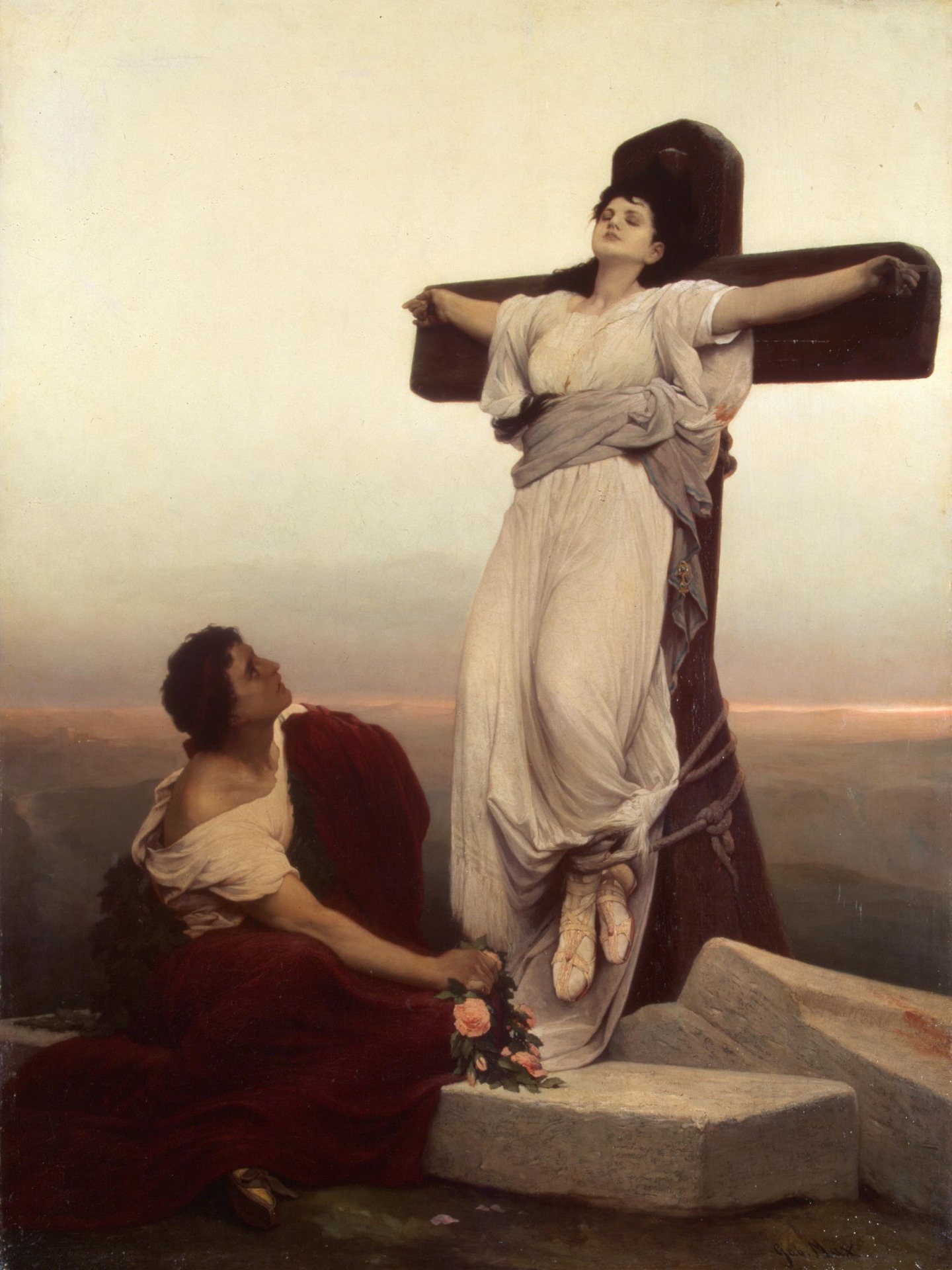
Santa Giulia di Corsica, revered as the patron saint of Corsica, is a figure steeped in both history and legend. Born in Carthage in 420 AD, Giulia’s life story is one of nobility, tragedy, and unwavering faith. Despite the scarcity of historical records, her legacy has endured through the centuries, inspiring devotion and reverence. This article explores the life, martyrdom, and enduring influence of Santa Giulia di Corsica, providing insights into her historical context, the legends surrounding her, and her significance in Christian tradition.
Early Life and Background
Santa Giulia was born into a noble Roman family, the gens Iulia, which had a distinguished history in the Roman Empire. Her early life was one of privilege, marked by the wealth and status of her family in Carthage, a prominent city in the Roman world. However, Giulia’s life took a dramatic turn when her family fell into ruin, leading to her being sold into slavery. This transition from nobility to servitude would become a defining moment in her life, setting the stage for her eventual martyrdom.
Giulia was purchased by a Syrian merchant named Eusebius, who took her with him on his travels. Despite her status as a slave, Giulia remained steadfast in her Christian faith, a devotion that would later lead to her tragic end.
The Voyage and Shipwreck in Corsica
The defining event in Giulia’s life occurred during one of Eusebius’s voyages. The ship on which they were traveling was caught in a storm and wrecked on the shores of Corsica. At that time, Corsica was under the rule of a tyrannical governor named Felix, who enforced pagan rituals and sacrifices. The shipwrecked survivors, including Giulia, were forced to participate in these pagan rites.
Giulia, however, refused to renounce her Christian faith. Her act of defiance drew the attention of Felix, who sought to claim her as his own. Despite Felix’s attempts to coerce her into sacrificing to the pagan gods, Giulia remained resolute, declaring her freedom in serving Jesus Christ rather than submitting to idolatry.
Her steadfastness in the face of persecution led Felix to sentence her to death. Giulia was subjected to brutal punishment—her hair was torn out, she was scourged, and ultimately, she was crucified. This act of martyrdom mirrored the suffering of Christ, reinforcing her devotion and piety.
The Miraculous Legend and Martyrdom
The story of Santa Giulia’s martyrdom is further embellished by a legend involving a group of monks from the nearby island of Gorgona in the Ligurian Sea. According to the legend, these monks received a vision of Giulia’s impending martyrdom and set out to rescue her. However, upon their arrival, they found her already crucified, with a piece of parchment detailing her suffering pinned to the cross.
The monks took her body to Gorgona, where they anointed it with oils and placed it in a sarcophagus. This tale, preserved in a 7th-century Passio (a narrative of a martyr’s suffering and death), highlights the sanctity attributed to Giulia’s martyrdom and her status as a holy figure.
Alternative Versions and Historical Context
The story of Santa Giulia di Corsica is not without variations. Another version of her life places her birth not in Carthage but in Nonza, a small village in Corsica, during the 2nd century. In this account, Giulia’s martyrdom occurred during the Great Persecution under the Roman Emperor Diocletian, which was a time of intense persecution of Christians throughout the Roman Empire.
According to this version, Giulia, along with other women, was forced to participate in a pagan ceremony honoring the Roman gods. When she refused to bow to a statue of Jupiter and instead knelt before a Christian church, she was condemned to crucifixion. This narrative adds another layer to the story of Giulia, illustrating the widespread veneration of her as a martyr who stood firm in her faith despite the threat of death.
The Legacy of Santa Giulia di Corsica
Santa Giulia’s legacy is one of enduring faith and resilience. Her story, whether viewed through the lens of history or legend, serves as a powerful example of unwavering devotion in the face of persecution. Over the centuries, her relics have been venerated in various locations, each contributing to the spread of her cult.
The Relics of Santa Giulia
The relics of Santa Giulia di Corsica have a storied history, moving across different regions as her veneration grew. Initially, her relics were believed to have been housed in Nonza, Corsica. However, during the Middle Ages, these relics were transferred to Gorgona Island by Benedictine monks. This transfer was part of a broader tradition in the Christian Church, where the remains of saints were often moved to protect them from desecration or to honor them in newly established churches.
In 762 AD, the relics of Santa Giulia were again moved, this time to Brescia, Italy, by Ansa, the wife of Desiderius, the last king of the Lombards. This transfer to Brescia marked a significant moment in the spread of her veneration. The church built in her honor in Brescia became a major center of pilgrimage, further solidifying her status as a revered saint.
Today, Santa Giulia’s relics are divided among three main locations: Nonza, Corsica, where two vertebrae and part of her skull are preserved; Livorno, Tuscany, which houses a finger and some bone fragments; and Brescia, where the majority of her remains are kept in the parish church dedicated to her. These relics continue to be objects of veneration, drawing pilgrims and devotees from across the Christian world.
The Cult and Iconography of Santa Giulia
Santa Giulia di Corsica is celebrated on May 22, the day of her martyrdom. This day is marked by ceremonies and prayers in her honor, particularly in the regions where her relics are kept. As the patroness of Corsica, Livorno, Monastero Bormida, Padria di Sassari, and Salisano di Rieti, she holds a special place in the hearts of the faithful in these areas.
In Christian iconography, Santa Giulia is often depicted with the symbols of her martyrdom: the cross, representing her crucifixion; the palm, symbolizing her victory over death; and the lily, a symbol of purity and virginity. These attributes not only reflect her story but also serve as a reminder of her virtues and the ideals she embodies.
Historical Significance and Influence
The veneration of Santa Giulia di Corsica must be understood within the broader context of early Christian martyrdom and the spread of Christianity throughout the Roman Empire and beyond. Her story is part of a larger tradition of female martyrs who, despite their relatively low social status, achieved sainthood through their steadfast faith and ultimate sacrifice.
The cult of saints like Giulia played a crucial role in the Christianization of Europe, particularly in regions like Corsica, where local traditions and beliefs were gradually supplanted by Christian practices. The veneration of martyrs provided a tangible connection to the divine for early Christians, offering examples of how ordinary people could achieve sanctity through faith and suffering.
Conclusion
Santa Giulia di Corsica remains a figure of profound spiritual significance. Her story, though shrouded in legend, continues to inspire devotion and reverence among Christians. Whether viewed as a historical figure or a legendary martyr, Giulia’s life and death embody the virtues of faith, resilience, and purity.
Her legacy lives on in the relics preserved in Corsica, Tuscany, and Brescia, and in the ongoing veneration of her as a saint. As the patroness of Corsica and several other regions, she serves as a powerful symbol of Christian devotion and the enduring power of faith in the face of persecution. Santa Giulia di Corsica’s story is a testament to the enduring influence of early Christian martyrs and their role in shaping the spiritual landscape of Europe.


