
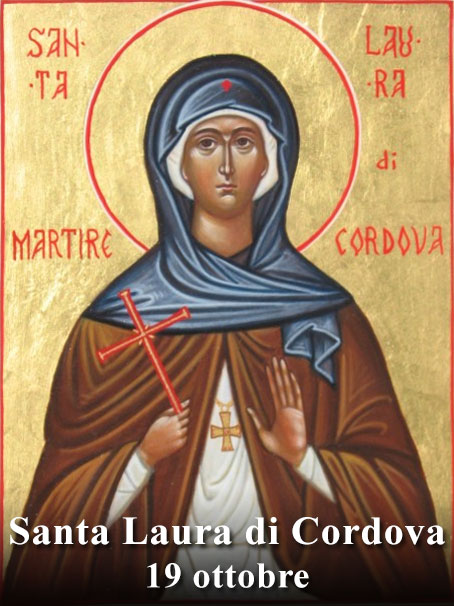
Santa Laura di Cordova, also known as Saint Laura of Cordoba, is a revered figure in Christian history, particularly in Spain, where her life and martyrdom are commemorated with great devotion. Although the historical records surrounding her life are sparse and sometimes unclear, Santa Laura’s legacy as a Christian martyr during the period of Moorish rule in Spain has left an indelible mark on the religious and cultural landscape. This article delves into the life, significance, and enduring legacy of Santa Laura di Cordova, providing detailed insights into her background, her unwavering faith, and the impact of her martyrdom.
Early Life and Background
Santa Laura di Cordova was born around the year 800 AD into a noble Spanish family during a tumultuous time in the Iberian Peninsula’s history. The region was under the control of the Moors, a Muslim group that had conquered large parts of Spain and established the Emirate of Córdoba. This period, known as the Reconquista, was marked by ongoing conflicts between the Christian and Muslim populations, with Christians often facing persecution under Moorish rule.
Little is known about Laura’s early life, but it is believed that she was married to a high-ranking official within the Emirate. Her husband’s death left her widowed at a young age, and tragically, Laura also lost her children shortly thereafter. These personal losses led her to seek solace in a life of religious devotion. She entered the convent of Santa Maria de Cuteclara, located near Córdoba, where she took on the role of a nun, dedicating herself to the service of God and the Christian faith.
Becoming the Abbess of Santa Maria de Cuteclara
In 856 AD, Laura was appointed as the abbess of the convent, a position of significant authority and responsibility. As abbess, Laura was known for her strict adherence to Christian doctrines and her commitment to enforcing the rules of monastic life. Her leadership was characterized by a deep sense of duty to her faith, and she sought to instill the same level of devotion in the other nuns under her care.
During her tenure as abbess, Laura’s influence extended beyond the walls of the convent. She was deeply committed to spreading the Christian faith, even at a time when doing so was fraught with danger due to the oppressive Moorish rule. Her actions eventually drew the attention of the Islamic authorities, who viewed her as a threat to their dominance in the region.
Martyrdom and Persecution
The 9th century was a perilous time for Christians in Moorish Spain. The Islamic rulers of Córdoba were increasingly intolerant of the Christian faith, and many Christians faced persecution for refusing to renounce their beliefs. This period saw the emergence of the Mozarabic martyrs, a group of Christians who chose to die rather than convert to Islam.
Santa Laura di Cordova is one of the most prominent figures among these martyrs. According to historical accounts, Laura’s steadfastness in her faith and her efforts to promote Christianity eventually led to her arrest by the Moorish authorities. She was brought before a court and charged with apostasy, a crime that was punishable by death under Islamic law.
Refusing to renounce her faith, Laura was subjected to a brutal and horrific form of execution. She was condemned to death by being boiled alive in a cauldron of pitch or tar, a torturous punishment designed to serve as a warning to other Christians. On October 19, 864 AD, after enduring hours of excruciating pain, Laura succumbed to her injuries, thus becoming a martyr for her faith.
The Significance of Santa Laura di Cordova’s Martyrdom
Santa Laura’s martyrdom is significant not only for its demonstration of her unwavering faith but also for the broader context in which it occurred. Her death is emblematic of the struggle faced by Christians living under Moorish rule in Spain, a struggle that would continue for several centuries until the completion of the Reconquista in 1492.
The story of Santa Laura di Cordova has been preserved in the Martyrologium Hispanicum, a liturgical book that chronicles the lives and deaths of Spanish saints and martyrs. Her inclusion in this text highlights the importance of her sacrifice and the reverence with which she was regarded by later generations of Christians.
The Cult of Santa Laura and Her Legacy
Following her death, Santa Laura di Cordova was venerated as a martyr and saint by the Christian community. Her feast day is celebrated on October 19, the anniversary of her martyrdom. Over time, a cult developed around her, particularly in Spain, where she is considered a protector of students and scholars, due to the symbolic connection of her name with the laurel wreath, a symbol of victory and academic achievement in ancient Rome.
In religious art and iconography, Santa Laura is often depicted holding a branch of laurel, symbolizing both her victory in faith and her role as a patroness of learning. Her martyrdom and the circumstances surrounding it also made her a symbol of the resilience of the Christian faith in the face of persecution.
The veneration of Santa Laura is especially prominent in Córdoba, the city where she lived, served as abbess, and ultimately gave her life for her faith. In Córdoba, and in other parts of Spain, processions and ceremonies are held in her honor, often featuring floral decorations and laurel branches to commemorate her sacrifice.
Historical Context: Christian Persecution in Moorish Spain
Santa Laura di Cordova’s life and martyrdom cannot be fully understood without considering the broader historical context of Christian persecution in Moorish Spain. The 8th and 9th centuries were marked by the expansion of Islamic rule across the Iberian Peninsula, following the Muslim conquest of Spain in 711 AD. The Umayyad Caliphate established the Emirate of Córdoba, which became one of the most powerful and culturally advanced states in the medieval Islamic world.
Under Moorish rule, Christians and Jews were considered dhimmi, or “protected persons,” who were allowed to practice their religions but were subject to certain restrictions and taxes. However, this protection was often precarious, and periods of relative tolerance were interspersed with episodes of intense persecution, particularly during times of political instability or religious tension.
The Mozarabic martyrs, of whom Santa Laura di Cordova is a notable example, were Christians who resisted the pressures to convert to Islam, even under the threat of death. Their martyrdoms were acts of defiance against the imposition of Islamic rule and served as powerful symbols of the endurance of Christian faith in Spain.
The Symbolism of the Laurel in Santa Laura’s Legacy
The name Laura, derived from the Latin word “laurus,” meaning laurel, is closely associated with victory and honor. In ancient Rome, laurel wreaths were used to crown victors in athletic competitions and were also symbols of academic achievement. This association with victory and excellence is reflected in the veneration of Santa Laura di Cordova, who is seen as a spiritual victor for her unwavering faith in the face of persecution.
The laurel branch that Santa Laura is often depicted holding in religious art symbolizes her triumph over death and her eternal reward in heaven. It also reinforces her role as a patroness of students and scholars, who seek her intercession in their pursuit of knowledge and success in their studies.
Santa Laura di Cordova’s Influence on Christian Thought
The story of Santa Laura di Cordova has had a lasting impact on Christian thought and theology, particularly in the context of discussions about martyrdom and religious persecution. Her willingness to endure suffering and death rather than renounce her faith has been cited by theologians and scholars as an example of the highest form of Christian witness.
In the centuries following her death, Santa Laura’s martyrdom became a source of inspiration for Christians facing persecution in other parts of the world. Her story was used to encourage believers to remain steadfast in their faith, even in the face of oppression, and to trust in the promise of eternal life.
Conclusion: The Enduring Legacy of Santa Laura di Cordova
Santa Laura di Cordova’s life and martyrdom continue to resonate with Christians around the world, particularly in Spain, where she is honored as a symbol of faith, resilience, and victory over adversity. Her story serves as a reminder of the sacrifices made by early Christians in their struggle to maintain their faith under hostile regimes.
As a figure of both historical and spiritual significance, Santa Laura di Cordova represents the enduring power of faith and the profound impact that one individual’s sacrifice can have on the collective memory of a religious community. Her legacy lives on not only in the hearts of those who venerate her but also in the broader context of Christian history, where she stands as a beacon of courage and conviction.
Santa Laura’s life, though shrouded in mystery and legend, continues to inspire believers to this day, reminding us that the true measure of a person’s faith is not in the comfort of their circumstances but in their willingness to stand firm in their beliefs, even unto death.


